The Newest Hairstyles for Women Over 60

Every season brings new looks, and most of them are photographed on someone half your age. If you are searching for hairstyles over 60 older women new looks, here is what you will find: 20 current ideas, each checked against what works on fine, silver or thinning hair.
Each of the 20 looks below says what is new about it, why it is popular, and who might want to skip it. Expect fringes, bixies, bobs with new finishes, softer shags and a quiet shift toward grown-in silver.
New looks for hairstyles over 60: how to pick one
Start with what the trend does. Many of this year’s looks are about softness: a fringe that skims the lashes, a bob with ends tucked under, layers that move rather than step. That is good news for mature hair, which is often finer and drier. The mood is smooth, polished and light, not stiff.
Then check the maintenance. Curtain bangs need trims every four to six weeks, bobs every six to eight and a shag every eight to twelve. Gloss or toner can be every four to eight weeks if you go for deeply pigmented shades. Ask yourself if you will keep that up. A trend you cannot maintain looks worse than a classic you can.
Finally, think about texture and density. Over-texturizing fine hair is a mistake, and the new shag works best on thick hair because the layers remove weight. If your hair is fine, choose the blunt or tucked versions. If it is thick or wavy, you have more freedom. My rule: take only the part of a trend that suits your hair, and leave the rest.
Fringes and bangs that are new this year
The biggest change is that the wispy curtain bang is no longer the only option. Stylists are talking about heavier, longer and side-parted fringes.
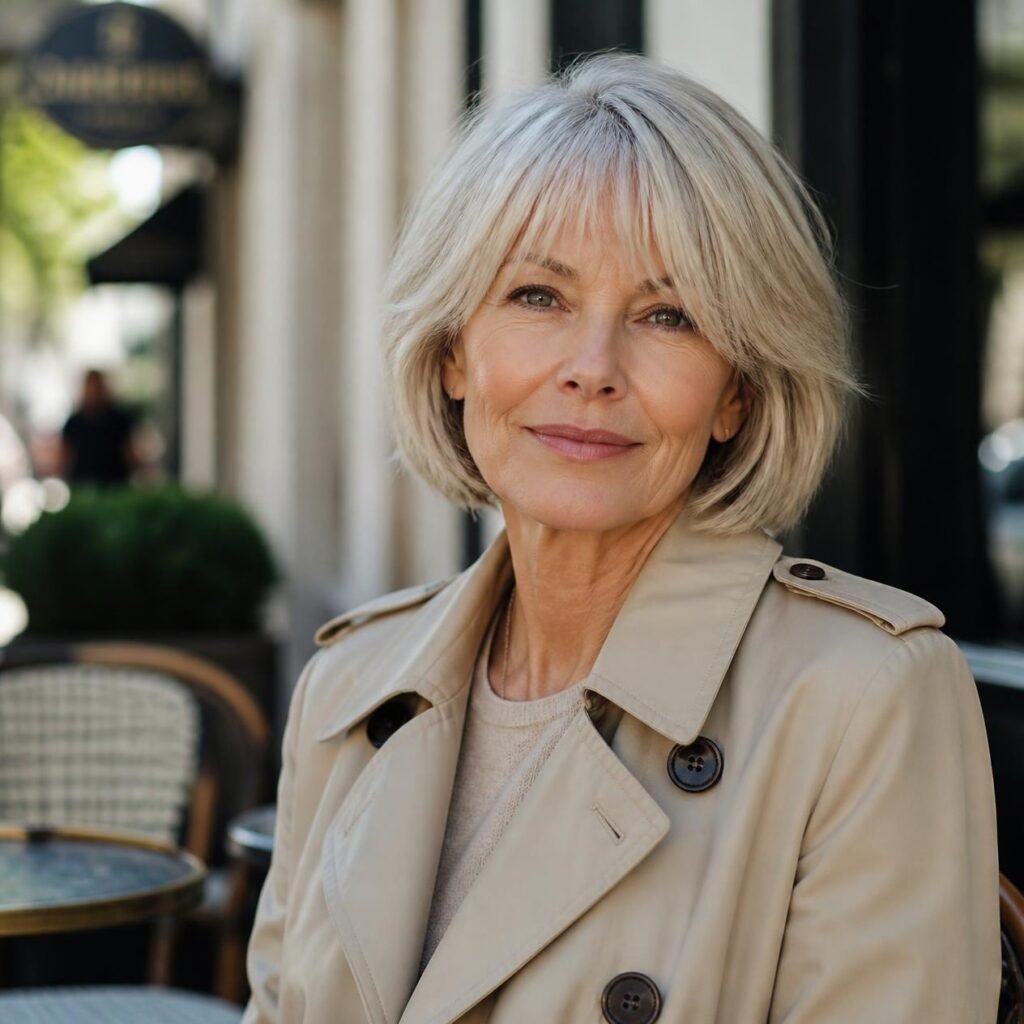
1. Curtain-fringe bob in champagne silver
Curtain bangs part in the middle and sweep to the sides, and on a bob they soften a jaw-length line. They suit all face shapes and add volume for fine or thin hair. Ask for a texturizing cut so they do not look heavy, and a light round-brush blow-dry weekly. A champagne shade is a warm, pale gloss tone, so ask your colorist. Trims every four to six weeks.
How to wear it: Skip it if you dislike hair near your eyes or have a very low hairline.
Best for: Fine hair and mid-length bobs
2. Heavyweight fringe
Fuller, more textured fringes are replacing the wispy curtain bangs of recent years, with more weight but a slightly undone finish. In my view it is bolder than a curtain bang. It needs thick enough hair to carry the weight. A fringe cut from the crown takes hair away from the sides, so check you can spare it.
How to wear it: Skip it if your hair is fine or thinning at the front.
Best for: Thick hair and strong features
3. XL fringe
Long, airy fringes that skim the lashes are a soft option. A blowout spray on damp roots keeps the fringe relaxed rather than floppy. This is the longest version of the trend, closer to a face frame than a bang. On silver hair it makes a soft frame around the eyes. Trim it every six weeks.
How to wear it: Skip it if you need your eyes clear; it can slide into glasses.
Best for: Straight and wavy hair that already has some length in front
4. Side-parted fringe
Side parts are returning, with a fringe that can be short or longer. A deep, asymmetrical side part is a classic with a modern feel. On mature hair, it can add height at the crown and cover a receding hairline. Ask for a fringe that blends into the rest of your hair. Use a root-lift spray.
How to wear it: Skip it if your hair has a strong cowlick at the front.
Best for: Fine hair needing lift; a receding hairline
5. Birkin bangs
Birkin bangs are soft, wispy bangs rather than heavy French ones. They suit most face shapes, but work best on oval, diamond and oblong faces. They let some forehead show, so they feel airy. They need regular trims to keep their short, feathered edge.
How to wear it: Skip it if you do not want to trim every few weeks.
Best for: Oval, diamond and oblong faces; fine hair
Short shapes with a modern twist
Short cuts are being reworked, with more texture and less severity than the pixies of the past.
6. Pearl-white bixie
The bixie, a pixie and bob hybrid, is one of the most popular cuts of the year. It is a good option if you want a shorter, feminine cut, and it suits fine or low-density hair because the shorter length creates the look of volume. Pearl white is a very light, cool silver shade. Trim every four to six weeks and use an air-dry cream.
How to wear it: Skip it if you want to tie your hair back.
Best for: Fine hair, women stepping down from a bob
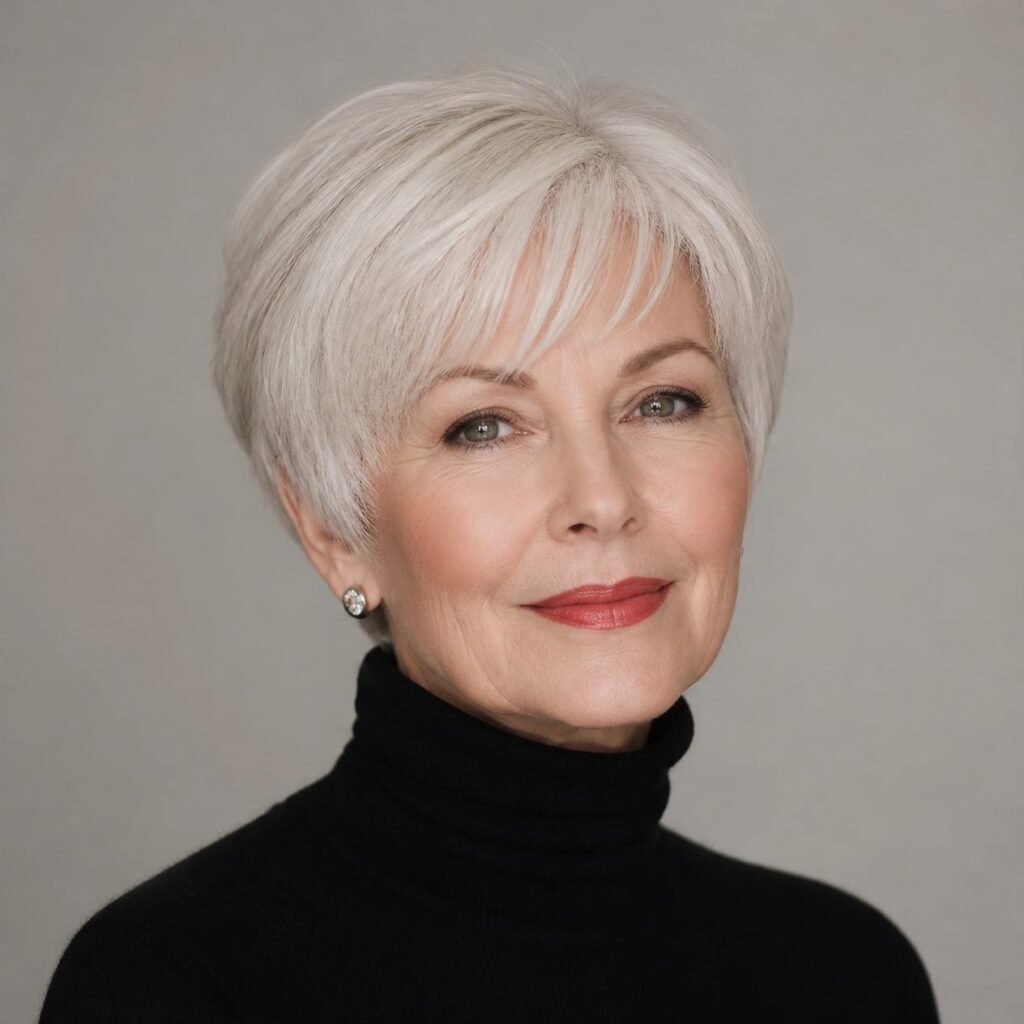
7. Pob cut
This is a 2000s revival, the pob cut, a pixie-bob blend with more texture and softer lines than sharp pixies. It is short at the back and sides with longer front pieces. It is a close cousin to the bixie. Mature hair does well with the soft lines, since sharp pixies can look severe on lined skin. Use paste at the ends.
How to wear it: Skip it if you prefer a classic look.
Best for: Straight to wavy hair; anyone who likes a retro edge
8. Box bob
The box bob is a sharp, jaw-skimming cut. Sharp and one-length, it is kind to fine hair because the blunt edge keeps weight at the ends. A light spray holds the line. The shape is simple, and it works on straight, silver hair especially. Trim every six weeks to keep it crisp.
How to wear it: Skip it if you have natural curl; it will bend the line.
Best for: Fine, straight hair
9. Silk bob tucked behind the ear
The silk bob is sleek and light, worn flat and tucked behind the ear. A related tucked bob has ends bevelled under, not flicked out. The result is clean and expensive-looking. On silver hair it shows off shine, and tucking exposes an earring. Use a smoothing serum and a flat brush. It reads as polished, but it needs healthy ends.
How to wear it: Skip it if your hair is frizzy or heavily textured.
Best for: Straight hair that shines
10. Textured French bob
A textured French bob with flipped ends is a fresher take on the classic. The French bob sits at jaw length or just above the shoulders, with a soft fringe, and suits straight or wavy hair. A light cream and air drying are enough. It looks slightly undone on purpose.
How to wear it: Skip it if you want a neat, precise finish.
Best for: Straight and wavy hair
Layers and length
Layers are back, but softer. These looks keep movement without thinning the ends.
11. Soft shag
The new shag is tousled, with soft, feathered layers, sitting between a 70s feathered shag and a choppy rock shag. It suits thick hair because the layers remove weight, and it is low maintenance with trims every eight to twelve weeks. Shaggier shapes with softer edges are the direction. Ask for feathered, not razored, layers.
How to wear it: Skip it if your hair is thin; too many layers can thin the ends.
Best for: Thick or wavy hair
12. Butterfly layers
The butterfly cut has long layers throughout, plus shorter layers at the front that frame the face. It is gentler than a shag or 90s blowout and can work for almost anyone, though it suits straight hair best. Grow length first, plan with a stylist, and trim every six to eight weeks.
How to wear it: Skip it if your hair is fine; the stepped layers can look thin.
Best for: Straight, medium to long hair
13. Kitty cut
The kitty cut is a layered cut sitting between the shoulders and collarbone that lifts hair and restores fluidity without changing everything. It is gentler than the butterfly cut, with fewer layers. It also suits fine hair because it is not extreme. Ask for soft layers starting at the cheekbones and keep the ends full.
How to wear it: Skip it if you want a dramatic change.
Best for: Fine hair at shoulder length
14. Glossy long bob in ash blonde
A long bob with a mirror-like finish combines two current trends: the lob and glass hair. Shiny, sleek, healthy-looking glass hair is on the rise, and many women are choosing styles that reflect their personality. Ask your colorist about an ash gloss. Skip hot irons daily and use a heat protectant, because shine comes from a smooth cuticle.
How to wear it: Skip it if you do not want to use heat tools or glossing.
Best for: Straight hair and ash or silver blondes
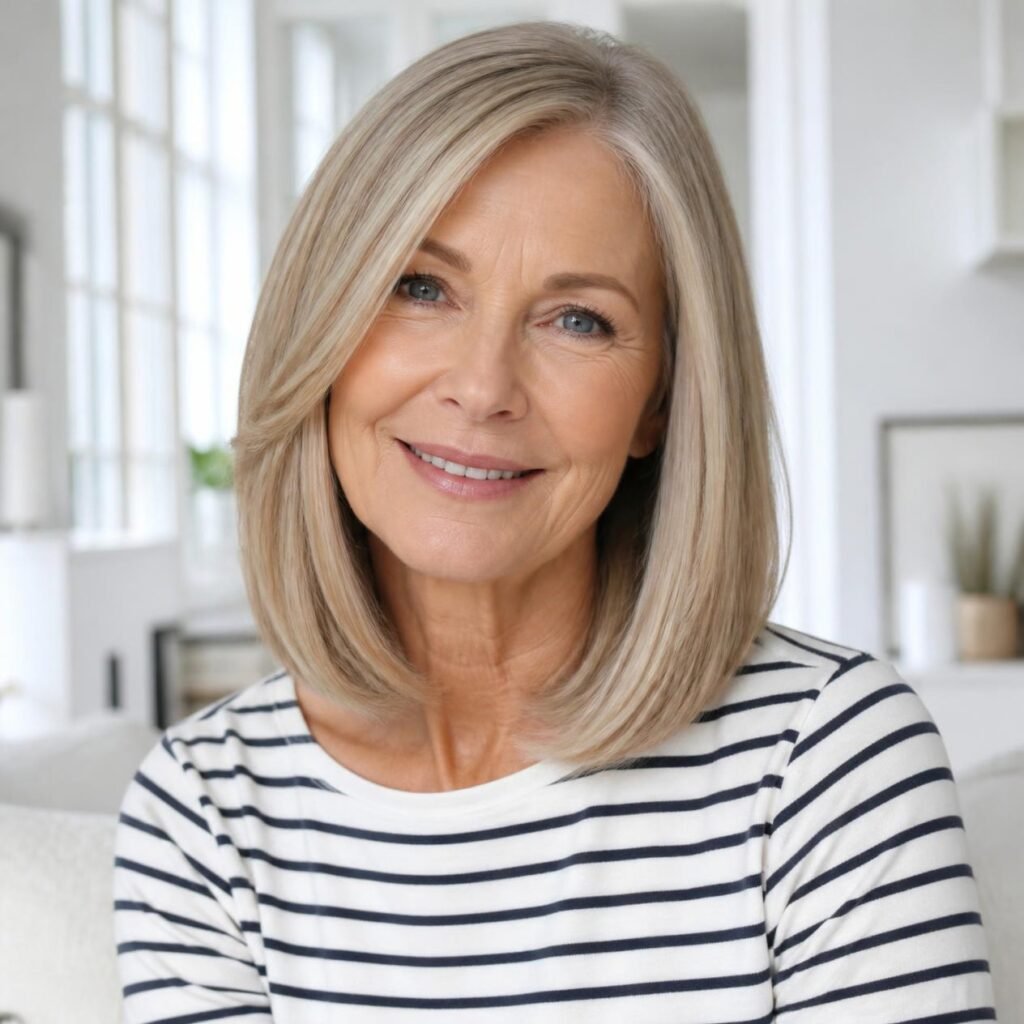
15. Soft precision bob
The soft precision bob, with clean but not rigid lines, is a cut that gives fine hair an impression of density. Think of a blunt bob with a softened edge, the opposite of a harsh angle. It can be worn with a side part or middle part. It is the practical pick for thin hair, and the least trend-driven.
How to wear it: Skip it if you want a loose, undone texture.
Best for: Fine to thinning hair
Color and finish
The color story is about deliberate gray and healthy shine rather than hiding every strand.
16. Quiet silvering
Grown-in grey is in growing demand. A sheer, see-through grey and soft highlights blur regrowth lines, and a weekly silver or purple shampoo helps with upkeep. It is a gentle path to natural silver. The approach suits clients with significant silver who want softness without a harsh root. It is also easy to explain to a colorist.
How to wear it: Skip it if you have only a few grays and prefer full coverage.
Best for: Women growing out dyed hair
17. Griege
Griege is a soft mix of grey, beige and silver that helps move from color to natural white. Warm pearl gray, a blend of pearl, beige and champagne, is warmer and softer than cool silver. Both avoid the flat, icy look some women dislike. Ask a colorist for a custom gloss. Bring photos to show the tone you like.
How to wear it: Skip it if you want a very cool, bright silver.
Best for: Warm skin tones; those who find silver harsh
18. Smoky silver
Smoky silver is soft ash tones with deeper charcoal highlights for metallic sheen with a natural look. The charcoal pieces add depth that flat white lacks. It suits a cool undertone. Ask a colorist for this, since gray hair can behave differently with color than pigmented hair. It looks best with a healthy, glossy finish.
How to wear it: Skip it if you do not want salon visits every few months.
Best for: Cool skin tones and natural gray
19. Color drenching in platinum
Color drenching, hair saturated in one highly pigmented shade from roots to tips, is replacing balayage, with silvery platinums among the examples. For women with gray, it means one even silver. It needs a gloss or toner every four to eight weeks. The upside is simplicity and shine. Expect to book the gloss visits in advance.
How to wear it: Skip it if you dislike frequent salon glossing.
Best for: White or silver hair
20. High-contrast roots
High-contrast roots, a deliberately visible darker root with a lighter tone below, are a trend best for naturally dark hair or anyone already embracing regrowth. It means fewer touch-ups. On mature hair, it can read as chic if intentional. Ask your colorist to keep the contrast deliberate rather than blended. It also saves on frequent root appointments.
How to wear it: Skip it if you prefer a seamless, even color.
Best for: Dark hair with some regrowth
Good to know
Trends are not designed with thinning hair in mind. If your part is widening or your hair is shedding more than usual, see a dermatologist rather than changing cuts, because treatment works best when started early. Then choose a cut with that in mind.
How to bring a trend to your stylist
Show a photo, then say what you like and dislike about it. Bring inspiration photos and describe your daily routine so the cut fits your life. Be honest about your time and your hair type, and ask your stylist what should change on your hair.
Ask what the trim schedule will be and what products you will need. Expect to adjust. The best trend is one that survives a week of your actual mornings.
Frequently asked questions
Trends are a menu, not a rulebook. Pick one idea that fits your hair, try it in the salon chair with a stylist you trust, and keep the parts that make mornings easier. If you love a classic, that is current too.