15 Hairstyles for Women Over 70
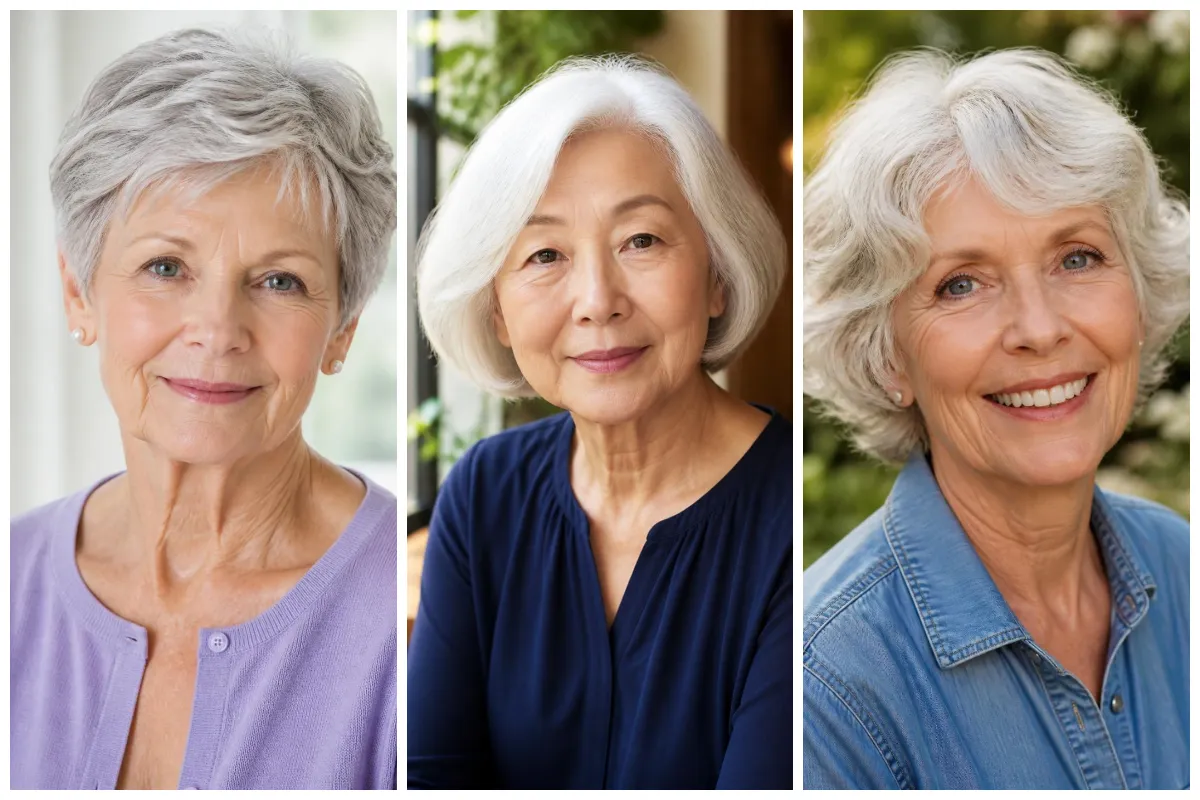
If you are looking for hair styles for women over 70, the question is usually not how to look different. It is how to have hair that behaves on a Tuesday morning when your shoulders are stiff, your hands are less nimble and your hair is finer than it used to be. This guide gives you cuts that answer that question, plus easy care habits that go with them.
The pattern across sources is clear. Hair over 70 tends to be drier and thinner, and white or silver strands are often coarser than the rest. Cuts that do well are soft, forgiving and quick: a bob with a strong line, a layered crop that dries by itself, curls left to do their own thing. Below are 15 haircuts for women over 70, plus the color and care choices that make them look their best.
How to choose hair styles for women over 70
Begin with what your hair does now. Female pattern hair loss commonly begins in midlife and shows as a widening part or thinner ponytail, and by this decade many women have lived with it for years. Menopause can change scalp oil production, and oil glands slow with age, so older adults generally can wash less often than younger people. Drier hair does better with a cut that has a clean edge, because split ends show less.
Then think about your body and your hands. Shorter cuts need less upkeep, pins and clips are easy to manage, and gentle fingertip pressure is kinder to the scalp than rubbing. If lifting your arms to blow-dry is tiring, choose a cut that air dries into shape. If you wear glasses, pixies keep the temples clear, while bobs that sit at or below the jawline avoid bunching behind the ears.
Finally, think about maintenance in real terms. Most cuts here need a trim every six to eight weeks, and a few, like a longer bob or wavy crop, can stretch to ten or twelve. The fewer products and tools involved, the easier it is to keep the look going.
Bobs with a strong line
A bob with a crisp outline gives thin hair weight at the ends and grows out evenly, which means fewer emergency salon visits.
1. Chin-length bob with a clean line
A bob that ends at the jaw has a strong perimeter, so it keeps its shape for weeks as it grows. The chin-length bob is low-fuss because that line grows out well while still adding movement. Ask for a smooth outline with a few invisible inner layers. Fine hair looks fuller with this because the weight sits at the bottom edge rather than being thinned out.
How to wear it: Dry with a medium brush or let it air dry and finish with a pea-size amount of serum.
Best for: Straight, fine hair; women who want a tidy look with little effort
2. Wavy white bob
White hair looks soft and luminous when it is cut into a bob with a gentle wave. The shape works because waves add volume without teasing. Brush gray hair daily, which spreads scalp oil down toward the ends, and that helps coarse white strands look smooth. A gloss now and then keeps white from dulling.
How to wear it: Scrunch in a light mousse and air dry; use a diffuser only on low heat.
Best for: Hair with a natural bend, and white or light silver tones
3. Graduated bob
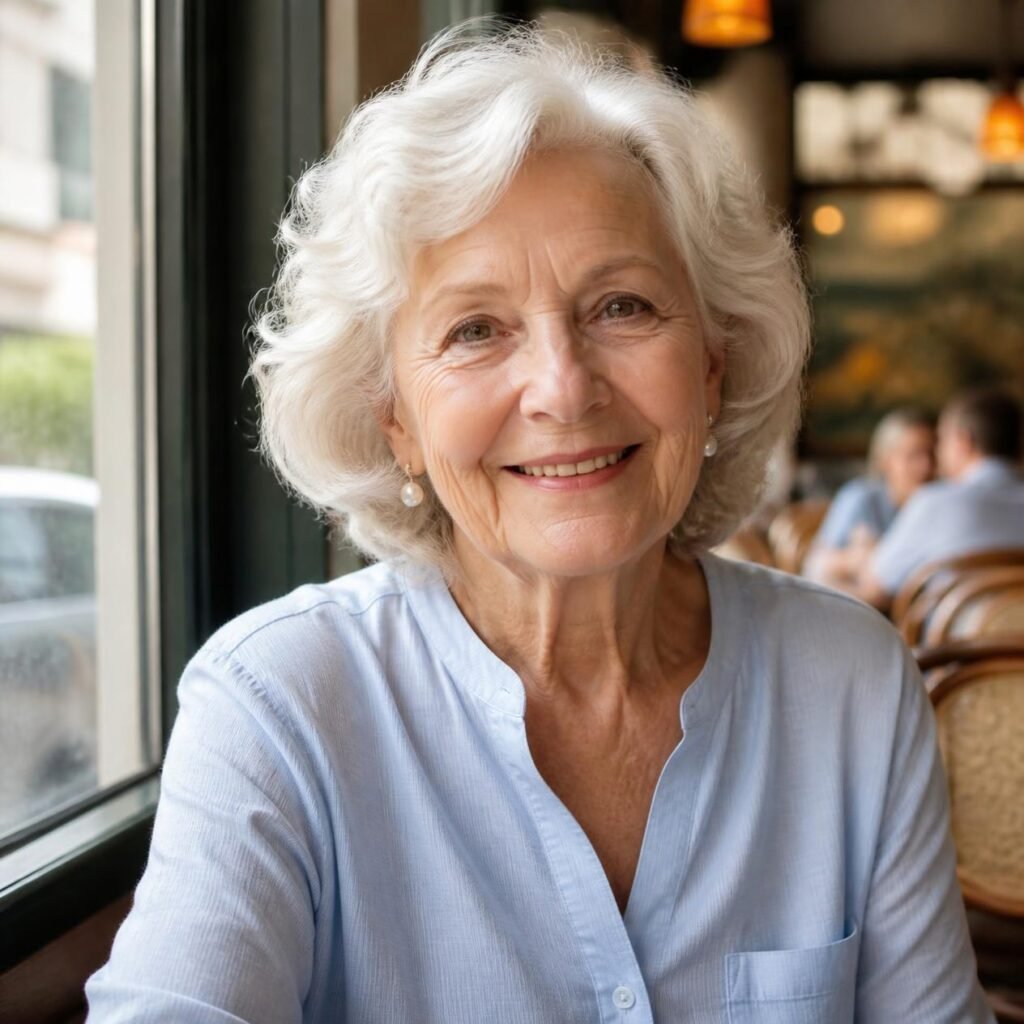
The graduated or stacked bob is shorter at the nape and longer at the front, with a gentle curve. This shape suits thin, fine hair that looks less flattering when long, and it can add visual length to the neck. It can read as a dated granny bob, but it looks polished when the stack is soft. Ask for a rounded, not severe, back.
How to wear it: Ask for the back to be kept soft, not shaved.
Best for: Fine hair and a short neck
Short, soft and easy cuts
Short hair needs less washing, less combing and less product. The trick is to keep the layers soft and not blunt.
4. Soft feathered crop
A layered crop with a soft, feathered finish can make you look considerably fresher. A crop is short all over with light layers on top and tapered sides. It dries quickly, needs a comb at most and keeps the ears and neck clear. Choose feathered texture, never harsh points.
Best for: Fine to medium hair; women who want minimal routine
5. Short layered gray cut with a side-swept fringe
A short layered cut with a long fringe swept to one side adds softness at the forehead and the temples. Fringes can disguise thin temples, and a fringe should sit just above the frames of your glasses. The layers on top add height while the sides stay close. Ask for the fringe to be cut with a razor or point-cut, so it does not look heavy.
How to wear it: Brush the fringe to the side with your fingers while it dries.
Best for: Thinning temples and glasses wearers
6. Angled-layer pixie
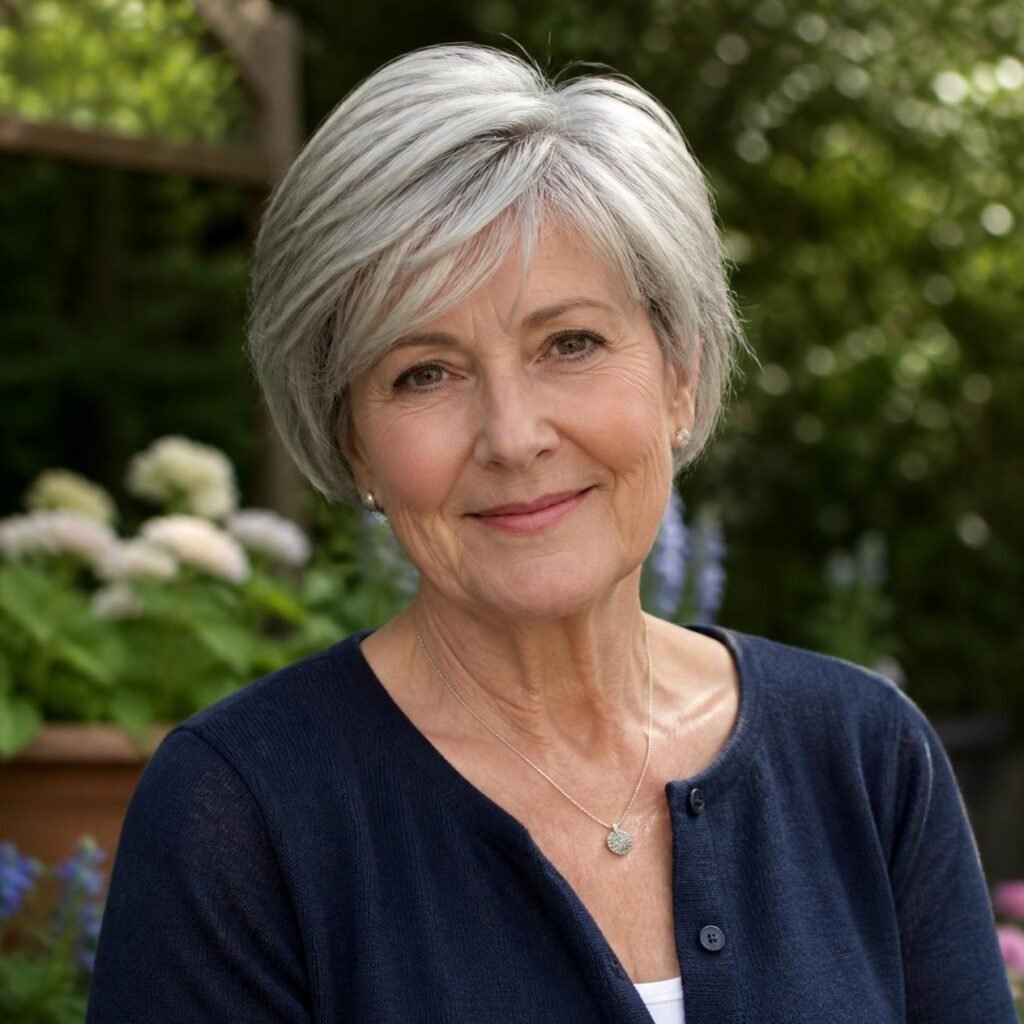
Angle the layers downward on a pixie to disguise sparse areas, with wispy bangs blending into the rest of the cut. After 70, pixies look best with soft rather than blunt layers and little more than a towel dry. The shape is a good one for thin, fine hair, and for hot summers.
How to wear it: Towel dry and finish with a touch of cream.
Best for: Fine, thinning hair
7. Mixie for thinning crowns
The mixie, a pixie with a mullet-style length at the back, suits thinning hair, because its choppy layers add texture where hair is sparse. The sides stay short and the back is slightly longer, which draws the eye away from the crown. It can look edgy, so ask for soft layers and a natural line at the nape.
How to wear it: Use a lightweight paste to define the pieces, then leave it alone.
Best for: Women with thin crowns who like an edgier cut
8. Pixie with height for bold glasses
Height on top balances bold frames. A pixie cut longer at the crown, with short sides tapered neatly above the ears, gives that lift while keeping the arms of your glasses unobstructed. A natural gray pixie also needs minimal upkeep. Ask for a smooth taper at the temples so the glasses sit cleanly.
How to wear it: Lift the top with your fingers and a dab of cream.
Best for: Women who wear statement glasses
Curls, waves and natural texture
If your hair has a wave or curl, a cut that follows it saves you from straightening, which is hard on shoulders and on dry hair.
9. Short curly silver cut
Silver curls are striking cut close, with the weight kept near the head. A very short curly cut lets gray look almost iridescent, especially with a demi-permanent gloss. Keep the cut rounded and use a curl cream, then scrunch. Trim every eight weeks or so to keep the shape round and tidy. Sleep on satin if you can, since it keeps curls from flattening.
How to wear it: Scrunch cream in with wet hands and avoid touching it while it dries.
Best for: Natural curls and silver or white hair
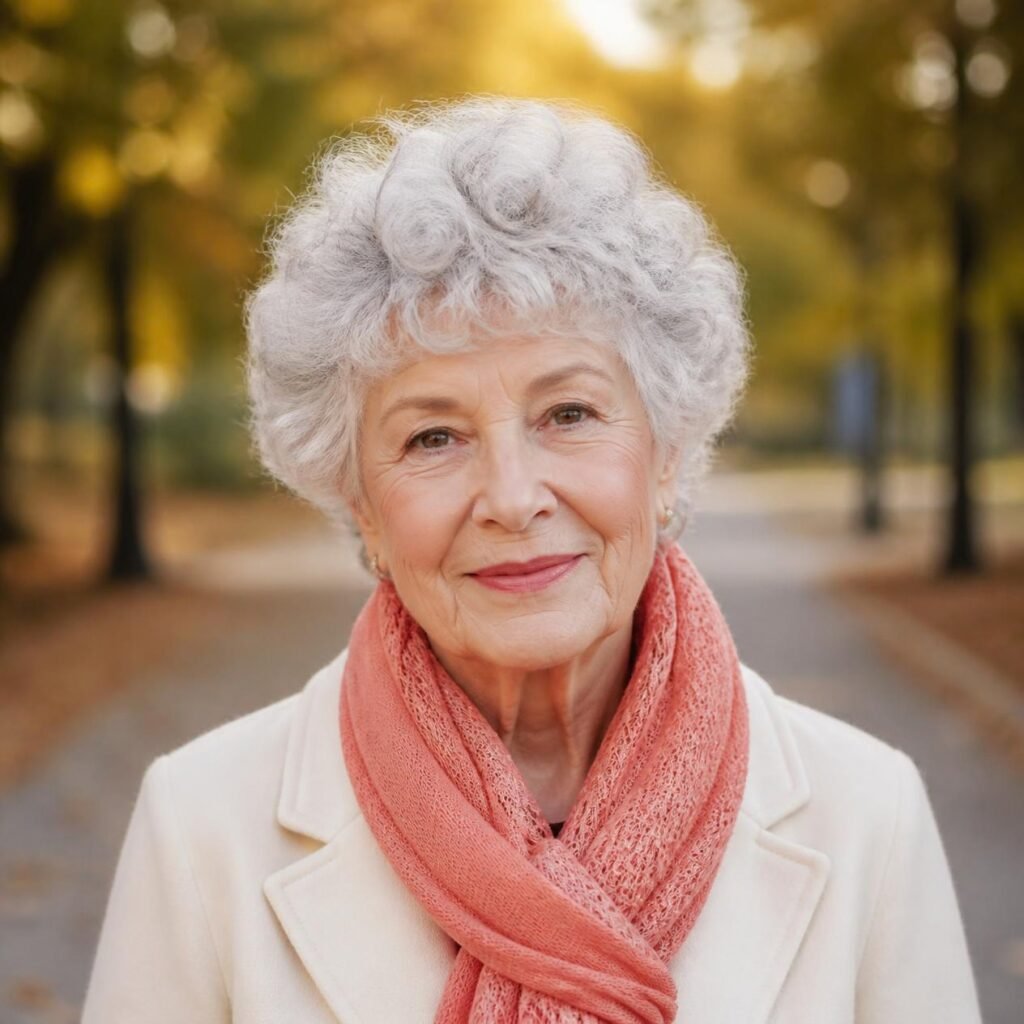
10. Wavy cropped cut
A cropped cut with some wave is simple. Short hair needs only a little mousse or soft cream to shape it. Waves give volume without teasing, so it works when your hair is fine. Have your stylist cut dry or damp so the layers follow the wave, and leave a little more length on top.
How to wear it: Mousse on damp hair, then air dry.
Best for: Wavy, fine hair that dries without a brush
11. Medium cut with a fringe
Medium length suits women over 70 because it adds movement without weight and leaves room for layers and a fringe. Think of a cut that ends between the chin and collarbone. This length can be tucked behind the ears or pinned back when it is warm, and the fringe softens the forehead. Ask your stylist to keep the layers light so the ends stay full.
How to wear it: Use a medium round brush at the roots and a clip when you want it off your face.
Best for: Women who are not ready to go short
12. Just-above-the-shoulder lob
A lob that stops above the shoulders is easier on the arms because it dries faster and needs less lifting. A long bob still gives some length for a half-up clip. Keep the ends blunt and the layers very light. A length around the shoulders avoids the wispiness that very long hair can develop. If a longer bob feels like too much, ask to go an inch shorter.
How to wear it: Part it to the side and let it dry naturally.
Best for: Women with shoulder stiffness who want to keep some length
13. Feathered shag for fine hair
A short shag with feathered layers is a good match for glasses on fine or thinning hair, since the layers add lift and the cut draws attention to the lenses and cheekbones. Avoid thinning shears on gray hair and remove bulk with layers instead. Keep the layers on top and the length around the nape.
How to wear it: Spray a light texturizer at the roots and let it be.
Best for: Fine hair and glasses
Style, color and comfort
These last five are about how you wear your hair and how you keep white and silver looking clean, which can matter as much as the cut.
14. Silver and ash blend
Ash balayage or gray blending lets silver show through with soft color, so it reads as intentional. Silver or ash balayage and subtle highlights are good ways to blend. Demipermanent color works for at-home touch-ups, but leave gray to a professional, since it can resist chemical treatment. Ask for low-ammonia formulas. A professional should apply any color near the scalp.
How to wear it: Book gloss visits between cuts.
Best for: Women with a mix of gray and color
15. Lowlights for dimension
White hair can look flat. Lowlights keep fine hair from looking flat and improve its texture, especially if you want more contrast. Lowlights add depth with a few darker strands, so hair appears thicker. Ask for a soft, hand-painted look. Mention if your scalp is sensitive so they can pick gentle formulas.
How to wear it: Ask for slightly cool tones, not warm.
Best for: Fine white hair that looks flat
Good to know
Oil glands slow with age, so many older adults can wash less often, although the right frequency depends on hair type. If your scalp is itchy, flaky or sore, or your part is widening, ask a dermatologist rather than switching shampoos repeatedly.
Care and comfort at home
Choose gentle cleansers, wash with the pads of your fingers rather than your nails, and condition the ends, not the scalp. Light fingertip pressure avoids irritating the scalp. Gray strands have lost melanin, which makes them more prone to dryness and sun damage, so a hat or scarf outdoors makes sense.
Skip scissors at home: a professional trim is safer. Ask your stylist to demonstrate a two-minute routine and to put it in writing. Mobile and in-home stylists exist in many areas, which helps if getting to a salon is hard. Do not let anyone talk you into tight styles; hair this age is fragile.
Frequently asked questions
A good haircut at this age should feel like a favor to your future self: easy to wash, easy to dry and kind to a scalp that needs gentleness. Take one of these ideas to your stylist, ask for soft lines, and let the cut do the work.