20 Hairstyles for Women Over 50
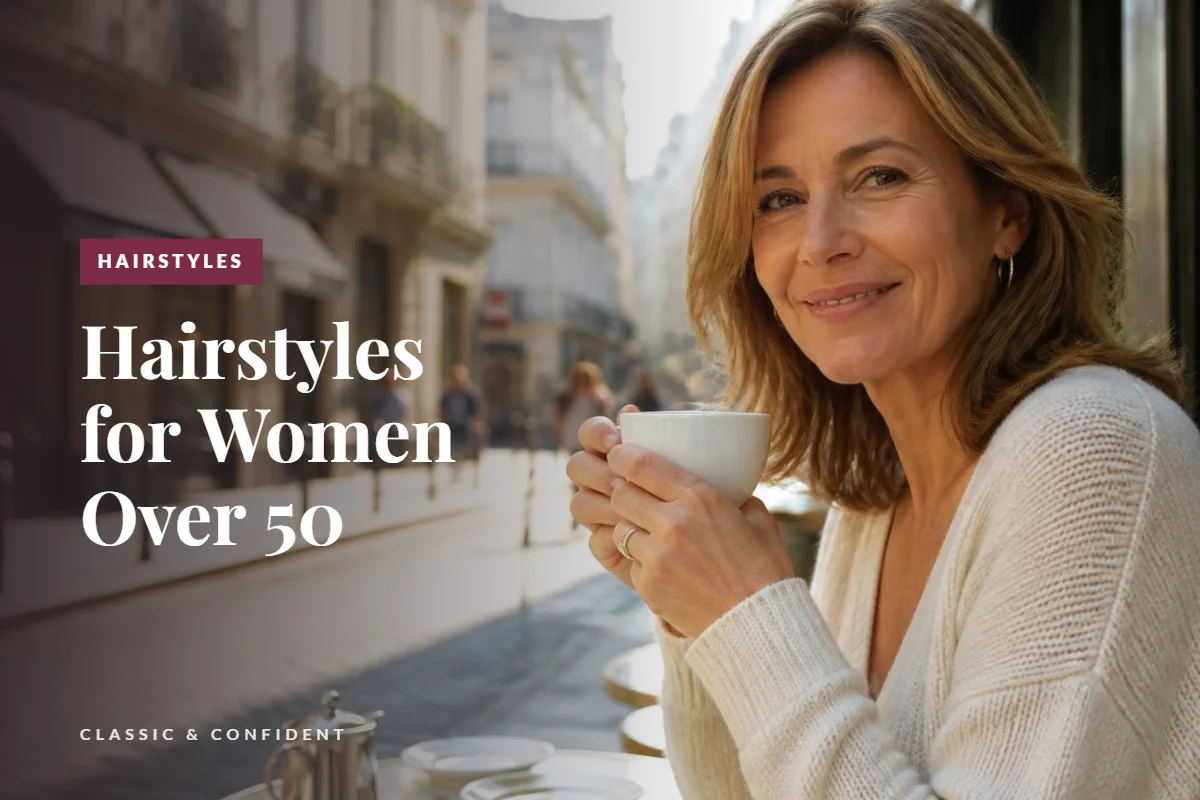
Hair changes after 50. It often gets finer, drier and a little less dense, and gray strands can feel coarser than the rest. The good news is that the right cut works with those changes instead of fighting them, and it can make your hair look fuller, softer and far more like you.
Below are 20 hairstyles for women over 50, from easy shoulder-length cuts to pixies, bobs, long layers and two special-occasion styles. For each one you will find who it suits, exactly what to say to your stylist, how to style it at home, and when to skip it.
Quick picks
- Easiest everyday cut: feathered collarbone layers (#1)
- Most volume on top: modern layered shag (#2)
- Growing out gray: grown-out silver shoulder cut (#5)
- Lowest maintenance: textured silver pixie (#7)
- Fullest-looking fine hair: blunt chin-length bob (#11)
- Keeping it long: long layers with curtain bangs (#16)
How to choose a haircut after 50
Most hair changes after 50 come down to texture and density. Strands often get finer, the hair can thin at the part or crown, and gray hair tends to be drier. That is why a cut that suited you at 40 can suddenly feel flat or frizzy. Choose the next one with these four questions in mind.
How thick is your hair now? Fine or thinning hair looks fuller with a solid outline and shorter lengths, such as a blunt bob or a cropped cut. Thick hair can carry long layers, a shag or internal layering. If fine hair is your main concern, my guide to hairstyles for fine hair over 50 goes deeper.
What is your texture? Wavy and curly hair does best with long layers that let it move. Straight hair suits clean lines, blunt edges and sleek finishes.
What is your face shape? Round faces suit length past the chin and a side part. Long faces look balanced with a fringe or width at the sides. Square jaws soften with layers around the face. Oval faces can wear almost anything.
How much time do you have? Be honest with yourself and your stylist. A wash-and-go cut you love is better than a polished one you never style.
The 20 haircuts at a glance
| Haircut | Length | Trims | Best for |
|---|---|---|---|
| Feathered collarbone layers | Collarbone | Every 8 weeks | Anyone who wants an easy, flattering everyday cut |
| Modern layered shag | Chin to shoulder | Every 6 to 8 weeks | Wavy or thick hair that needs shape and lift |
| Natural wavy shoulder cut | Shoulder | Every 8 to 10 weeks | Naturally wavy or curly hair |
| Shoulder-grazing cut with a deep side part | Just touching the shoulders | Every 6 to 8 weeks | Straight or relaxed hair and anyone who wants a polished look |
| Grown-out silver shoulder cut | Shoulder | Every 8 weeks | Women growing out their natural silver |
| Disconnected pixie | Short sides, longer top | Every 4 to 5 weeks | Confident short-hair lovers and defined features |
| Textured silver pixie | Short all over | Every 4 to 6 weeks | Silver or white hair and low-maintenance mornings |
| Bixie | Ear length, longer on top | Every 5 to 6 weeks | Women moving from a bob to shorter hair |
| Pixie shag | Short with wispy edges | Every 5 to 6 weeks | Hair with some natural body and an easygoing style |
| Cropped cut with a soft fringe | Short at the back, fringe at the brows | Every 5 to 6 weeks | Longer faces and anyone who likes a fringe |
| Blunt chin-length bob | Chin | Every 5 to 6 weeks | Fine or straight hair that needs to look fuller |
| Wavy blonde bob | Jaw to chin | Every 6 to 8 weeks | Medium hair and anyone who likes an easy, beachy look |
| A-line bob | Short at the nape, chin at the front | Every 5 to 6 weeks | Thick or medium hair and round faces |
| French bob with a fringe | Cheekbone to jaw | Every 6 weeks, fringe every 3 to 4 | Anyone who wants a chic short cut with personality |
| Soft collarbone lob | Collarbone | Every 8 weeks | Women who want to keep some length |
| Long layers with curtain bangs | Below the shoulders | Every 8 to 10 weeks | Thick, healthy long hair |
| Glossy one-length hair | Below the shoulders | Every 8 to 10 weeks | Healthy, thick hair and a classic look |
| Long hair with weight-reducing layers | Below the shoulders | Every 8 to 10 weeks | Thick, heavy long hair |
| Half-up with soft curls | Shoulder length or longer | As usual for your cut | Special occasions and longer hair |
| Low chignon bun | Shoulder length or longer | As usual for your cut | Special events and long hair |
One honest note: if your part has widened or you are losing more hair than usual, a good cut can only disguise it. It is worth mentioning to your doctor, because thinning can have causes that are easy to check.
Layered, shaggy and shoulder-length cuts
Shoulder length is where many women land after 50. It is long enough to feel feminine and short enough to keep its shape without much effort.
1. Feathered collarbone layers

If you want one cut that works for most women over 50, start here. The length sits at the collarbone, long enough to feel feminine and short enough to keep its shape, and soft feathered layers around the face lift the cheekbones and catch the light. Because the layers start at the chin rather than the crown, the ends keep enough weight to look full.
- Length: collarbone
- Trims: every 8 weeks
- Styling time: about 10 minutes
- Face shapes: oval, round, square
Ask your stylist for: “A collarbone-length cut with soft, feathered layers starting at my chin. Keep the ends fairly full and blend the front pieces into the rest.”
How to style it: Rough-dry until your hair is mostly dry, then use a large round brush on the front sections, rolling them back and away from your face. A light mist of texture spray through the lengths keeps the feathering from going flat by lunchtime.
Skip it if your hair is very fine all the way through. Feathering can leave the ends looking thin, so ask for fewer layers.
Best for: anyone who wants an easy, flattering everyday cut
2. Modern layered shag
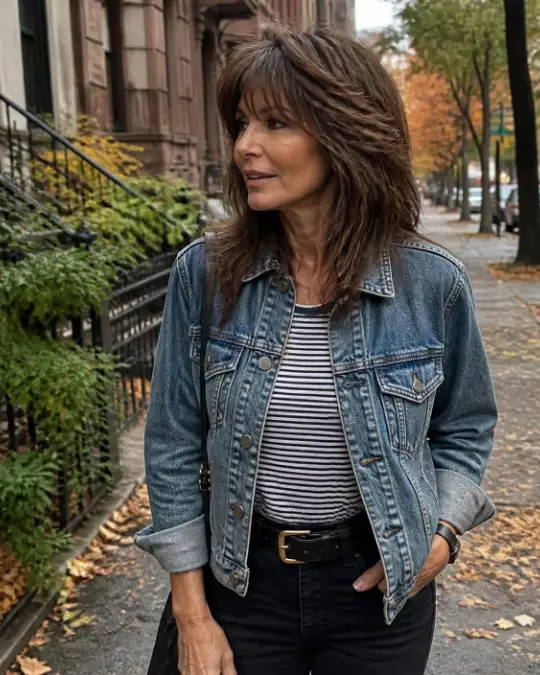
The modern shag is softer than the choppy shags of the 70s. Layers run around the crown and face, the ends are lightly textured, and a curtain fringe ties it all together. It builds volume at the top of the head, which is exactly where hair tends to flatten after 50, and it looks better a little undone.
- Length: chin to shoulder
- Trims: every 6 to 8 weeks
- Styling time: 5 to 10 minutes
- Face shapes: oval, long, square
Ask your stylist for: “A soft modern shag with layers around the crown and face and a curtain fringe. Texture the ends lightly, and keep enough weight at the bottom so it does not look thin.”
How to style it: Scrunch a light mousse or curl cream into damp hair and let it air-dry or use a diffuser. Once dry, twist two or three face-framing pieces around a curling iron and shake them out with your fingers.
Skip it if your hair is very straight and very fine. A shag needs some texture to hold its shape.
Best for: wavy or thick hair that needs shape and lift
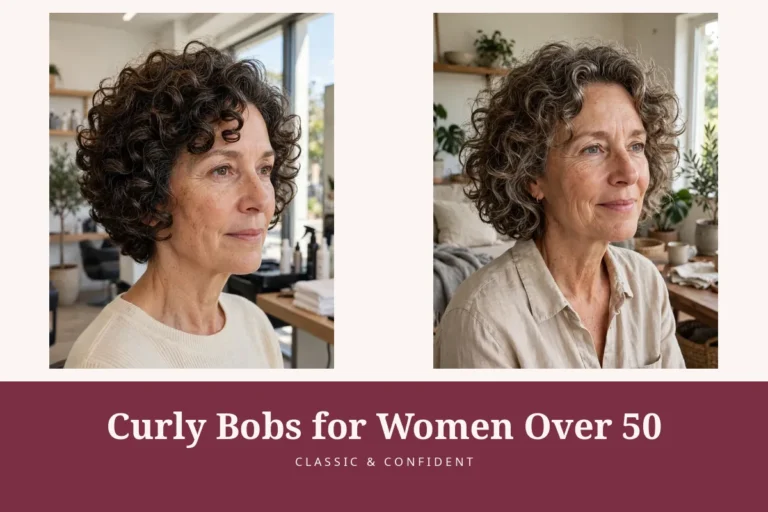
3. Natural wavy shoulder cut
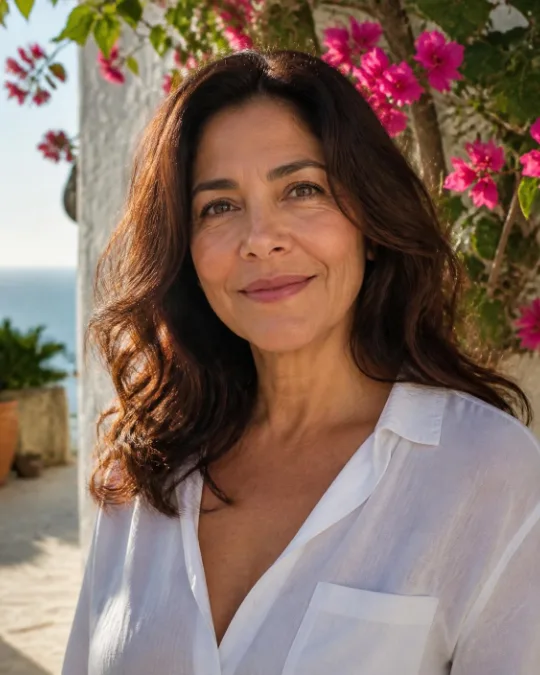
If your hair has natural movement, this cut lets it do the work. It sits at the shoulders with long, invisible layers that let each wave spring into place instead of being weighed down. The result looks relaxed and expensive, and it grows out gracefully between appointments.
- Length: shoulder
- Trims: every 8 to 10 weeks
- Styling time: about 5 minutes
- Face shapes: most shapes
Ask your stylist for: “A shoulder-length cut with long, invisible layers that follow my natural wave. Please cut it dry or check the shape once it is dry, so the waves sit evenly.”
How to style it: Apply a leave-in cream to soaking-wet hair, scrunch gently and leave it alone while it dries. Refresh the next morning with a spritz of water and a little more cream on the ends.
Skip it if your hair is straight. You will spend a lot of time creating waves this cut expects you to have.
Best for: naturally wavy or curly hair
4. Shoulder-grazing cut with a deep side part

A simple, polished cut that just touches the shoulders, worn with a deep side part. The part does more than you would think: it lifts the roots on one side, adds instant volume and softens a high forehead. It is an easy cut to wear to the office, to dinner and everywhere in between.
- Length: just touching the shoulders
- Trims: every 6 to 8 weeks
- Styling time: about 10 minutes
- Face shapes: round, square, heart
Ask your stylist for: “A shoulder-grazing cut with a solid outline and a few long layers at the front, designed to be worn with a deep side part.”
How to style it: Blow-dry your roots in the opposite direction to your part, then flip the part into place for lift. Smooth the lengths with a paddle brush and bend the ends slightly under or out.
Skip it if you have a strong cowlick that will not sit to one side.
Best for: straight or relaxed hair and anyone who wants a polished look
5. Grown-out silver shoulder cut
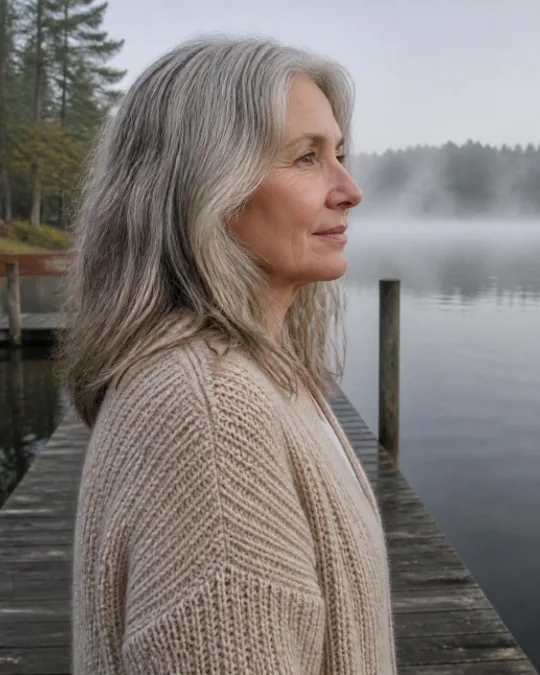
Going gray is easier with the right length. This cut keeps silver hair at the shoulders so it has enough weight to look sleek, with a few long layers so it does not look heavy. Silver hair can feel coarser, so the shape relies on a clean outline and good moisture rather than lots of layers.
- Length: shoulder
- Trims: every 8 weeks
- Styling time: about 10 minutes
- Face shapes: most shapes
Ask your stylist for: “A shoulder-length cut with a clean outline and a few long layers to keep my silver hair from looking heavy. Please trim any dry or yellowed ends.”
How to style it: Use a hydrating mask once a week and a purple shampoo every few washes to keep the silver bright. Finish with a drop of light oil on the ends for shine.
Skip it if your gray is coming in very wiry and you dislike frizz. A shorter cut is easier to control.
Best for: women growing out their natural silver
Short and pixie cuts
Short hair has less weight pulling it down, so it often looks fuller and lifts the face. These five range from bold to soft. For more ideas, see my short haircuts for fine hair over 50.
6. Disconnected pixie
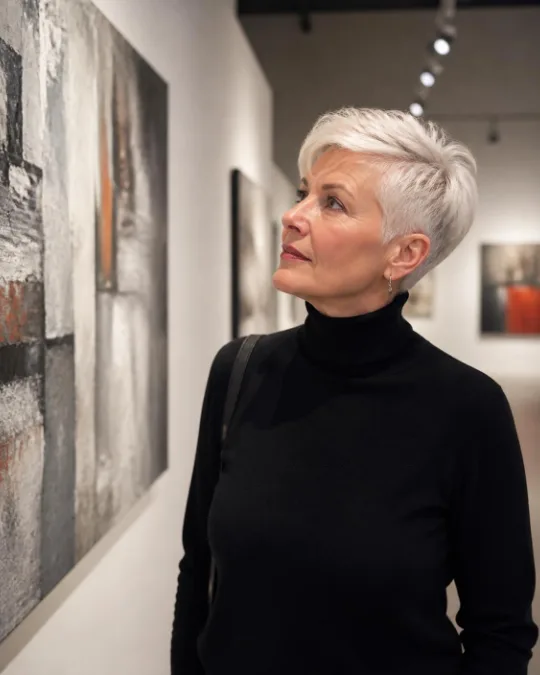
A disconnected pixie keeps the sides and back very short and leaves noticeably more length on top, so there is a clear contrast between the two. It looks modern and confident, and the longer top can be swept to the side, pushed back or roughed up for texture.
- Length: short sides, longer top
- Trims: every 4 to 5 weeks
- Styling time: about 5 minutes
- Face shapes: oval, heart, defined jaws
Ask your stylist for: “A disconnected pixie: short, clean sides and nape, with three to four inches left on top. I want to be able to sweep the top to one side.”
How to style it: Work a pea-sized amount of paste through dry hair, then push the top to one side or forward. For a sleeker look, blow-dry the top with a small brush and smooth the sides flat.
Skip it if you do not like the look of very short sides or the trim schedule that keeps them neat.
Best for: confident short-hair lovers and defined features
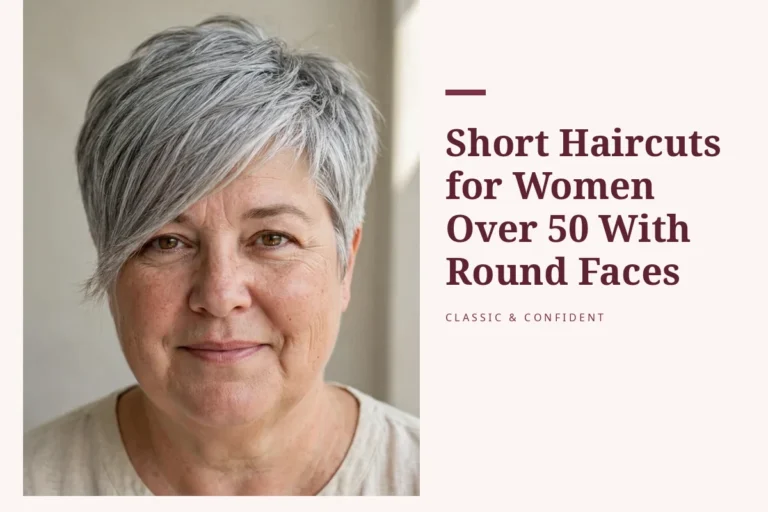
7. Textured silver pixie
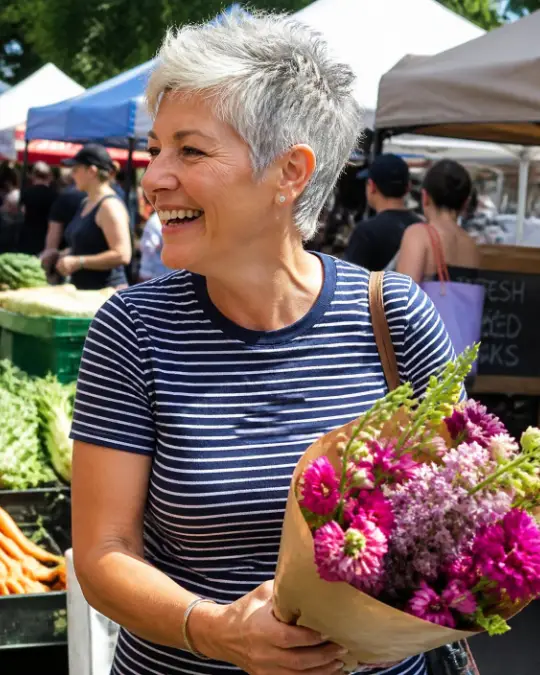
Silver hair and a pixie are a natural pair. The short length shows off the color, the texture adds movement, and the cut takes a lot of the effort out of looking put together. Choppy, piece-y layers on top make silver hair look intentional rather than overgrown.
- Length: short all over
- Trims: every 4 to 6 weeks
- Styling time: about 5 minutes
- Face shapes: oval, heart, round with height on top
Ask your stylist for: “A textured pixie with piece-y layers on top and soft edges around the ears. Please point cut so it looks soft, not blunt.”
How to style it: Rub a little matte paste between your fingers and pinch random pieces on top for texture. A purple shampoo once a week keeps the silver from turning yellow.
Skip it if you want a style you can tie back on hot days.
Best for: silver or white hair and low-maintenance mornings
8. Bixie
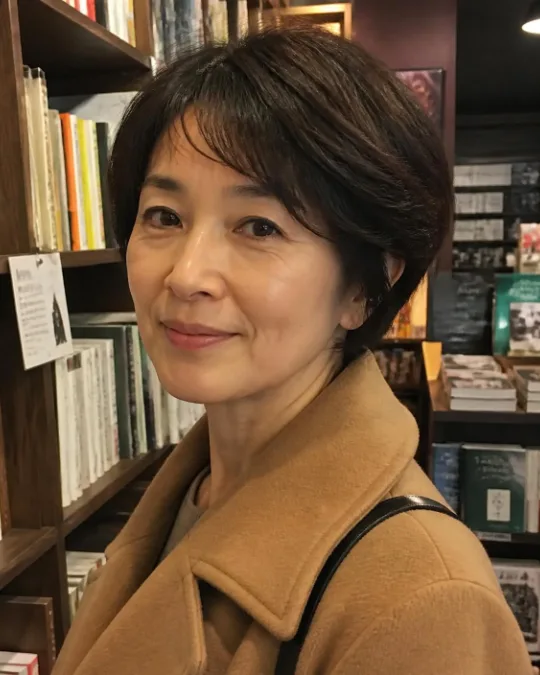
The bixie sits between a bob and a pixie. It is short at the back with more length around the ears and on top, so it feels softer than a pixie and lighter than a bob. It is a good choice if you want to try short hair but are not ready to go all the way.
- Length: ear length, longer on top
- Trims: every 5 to 6 weeks
- Styling time: about 5 minutes
- Face shapes: oval, heart, petite features
Ask your stylist for: “A bixie: tapered at the nape, more length around my ears and on top, with soft, slightly piece-y edges.”
How to style it: Blow-dry with your fingers, lifting at the crown, then use a little cream to define the pieces around your face. Tuck one side behind your ear for a different look.
Skip it if your hair is very thick and puffs out at the sides when it is short.
Best for: women moving from a bob to shorter hair
9. Pixie shag
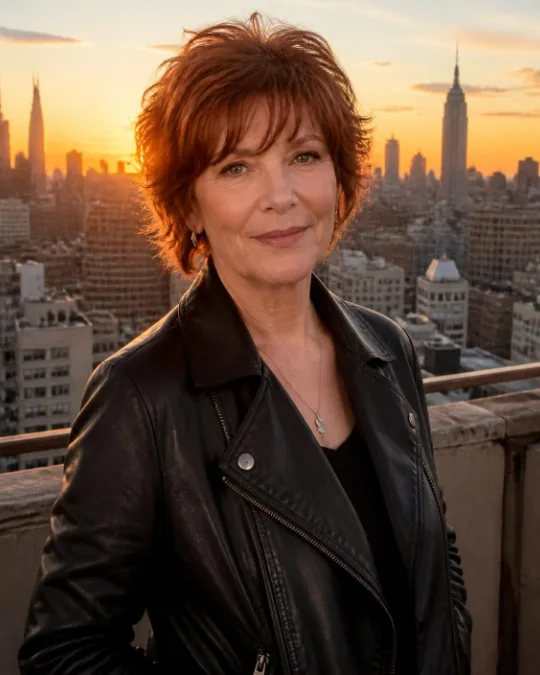
The pixie shag adds shaggy, feathered layers to a short pixie length, with wispy pieces around the face and neck. It gives you more movement and edge than a classic pixie and suits hair with a bit of natural wave or body.
- Length: short with wispy edges
- Trims: every 5 to 6 weeks
- Styling time: 5 to 10 minutes
- Face shapes: oval, long, square
Ask your stylist for: “A pixie shag with feathered layers on top, wispy pieces at the nape and around my ears, and a soft fringe.”
How to style it: Use a sea salt spray or texturizing mousse on damp hair, rough-dry with your fingers and twist a few pieces as they dry. Finish with a light texture spray.
Skip it if you prefer a neat, polished finish every day.
Best for: hair with some natural body and an easygoing style
10. Cropped cut with a soft fringe

A cropped cut with a soft, side-swept fringe is one of the most flattering short styles for women over 50. The fringe draws attention to your eyes and softens forehead lines, while the cropped back keeps the shape neat and easy.
- Length: short at the back, fringe at the brows
- Trims: every 5 to 6 weeks
- Styling time: about 5 minutes
- Face shapes: long, oval, heart
Ask your stylist for: “A cropped cut, short and soft at the back, with a longer side-swept fringe that falls around my brows.”
How to style it: Blow-dry the fringe first, brushing it across in the direction you want it to fall. Add a little cream to the back and press it into shape with your hands.
Skip it if you have a strong cowlick at the front hairline.
Best for: longer faces and anyone who likes a fringe
Bobs and lobs
A bob is the cut stylists reach for most often after 50, because a solid outline makes hair look thicker. If your hair is fine, my guide to bobs for fine or thin hair has ten more.
11. Blunt chin-length bob
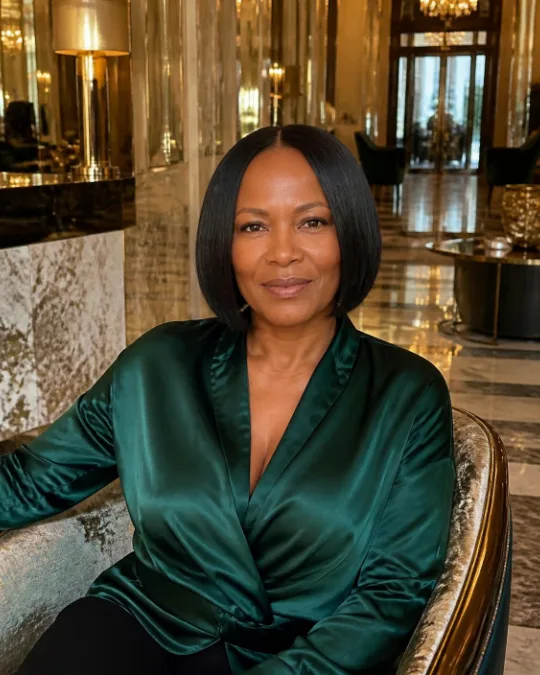
A blunt chin-length bob is crisp, modern and makes hair look thicker. Every strand ends at the same line, so the bottom edge looks solid and full. It frames the jaw and works especially well on straight or relaxed hair.
- Length: chin
- Trims: every 5 to 6 weeks
- Styling time: about 10 minutes
- Face shapes: oval, heart, long
Ask your stylist for: “A one-length bob at my chin, cut blunt with scissors, with no thinning or texturizing.”
How to style it: Blow-dry with a paddle brush for a smooth finish, or a round brush to curve the ends slightly under. A smoothing serum on the ends keeps the line sharp.
Skip it if your hair has a strong wave. The blunt line can look uneven.
Best for: fine or straight hair that needs to look fuller
12. Wavy blonde bob
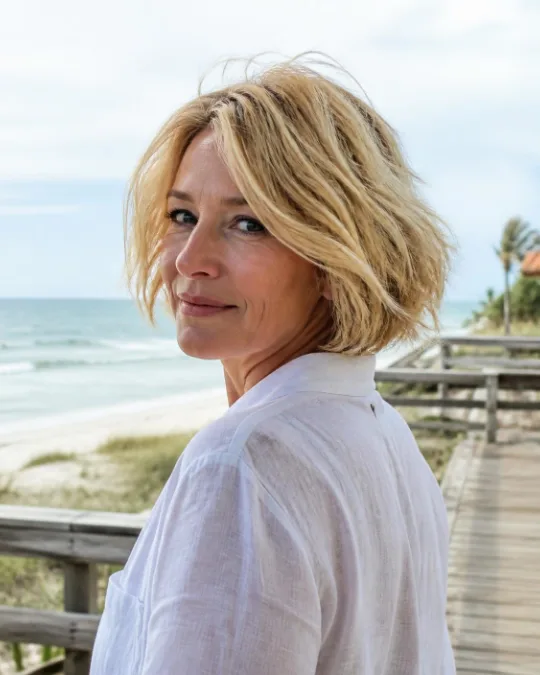
A soft, wavy bob in a warm blonde looks fresh and relaxed. The waves add volume and hide any thinner patches, and the bob length keeps the shape tidy. It is a great choice if you want a beachy feel without the upkeep of long hair.
- Length: jaw to chin
- Trims: every 6 to 8 weeks
- Styling time: about 10 minutes
- Face shapes: round, square, oval
Ask your stylist for: “A bob between my jaw and chin with a few soft layers to let the waves move. Keep the outline fairly solid.”
How to style it: Wave the mid-lengths with a 1-inch curling iron, alternating directions and leaving the ends straight. Shake the waves out with your fingers and finish with a texture spray.
Skip it if you prefer a sleek look. This cut is meant to be worn tousled.
Best for: medium hair and anyone who likes an easy, beachy look
13. A-line bob
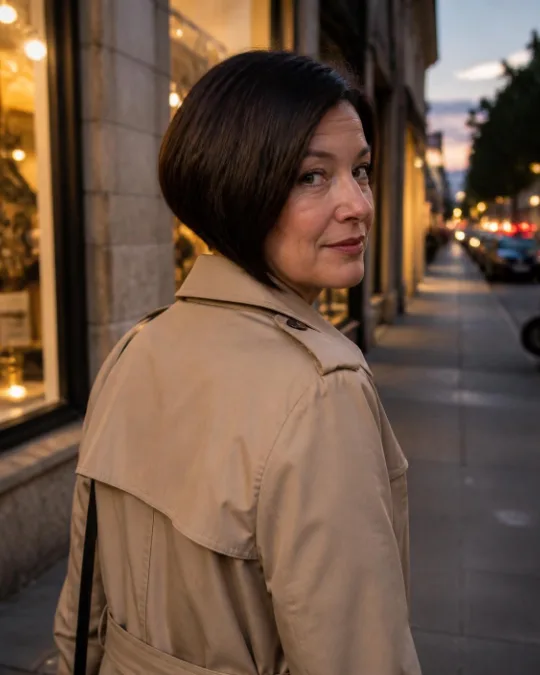
An A-line bob is shorter at the back and gradually longer toward the front. The angle creates a clean line that draws the eye toward the face and jaw, and the shorter back adds lift at the crown.
- Length: short at the nape, chin at the front
- Trims: every 5 to 6 weeks
- Styling time: about 10 minutes
- Face shapes: round, oval, heart
Ask your stylist for: “An A-line bob with a gentle angle, shorter at the nape and reaching my chin at the front. Keep the angle soft, not dramatic.”
How to style it: Blow-dry the back with a round brush for lift, then smooth the front pieces forward and slightly under. A flat iron on the front pieces keeps the angle crisp.
Skip it if your hair is very fine at the front. A steep angle can make it look thin.
Best for: thick or medium hair and round faces
14. French bob with a fringe

The French bob is short, chic and a little undone. It usually sits around the cheekbone or jaw, with a fringe that grazes the brows. It is a flattering, easy cut with a lot of personality, and it looks good with very little styling.
- Length: cheekbone to jaw
- Trims: every 6 weeks, fringe every 3 to 4
- Styling time: about 5 minutes
- Face shapes: oval, long, heart
Ask your stylist for: “A French bob between my cheekbone and jaw with a soft fringe that grazes my brows, and a slightly undone edge.”
How to style it: Dry the fringe first with a flat brush, side to side. Let the rest air-dry with a little texturizing cream for that relaxed, lived-in finish.
Skip it if you do not want to keep up with fringe trims.
Best for: anyone who wants a chic short cut with personality
15. Soft collarbone lob

A lob is simply a long bob, and this soft version sits at the collarbone with long, blended layers. It is a gentle middle ground between short and long hair, easy to tie back and flattering on almost everyone.
- Length: collarbone
- Trims: every 8 weeks
- Styling time: about 10 minutes
- Face shapes: round, square, oval
Ask your stylist for: “A lob at my collarbone with long, blended layers and a solid bottom line.”
How to style it: Blow-dry with a large round brush for a smooth finish, or add loose waves through the mid-lengths with a curling iron for a softer look.
Skip it if your ends look thin at this length. Go a little shorter instead.
Best for: women who want to keep some length
Long hair, if you love it
There is no rule that says hair must be short after 50. Long hair looks great when it is healthy and shaped with care.
16. Long layers with curtain bangs

Long hair can absolutely work after 50, especially with long layers and curtain bangs. The layers add movement and keep long hair from looking heavy, and the curtain bangs frame the face and soften the look.
- Length: below the shoulders
- Trims: every 8 to 10 weeks
- Styling time: about 15 minutes
- Face shapes: oval, long, square
Ask your stylist for: “Long layers starting around my chin and curtain bangs that start just below my brows and blend into the layers.”
How to style it: Blow-dry the bangs first with a small round brush, rolling each side away from your face. Then smooth the lengths with a large round brush, bending the ends slightly.
Skip it if your hair is very fine at the ends. Long layers will make it look thinner.
Best for: thick, healthy long hair
17. Glossy one-length hair
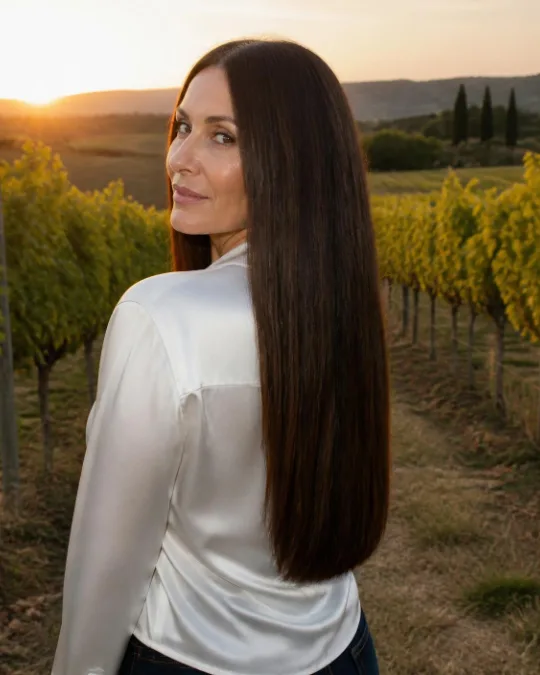
One-length long hair looks sleek and polished when it is healthy and glossy. With no layers, the ends stay full and the whole look is classic and elegant. The key is regular trims and plenty of moisture.
- Length: below the shoulders
- Trims: every 8 to 10 weeks
- Styling time: about 10 minutes
- Face shapes: oval, heart, round with a middle part
Ask your stylist for: “A one-length cut below my shoulders with a clean, blunt bottom line. Please trim any split ends but keep the length.”
How to style it: Blow-dry with a paddle brush, pointing the nozzle down the hair for shine. Finish with a drop of light oil on the ends, never at the roots.
Skip it if your hair is thin from the crown down. One length can make it look flat.
Best for: healthy, thick hair and a classic look
18. Long hair with weight-reducing layers
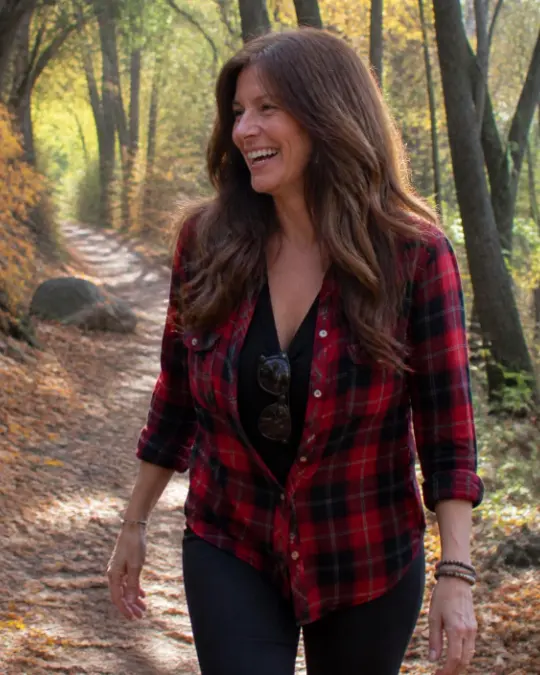
If your long hair is thick and heavy, internal layers can take out bulk without making it look choppy. The hair falls more freely, moves better and feels lighter, and it is easier to style each day.
- Length: below the shoulders
- Trims: every 8 to 10 weeks
- Styling time: about 15 minutes
- Face shapes: most shapes
Ask your stylist for: “Long layers with some internal weight removed so my hair moves more, but keep the outline full and soft.”
How to style it: Air-dry with a light leave-in cream, or blow-dry with a round brush for volume. Loose waves through the mid-lengths show off the movement.
Skip it if your hair is already fine. Removing weight will make it look thinner.
Best for: thick, heavy long hair
Styles for special occasions
Two easy ways to wear longer hair for weddings, parties and evenings out.
19. Half-up with soft curls
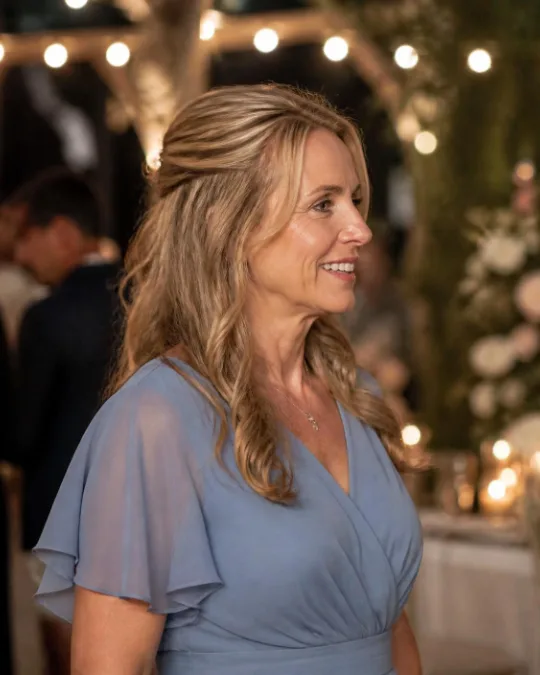
A half-up style with soft curls is a pretty, romantic look for weddings, parties and special dinners. Pulling the top half back lifts the face, while soft curls through the lengths add movement and fullness.
- Length: shoulder length or longer
- Trims: as usual for your cut
- Styling time: about 20 minutes
- Face shapes: most shapes
Ask your stylist for: “No special cut needed. If you are booking a stylist, ask for soft curls through the lengths and a loose half-up section secured at the crown.”
How to style it: Curl the lengths with a 1.25-inch iron, then pull back the top section loosely and secure it with a clip or small elastic. Gently tug a few pieces at the crown for volume.
Skip it if your hair is shorter than your shoulders. There may not be enough length to hold the curls.
Best for: special occasions and longer hair
20. Low chignon bun
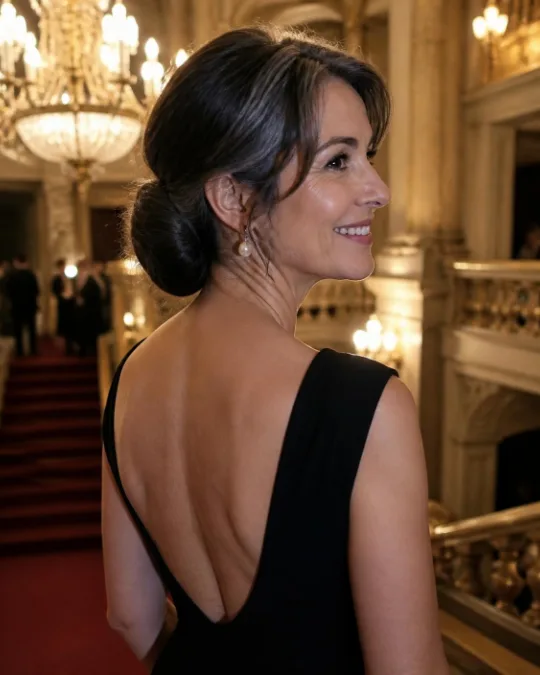
A low chignon is timeless and elegant. The bun sits at the nape, keeps hair off your face and works for weddings, evening events or simply a polished day at the office. It is a lovely way to wear long hair when you want it neat.
- Length: shoulder length or longer
- Trims: as usual for your cut
- Styling time: about 10 minutes
- Face shapes: oval, heart, defined features
Ask your stylist for: “No special cut needed. If you want a stylist to do it, ask for a low, soft chignon with a few loose pieces around the face.”
How to style it: Gather your hair at the nape, twist it into a coil and pin it in place. Pull out a few soft pieces around the face, and finish with a light hairspray.
Skip it if your hair is very short or heavily layered. The bun may not hold.
Best for: special events and long hair
Good to know
Bring two or three photos to your appointment, including one from the side or back, and point out exactly what you like about each. Mention how much time you spend on your hair in the morning, and ask how the cut will look as it grows out over six to eight weeks.
What to say at the salon
- Describe your hair as it is now, not how it was ten years ago: fine, thick, wavy, dry or thinning.
- Say where the length should sit: jaw, chin, collarbone or shoulders.
- Ask where the layers will start. Layers that start too high can remove the weight fine hair needs.
- Ask for point cutting instead of a razor if your hair is fine. Razor ends can look wispy.
- Ask how to style it at home and which one product you need.
A simple routine for fuller-looking hair
- Use a lightweight shampoo and keep conditioner on the mid-lengths and ends.
- Spray a root lifter or a little mousse into damp roots.
- Rough-dry until your hair is about 80 percent dry, then finish with a round brush.
- Change your part now and then. Hair lifts more where it has not been lying flat.
- Finish with a light texture spray instead of heavy serums or oils.
If you color your hair, a shade close to your natural color with a few soft highlights or lowlights tends to look fresher than one flat color. And if you are going gray, a purple shampoo once a week keeps silver from turning yellow. For decade-specific ideas, see my guides to hairstyles for women over 60 and hairstyles for women over 70.
The bottom line
If you are not sure where to start, book feathered collarbone layers or a soft collarbone lob. Both suit most face shapes and hair types and are easy to adjust later, shorter, longer or with a fringe. Save this guide to your hair board so you have the photos and the exact wording ready for your next appointment.