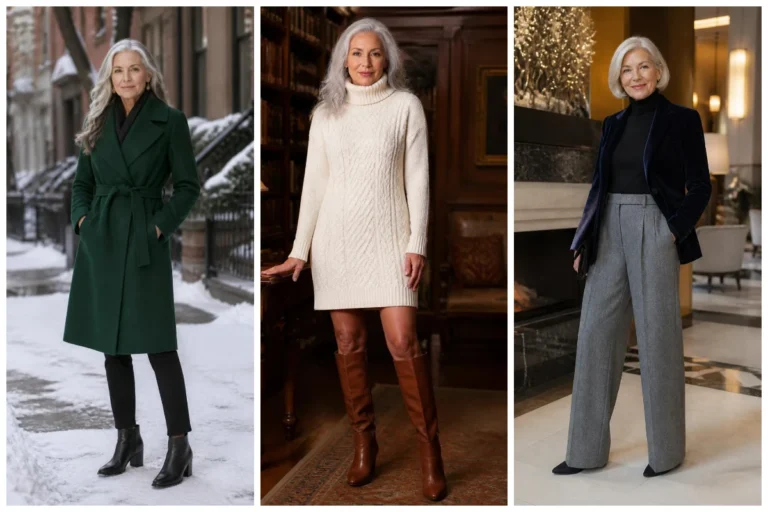
10 Casual Winter Outfits for Women Over 60
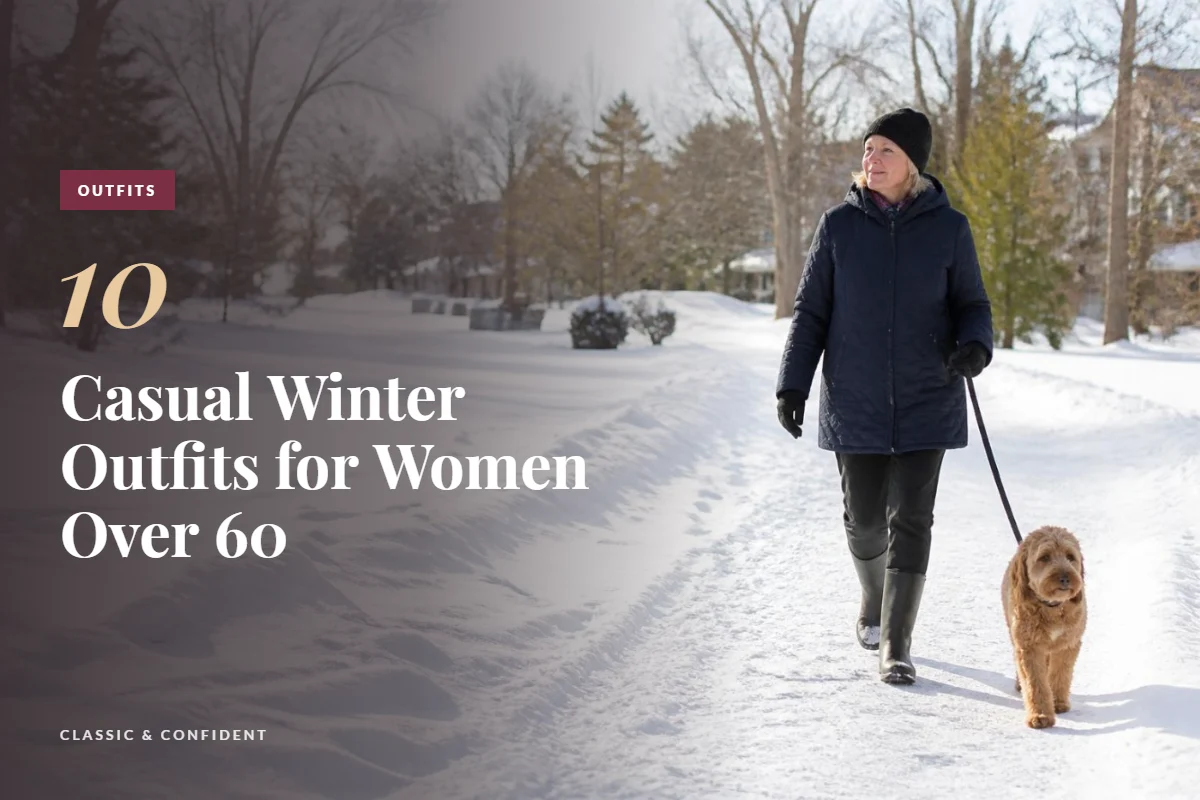
The best casual winter outfits for women over 60 do three jobs at once: they keep you warm, they are easy to get into and out of, and they help you stay steady on cold, slippery ground. Style matters too, but a coat that is hard to zip or a boot with a slick sole is not a bargain at any age.
These 10 outfits are built around real days: walking, errands, time with the grandchildren and getting through an airport. I kept the focus on warmth, grip and comfort, and I have kept every health point hedged. I am not a doctor, so please treat anything about falls, circulation or feeling cold as a prompt to talk with your own clinician.
How to choose winter outfits for over 60 women who want comfort first
Start with a simple layering system: a moisture-wicking base in wool or synthetic, a fleece or thin down middle, and a water- and wind-resistant shell. Merino is soft and resists odor, cotton holds damp and cools you down, and thin layers can be added or removed as you move between a cold street and a warm shop. Fitted long-sleeve bases also lie flatter than boxy tees.
Footwear deserves the most attention. Falls are a leading cause of injury death for adults 65 and older and are not an inevitable part of aging. Avoid high heels, loose slippers and smooth-soled shoes, and favor snug, sturdy, flat shoes with grippy soles. Look for rubber soles with good tread, a low broad heel and ankle support, plus a backpack or cross-body bag so your hands stay free.
If you feel cold more than others do, there may be a reason. Anemia, an underactive thyroid and poor circulation are possible causes, so see a doctor if the chill is sudden, severe or comes with tingling or fatigue. For cold, numb fingers and toes, layers, gloves and thick socks help. None of this replaces a medical check, but good clothing can make winter more comfortable while you find out.
Walking and errands
1. Lugged-sole waterproof boots with wool socks
For walking, the sole matters more than the style. Look for slip-resistant rubber soles, grippy tread, a low broad heel and good ankle support. Ideal tread is like a snow tire, with deep grooves. Choose a mid-calf boot that zips or laces easily, insulated and waterproof, and pair it with wool or synthetic socks, which stay warmer than cotton when damp.
How to wear it: Buy boots in the afternoon when feet are slightly larger, and test them with your thickest socks.
Best for: Daily walks and wet sidewalks
2. Hip-length quilted jacket and a cross-body bag
A quilted or lightly insulated jacket that ends at the hip is easy to move in and does not catch on car doors or stair rails. On icy days, keep your hands free by using a backpack or cross-body bag rather than carrying loads in your arms. Choose a jacket with zip pockets for keys and phone, and a bag that sits flat against your side.
How to wear it: Put heavy items in the cross-body bag, and keep one hand free for a rail.
Best for: Grocery runs and pharmacy trips
3. Fleece-lined stretch pants with a thermal henley
Fleece-lined stretch pants give you the warmth of tights with the look of trousers. Pair them with a thin thermal henley or long-sleeve top in a soft knit, which can be worn alone indoors. The stretch waist and straight leg are easy to pull on, and a slight bootcut lets you fit the pants over thicker socks without bunching at the ankle.
How to wear it: Choose a tunic-length top over the pants so the lower back stays covered when you bend.
Best for: Cold-weather walks and low-key days
4. Base layer, fleece mid layer and shell for brisk walks
Wear a moisture-wicking base, a fleece or thin down middle layer and a water- and wind-resistant outer shell, so you can adjust as you warm up. This is the walking outfit in its plainest form. Choose a zip fleece that opens at the neck and a shell with a hood. The look is sporty rather than polished, and every layer comes off in seconds.
How to wear it: Unzip rather than strip when you start to overheat, and stop to retie scarves in a safe, dry spot.
Best for: Exercise walks and bracing mornings
5. Wool-blend car coat with big pockets
A zip-through car coat in a wool blend ends near the hip or upper thigh, keeps your backside warm and has deep pockets for gloves, tissues and keys. Look for a stand collar that closes against wind and a front zip with a large pull tab. Because it is structured, it looks tidy over jeans for appointments, too. Choose a length that clears the seat when you slide into the car.
How to wear it: Look for a lining that is smooth, so the coat slides on easily over a sweater.
Best for: Errands that include appointments
Time with the grandchildren
6. Long cardigan with pockets over a turtleneck
A long open cardigan in a medium-weight knit gives a layer you can slip on without pulling anything over your head, which is a plus if shoulders are stiff. Deep pockets hold tissues and small toys. Turtlenecks, mock necks or funnel necks beat open necklines at closing gaps for anyone who feels the cold. Choose a washable wool blend.
How to wear it: Wear a fitted turtleneck underneath, and keep the cardigan to hip or upper-thigh length.
Best for: Family dinners and home visits
7. Leggings under a tunic sweater
Opaque leggings in a warm knit or wool blend under a long tunic sweater make a dress-like outfit with the comfort of pajamas. Choose a tunic that falls to mid-thigh so there is no risk of an exposed seat, and a soft rib or fine-gauge knit so it is not scratchy. Tall socks tucked over the leggings keep ankles warm.
How to wear it: Add a long scarf for outdoors, and swap leggings for lined trousers for cold school pickups.
Best for: Cozy afternoons with children at home
Travel days and long outings
8. Coat or cardigan with large buttons or zips
Fiddly fastenings are a daily annoyance if your fingers are stiff or cold. Large flat buttons, magnetic closures, zips with a big pull tab or toggles are easier to use with gloves. Try the closure on in the store with your gloves on. A coat that fastens quickly is more likely to be worn properly, which keeps the chill out.
How to wear it: Ask a tailor to swap tiny buttons for larger ones if you love the coat but not the fastening.
Best for: Women with stiff or arthritic fingers
Warmth, grip and visibility details
9. Slip-on ice grippers on your boots
Ice grippers or cleats add extra traction on very icy days. They can be slippery on smooth indoor floors, so take them off the moment you go inside. Choose a pair that fits snugly over your boots, and test them on a safe patch before heading out. They are meant for walking only; do not drive in them.
How to wear it: Keep a small pouch in your bag to stow them when you reach the door.
Best for: Icy driveways and frozen paths
10. Reflective details and a bright coat for dusk
Reflective materials make you easier to see in winter. Early dark means dusk walks are common, so choose a coat in a bright color with reflective piping, or add a reflective strip to your bag. You can look stylish and still be visible: think cranberry, teal or cobalt rather than neon. Better visibility helps drivers and cyclists notice you.
How to wear it: Choose a hat in the same bright tone as the coat for a coordinated look.
Best for: Early darkness and evening walks
Good to know
Regular activity such as walking, strength work or tai chi can improve strength and balance, and it is worth asking your clinician about medications that may raise fall risk. A clinician can also help you assess your own risk of falling.
Choosing pieces that are easy to live with
A few practical rules, which come from common sense. Try a coat on with gloves and your biggest sweater, then raise your arms and bend forward to be sure it does not pull. Choose fabrics you can wash at home, and pick one or two colors that coordinate so getting dressed in a cold house takes no thought.
Layers that open at the front are easier than pullovers if your shoulders are stiff. Keep one warm hat, one pair of liner gloves and one scarf beside the door, so you can leave without hunting for them.
Frequently asked questions
Comfort and safety are not the opposite of style, they are the base for it. A boot with real grip, a coat that zips easily and layers you can peel off will do more for your winter than any single trend. Pick the outfits that match your week and leave the rest.