15 Dresses for Women Over 50
Older women dresses succeed or fail on three details: the shape, the sleeve and where the hem lands. Get those right and a dress is the easiest outfit in your closet, because everything is decided in one piece. I sorted 15 styles by what each one does for different figures.
You will find wrap, fit-and-flare, shirt, shift, A-line, empire, knit, slip and maxi dresses, followed by occasion dresses for weddings and formal evenings. Each entry explains the shape, the fabric to look for, and how to wear or tailor it. Consider it a guide to over 50 womens fashion dresses without the guesswork.
Older women dresses: how to match shape, sleeve and hem to you
Match the shape to where you want attention. Fit-and-flare flatters the tummy, a wrap skims the figure and highlights the waist, shirt dresses suit most body types, and a boat neckline with a gathered skirt balances a pear shape. A-line styles with a seam under the bust are flattering on a smaller bust.
Sleeves are worth choosing on purpose. Full sleeves with cuffs, sleeves that end just above the elbow for upper-arm coverage, and gathered or blouson sleeves all help balance a fuller upper arm. Show only one area at a time, such as legs, shoulders or neckline, and using sheer or lace sleeves to reveal and conceal.
Hem length changes the whole look. I recommend skirts and dresses at or slightly above the knee, with flowy dresses at mid-calf. Midi and maxi lengths are easier to move in and need no tights, and midis also let you cross your legs at work without pulling the hem. Work out where the hem sits before you buy.
Fabric does the shaping. Viscose gives drape over curves, cotton jersey suits warm weather and stretch with a little elastane contours. Choose structured fabrics such as cotton, linen or sturdy viscose blends for work dresses so they keep their shape. A tailor can adjust shoulders, hems and sleeve length.
Wrap and waist-defining dresses
If you like some shape at the waist without a tight fit, start here.
1. Midi jersey wrap dress
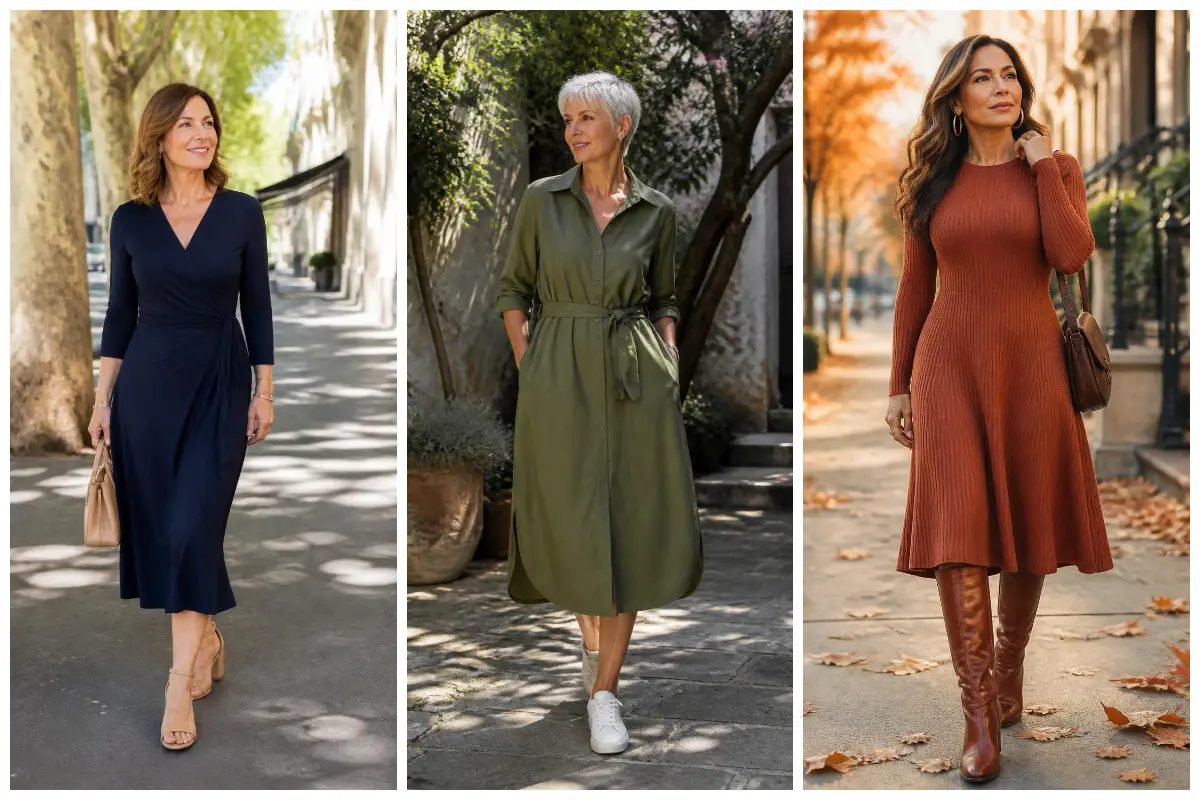
The wrap dress is versatile when weight or bloating shifts: the crossover V balances the hips and lifts the bust, and the tie waist defines the waist. A midi length elongates the body and helps cover bare legs, and stretchy, fluid jersey adapts to different shapes. Choose a wrap with a deep enough overlap so it stays closed when you sit.
How to wear it: Tie the belt at the side, not in a front bow.
Best for: Weight that changes through the month
2. Fit-and-flare with a square neckline
Fit-and-flare dresses flatter the tummy and suit an hourglass figure, especially with a V or square neckline. The fitted bodice defines the upper body while the full skirt skims over the hips and thighs. Look for a lined skirt that holds its shape and a waist seam that sits at your natural waist, not above it.
How to wear it: Have the straps or sleeves taken in so the bodice sits flat.
Best for: Hourglass and apple figures
3. Belted shirtdress with rollable sleeves
A relaxed midi or maxi shirtdress with modern details like pockets, rollable sleeves and a tie belt is a great choice. Shirt dresses suit most body types and come in everyday viscose or dressier satin. Choose a placket that lies flat, a collar that stands softly, and a hem at mid-calf. Cinching at the waist gives structure, while the button front allows ventilation.
How to wear it: Open the top two buttons and cuff the sleeves to three-quarter length.
Best for: Casual workdays and warm travel
4. Smocked-waist printed midi
Printed midi and maxi dresses with fitted waists and flared skirts can shape the figure without shapewear, and smocked waists create a softer silhouette than a seamed one. The elastic gathering accommodates changes in size through the day, which helps if your waist shifts after meals. A print with a medium scale hides wrinkles, and a lightweight cotton or viscose keeps it cool.
How to wear it: Skip the belt and add a wedge or low block heel.
Best for: Summer lunches and garden parties
Relaxed and easy shapes
These styles skim the body instead of fitting it, and each handles a particular concern.
5. Knee-length shift dress
Shift dresses are comfortable, show off the legs and end just above the knee. They hang straight from the shoulders, so there is no waistband to manage. Choose a fabric with a little structure, such as ponte or crepe, and make sure the armholes are cut high enough to avoid gaping. Shoulder fit matters most, so ask a tailor to adjust it.
How to wear it: Add a thin belt at the hip, not the waist, if you want some definition.
Best for: Anyone who wants no waistband
6. Tunic dress that floats over the midriff
Loose tunics float over the midriff. Oversize tunics and loose shifts are one choice, while curve-defining pieces are another, and you can switch between them. A tunic dress in a soft drape works over leggings or slim pants too. Pick a V or boat neck and sleeves that reach the wrist.
How to wear it: Roll the sleeves and show your ankles to avoid looking boxy.
Best for: Days when comfort comes first
7. A-line with an under-bust seam
An A-line dress with a seam under the bust is flattering for smaller busts. The seam lifts the line and the skirt falls gently away from the ribs, which skims the stomach. Choose a lightweight woven or jersey that does not cling, and aim for a hem just below the knee. It also works with a cardigan.
How to wear it: Keep necklines simple, like a V or scoop, so the seam is the detail.
Best for: Smaller busts and softer midsections
8. Midi work dress with sleeves
For work, choose wrap, A-line, fit-and-flare and shirt dresses in midi lengths with sleeves, in neutral colors and structured fabrics such as cotton, linen or sturdy viscose blends. A midi hem lets you sit and cross your legs without tugging. Choose a fabric that does not cling, with an inner lining, so it stays smooth through meetings.
How to wear it: Add a knit blazer or cardigan in a darker shade and loafers or block heels.
Best for: Offices, interviews and presentations
Maxi dresses for women over 50, knit dresses and slips
Longer lengths and softer fabrics deserve some special attention, because a dress that drags or clings undoes all the comfort.
9. Tiered print sundress with a fitted bodice
Choose a tiered print sundress with a fitted bodice and wide straps rather than a baby-doll or trapeze cut. The fitted top keeps you from looking swamped, and the tiers add movement and hide a softer middle. Wide straps give support and sit comfortably over a bra. A lightweight cotton or viscose in a mid-scale print is ideal. Sandals, mules, flats or espadrilles all work.
How to wear it: Check that the hem skims the ankle bone or sits at mid-calf so you do not trip.
Best for: Hot weather and vacations
10. Jersey maxi with flutter sleeves
Maxi dresses for women over 50 are most comfortable in soft jersey or viscose. Viscose drapes well over curves. Flowy dresses look best at mid-calf, so try different hems with your shoes. Look for a V or scoop neckline, a defined waist seam and flutter or elbow-length sleeves that cover the upper arm without clinging.
How to wear it: Hem the dress while wearing the shoes you will use, as maxi lengths show every inch.
Best for: Beach holidays and long summer evenings
11. Fine-gauge knit sweater dress
A wool-cashmere sweater dress is a core piece in a refined wardrobe. A fine-gauge knit with a clean neckline skims the body, keeps you warm and feels dressy without effort. Choose a style that ends below the knee and has some stretch for sitting. Lined knits do not cling to tights. A belt adds shape if you want it.
How to wear it: Wear it with knee-high boots, or with loafers and a scarf.
Best for: Cold-weather lunches and dinners
12. Slip dress layered over a tee or cardigan
Slip dresses can work, but I would avoid clingy slip skirts, so choose a slip with weight, such as heavy satin or crepe, and layer it. Wear a fitted long-sleeve tee underneath or a cardigan on top. A bias cut skims, while a straight cut can cling. Test it by sitting down in the fitting room.
How to wear it: A longer cardigan or lightweight coat on top solves coverage and gives you pockets.
Best for: Evenings and layered looks
Occasion dresses and gowns
For weddings and formal events, these four cover the general rules; always check the invitation and the venue.
13. Black dress with sheer or lace sleeves
Black or navy dresses with sheer or lace sleeves, necklines or hems reveal some areas and conceal others, such as arms and sun-damaged skin. A classic black dress in knee, midi or long length works for many events. Choose lace with a soft finish and a lining that is skin-toned under the sheer areas, so the effect looks intentional. Avoid scratchy trims at the neckline.
How to wear it: Let jewelry carry the sparkle, and keep the dress simple.
Best for: Evening events and funerals
14. Statement dress in coral, rose or red
Pinks, roses, corals and reds flatter most women and echo the shades of lipstick and blush. A color like this adds personality and is memorable at reunions, dates and lunches. Voluminous, flutter or knit sleeves all work well. Choose a clean silhouette so the color can take center stage, and avoid competing prints. Test the shade next to your face in daylight before you buy.
How to wear it: Match your lipstick to the dress, or pick a neutral lip.
Best for: Parties, reunions and celebrations
15. Floor-length gown for formal evenings
A gown for older women over 50 should be comfortable enough to enjoy the night. Long, midi or knee lengths in black work for formal events, off-shoulder or one-shoulder necklines for glamour, and a supportive strapless or multi-strap bra. Look for fabric with weight, like crepe or satin, and a hem that clears your shoes. Stylish does not have to mean sparkly.
How to wear it: Choose shoes with a wide toe box and cushioning, and break them in beforehand.
Best for: Black-tie events and milestone celebrations
Good to know
A mother-of-the-bride or groom style guest look follows a few general rules: avoid black and white, think about the wedding’s theme, location and weather, coordinate with the other parent and the wedding party, and choose comfortable footwear you can wear all day.
Styling and tailoring a dress
Tailoring is the quickest upgrade. Ignoring fit is a common mistake, so alter hems and sleeves on new pieces and remove any basting stitches on pockets and vents of online purchases. A neckline that sits too low is easy to fix with a camisole or another layer underneath.
Finish with shoes that make the day easier. Choose roomy, breathable shoes because feet swell during the day, and look for wide toe boxes, arch support and cushioning for wedding and occasion shoes. For midi dresses, a block heel or cushioned flat keeps the hemline looking balanced.
Frequently asked questions
A good dress is simple to wear once it fits you, so spend your time on the fit. Pick a shape that suits your figure, ask a tailor to fix the shoulders and hem, and put it with shoes you can walk in. One well-chosen dress can handle more of your calendar than you expect.