15 Braided Hairstyles for Black Women Over 50

Braids for older Black women over 50 should work harder than they did at 30 — protecting thinning edges, sparing tender scalps, and giving you weeks of freedom from the daily hair routine.
The braid math changes after 50: weight, tension and installation time matter more than trendiness, and the right style buys you 4–8 weeks of low-effort elegance while the wrong one costs you edges you can’t get back.
Below are 15 braided hairstyles chosen for exactly that trade-off: how each style is built, how many hours it takes to install, how long it lasts, and the exact words to say to your braider so your edges survive it. Find your style and protective hair gets easy again.
Quick picks
- If you want the safest all-rounder → knotless box braids (#2).
- If your edges need a break → feed-in cornrows (#5).
- If you want softness, not sharpness → passion twists (#6).
- If you sit long hours → the braided bob (#10).
- If you have an event this week → the braided crown updo (#12).
- If grey is growing in → goddess braids with curly ends (#7).
Contents
How to choose braids for older Black women over 50
Tension is the whole game. After 50 the scalp thins and follicles miniaturise, so a braid job that felt fine at 35 can now cause traction alopecia at the hairline. Tell your braider up front: “If I can’t move my forehead, they’re too tight.”
A well-braided style should feel secure but never painful, and you should be able to take a painkiller-free nap the night it’s done. The hairstyles for Black women over 50 guide makes the same case for shorter protective cuts.
Weight pulls more than you think. Long, thick braids are beautiful and heavy — a full head of waist-length box braids can weigh 500–700 g, and gravity works on them 24 hours a day. If you have neck or shoulder issues, cap length at the shoulder blades (roughly 35–40 cm) or choose lighter feed-in or twist styles.
Smaller, shorter braids last just as long and feel like nothing.
Match the style to your hair density, not the photo. Full, fluffy install photos assume dense hair underneath to anchor the parts.
If your hair has thinned, ask for smaller braids with feed-in extensions added gradually along the shaft rather than chunky ones that pull at sparse roots — knotless techniques were invented for exactly this, which is why they dominate this list. The fine hair over 50 guide covers the same density-first logic for unbraided hair.
Grey hair braids differently. Grey strands are coarser, drier and snap more easily under extension tension, so grey and salt-and-pepper hair needs a moisturised, slightly looser install — and it looks magnificent. Textured curly ends and ombré blending (rather than a hard colour change) grow out gracefully.
For more on working with your natural colour, the short haircuts for women over 50 piece covers going grey on purpose.
Installation time is a real cost. Six to eight hours in a chair is a long day for anyone, and it’s a long day you don’t have to pay. Crochet installs (1.5–2 hours) and jumbo twists (2–3 hours) deliver most of the payoff for a third of the sitting time.
Book braiders who work efficiently, bring snacks and water, and never feel guilty about choosing the faster style.
At a glance: all 15 braided styles
| Style | Install time | Lasts | Best for |
|---|---|---|---|
| Classic medium box braids | 5–7 hrs | 6–8 weeks | Maximum versatility |
| Knotless box braids | 6–8 hrs | 6–8 weeks | Tender scalps, fine hair |
| Two-strand Senegalese twists | 4–6 hrs | 4–6 weeks | Lightweight everyday wear |
| Straight-back cornrows | 2–3 hrs | 3–4 weeks | Active lifestyles |
| Feed-in cornrows | 2–4 hrs | 3–5 weeks | Thin edges, natural look |
| Passion twists | 3–5 hrs | 4–6 weeks | Soft, romantic texture |
| Goddess braids with curly ends | 5–7 hrs | 5–7 weeks | Blending grey gracefully |
| Soft faux locs | 5–8 hrs | 6–8 weeks | Boho length without commitment |
| Crochet braids | 1.5–2 hrs | 4–6 weeks | Fastest install, easy on roots |
| The braided bob | 3–4 hrs | 4–6 weeks | Chic, low-weight option |
| Jumbo rope twists | 2–3 hrs | 3–4 weeks | Quick weekend refresh |
| Braided crown updo | 1–2 hrs | 2–3 weeks | Weddings and events |
| Braided top-knot bun | 1 hr | 3–4 weeks | Elegant everyday polish |
| Halo crown braid | 1–2 hrs | 2–3 weeks | Regal formal look |
| Fulani-inspired braids | 3–5 hrs | 4–6 weeks | Decorative, jewellery-friendly |
The classics that always work
These four are the foundation styles — the ones braiders have installed thousands of times, with known longevity and styling options that go from gym to wedding with a change of jewellery.
1. Classic Medium Box Braids
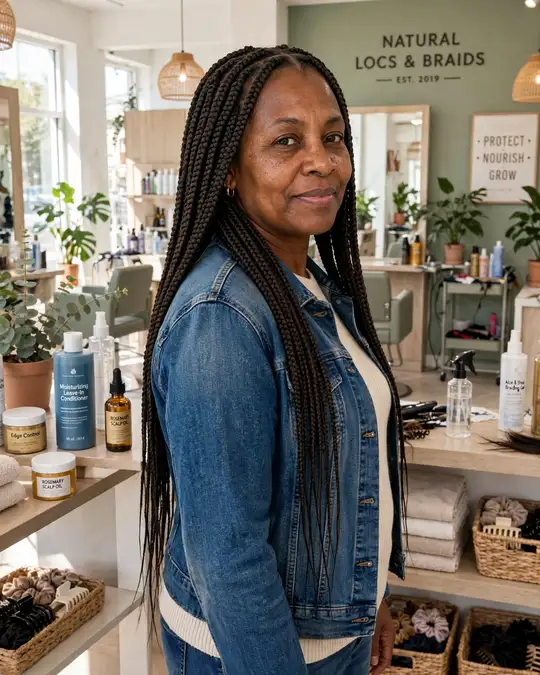
Box braids work because each braid is individually anchored: three-strand plaits built from a square-parted section, so the weight distributes evenly across the scalp instead of pulling in one direction. At medium size (about 1.5–2 cm thick, 40–50 braids total) they give you styling freedom — buns, ponytails, half-up — while the 40–45 cm length keeps the weight manageable.
They’re the benchmark braids for older Black women over 50 precisely because nothing about them is experimental.
- Length: Mid-back, 40–45 cm
- Install time: 5–7 hours
- Daily styling: 5 minutes — ponytail, bun or down
- Face shapes: All — parting placement does the flattering
Ask your stylist for: “Medium box braids, mid-back length, about 45 braids, with my edges left alone at the hairline — no small braids at the front.” Say the last part even if she looks at you funny.
How to style it:
- Wear them down the first week while the roots are snug — pulling fresh braids up strains the hairline.
- From week two, gather into a low ponytail at the nape for work, secured with a silk scrunchie, never an elastic band.
- For evenings, twist the ponytail into a low chignon and pin with gold cuffs or a simple clip.
- Nightly: gather loosely on top and cover with a satin bonnet — cotton pillowcases rough up the braids in a week.
Skip it if your hairline is already fragile — the knot at the root of traditional box braids concentrates tension exactly where thinning starts. Knotless (#2) is the safer sibling.
Best for: women who want one style that does everything for two months with minimal decisions.
2. Knotless Box Braids

Knotless braids solve the single biggest problem of traditional box braids: the knot. Instead of starting with a tight knot of extension hair, the braider starts with your own hair and feeds extension hair in gradually along the first 5–8 cm.
That eliminates the hard tension point at the root, so the braid moves naturally from day one and the hairline takes a fraction of the pull. For braids for older Black women over 50, this technique is the single most important upgrade of the last decade.
- Length: Shoulder-blade to mid-back, 35–45 cm
- Install time: 6–8 hours
- Daily styling: 5 minutes — same freedom as box braids, less root pain
- Face shapes: All, especially good for delicate hairlines
Ask your stylist for: “Knotless, medium parts, starting with my own hair and feeding in gradually — I don’t want any knots or bulky starts at the root.”
How to style it:
- Slick the first 3 cm with edge control and a soft brush for a polished part line that lasts all day.
- Try a high ponytail from day one — unlike traditional braids, knotless roots flex immediately.
- Refresh the hairline with diluted witch hazel on a cotton pad weekly; clean roots hold styles longer.
Skip it if you’re in a hurry — knotless takes longer to install than traditional braids, and rushing a braider defeats the whole point of the technique.
Best for: tender scalps, thinning edges, and anyone who has sworn off braids because of pain.
3. Two-Strand Senegalese Twists

Twists are mechanically gentler than braids: two strands coiled around each other create even, distributed tension along the whole length instead of the interlocking pull of a three-strand plait. Senegalese twists use silky extension hair twisted rope-style, giving a smooth, sleek finish that weighs roughly 20–30% less than the same size in braids.
They’re the lightweight answer for women who love long hair but not the neck ache that comes with it.
- Length: Shoulder-blade length, 35–40 cm
- Install time: 4–6 hours
- Daily styling: 3 minutes — they fall into place on their own
- Face shapes: Round and square — the vertical line slims
Ask your stylist for: “Small-to-medium Senegalese twists, shoulder-blade length, with the ends sealed — I want them light, so don’t overload the extension hair.”
How to style it:
- For the first two weeks, wear them down — the smooth twist surface catches light and looks expensive with zero effort.
- Half-up: gather the top third and twist it into a small bun; the rest falls naturally.
- At night, two loose twists into a pineapple on top preserves the rope texture.
- Seal frizzy ends with a pea-size amount of oil rather than re-twisting — re-twisting thins the strands.
Skip it if you want a style you can leave completely alone — twists unravel faster than braids if you skip night protection.
Best for: women who want long, light, low-maintenance hair without the weight of braids.
4. Straight-Back Cornrows
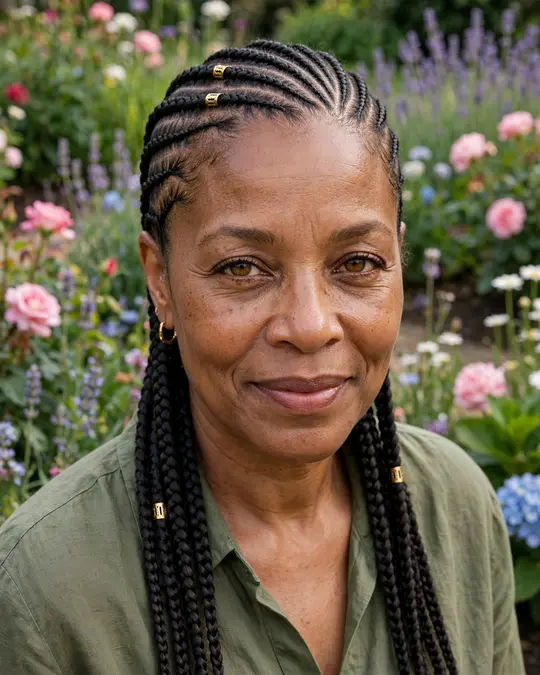
Cornrows are the oldest and most scalp-honest style on this list: the hair is braided flat against the head in clean, parallel rows, which means zero hanging weight, maximum airflow to the scalp, and the shortest install time of any style here. For active women — swimmers, gym-goers, gardeners — nothing stays neater under a hat or through a workout.
Modern versions vary the row size and add gentle curves or a side part so it reads polished, not plain.
- Length: Scalp-length to short extensions, 5–15 cm
- Install time: 2–3 hours
- Daily styling: 2 minutes — scarf tie-down at night
- Face shapes: Oval and heart — the symmetry flatters even features
Ask your stylist for: “Ten to twelve straight-back cornrows, medium width, not too tight at the hairline — and no tiny braids right at the front.”
How to style it:
- Style with a side part for a softer, more current look than the classic centre parting.
- Add two gold cuffs on the front rows for evenings — jewellery is the difference between “gym hair” and “event hair.”
- Nightly, tie down with a satin scarf; cornrows frizz fastest at the front rows.
Skip it if your scalp shows through between rows — cornrows are honest about density, and very sparse hair reads better under twists or crochet.
Best for: active lifestyles, hot weather, and anyone who wants braids with almost zero daily effort.
Styles that treat your edges like gold
Edges are the non-renewable resource of braided hair after 50. These four styles were chosen because their construction puts the least stress on the hairline — feed-in techniques, softer textures and looser starts.
5. Feed-In Cornrows

Feed-in cornrows use the same gradual-addition principle as knotless braids, applied to cornrows: the braider starts each row with only your natural hair and feeds extension hair in bit by bit.
The result is a cornrow that starts thin at the hairline and thickens naturally toward the back — no bulky knot tugging at the edges, and a flatter, more natural-looking row. It’s the edge-friendliest way to wear cornrows.
- Length: Braid-back to shoulder length, 20–35 cm
- Install time: 2–4 hours
- Daily styling: 2 minutes — they lie flat and stay neat
- Face shapes: All — the gradual thickening suits every face
Ask your stylist for: “Feed-in cornrows starting with just my hair — small at the front, building to medium at the back. My edges come first.”
How to style it:
- Wear straight back for the gym and workouts; the flat profile never snags.
- For events, have the back ends curled or left long and loose — the feed-in taper makes the length look natural.
- Massage the hairline with a drop of oil every other night; feed-ins let the product reach the scalp easily.
- Take them down at 4–5 weeks even if they still look good — regrowth tension is where edge damage hides.
Skip it if you want maximum longevity — the thin start at the hairline loosens faster than knot-started rows.
Best for: recovering or thinning edges that still want the cornrow look.
6. Passion Twists
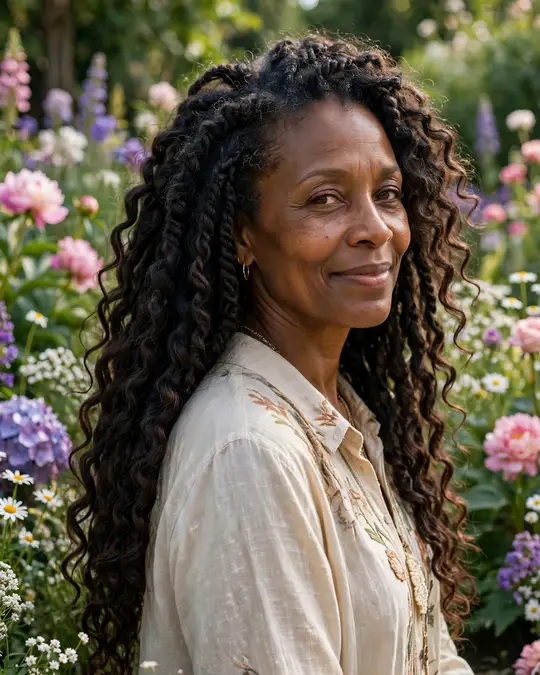
Passion twists use pre-curled, water-wave extension hair twisted loosely around your own hair, which creates a fluffy, romantic texture with genuine air between the strands — the opposite of the tight, sleek twist.
That loft is the point: the twists sit softly on the scalp, weigh less than they look, and the boho texture camouflages thinning areas better than any smooth style. They’re the style women pick when they want softness without fragility.
- Length: Shoulder to mid-back, 30–45 cm
- Install time: 3–5 hours
- Daily styling: 5 minutes — shake, fluff, go
- Face shapes: Oval and long — the width softens length
Ask your stylist for: “Medium passion twists with water-wave hair, not too tight at the root — I want them fluffy and light, shoulder to mid-back.”
How to style it:
- Shake the twists out in the morning instead of brushing — the texture is the style.
- Pin one side back with a decorative clip for an asymmetric evening look.
- Mist with a leave-in spray every few days; curly-textured hair drinks moisture faster than smooth hair.
Skip it if you wear structured clothing daily — the boho texture fights with sharp tailoring; sleek twists (#3) pair better.
Best for: soft, feminine volume and women who want their hair to look like an accessory.
7. Goddess Braids With Curly Ends
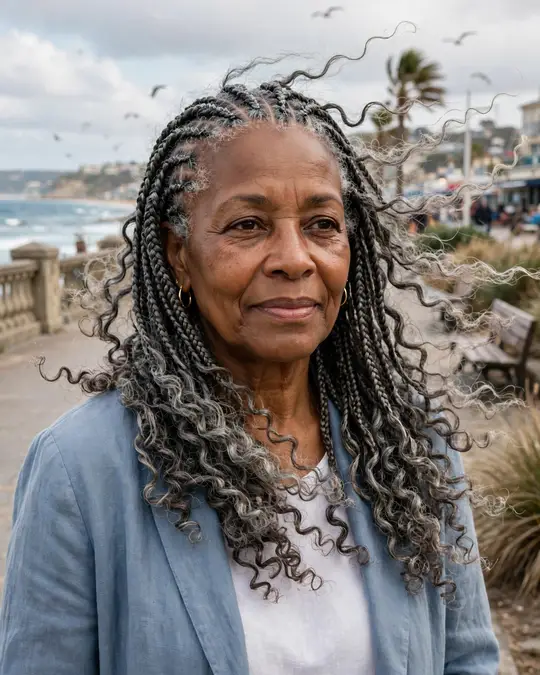
Goddess braids take standard box braids and leave the last 10–15 cm of each braid unbraided, finished with loose curly extension hair. That unbraided section changes everything for older women: the curly ends frame the face softly, blend grey regrowth so there’s no harsh root line, and the overall effect reads relaxed rather than severe.
Braids for older Black women over 50 work best when they soften the face, and this style does it by construction.
- Length: Mid-back with 10–15 cm of loose curly ends
- Install time: 5–7 hours
- Daily styling: 5 minutes — finger-fluff the curls
- Face shapes: Square and heart — the curls soften angles
Ask your stylist for: “Medium goddess braids, braided to mid-back, then loose curly ends — I want the curls blended so my grey shows through naturally.”
How to style it:
- Scrunch the curly ends with a pea-size amount of curl cream in the morning; skip the brush entirely.
- Gather into a high ponytail for workouts — the curly ends cascade and stay out of your face.
- At night, pineapple the curls and bonnet the braids; the two textures need different protection.
- Trim frizzed curl ends at week four rather than taking the whole style down — the braids stay neat longer than the curls.
Skip it if you hate any frizz — the loose curly ends will never stay as sleek as the braided sections.
Best for: grey-blending, softer facial framing, and a style that looks expensive without trying.
8. Soft Faux Locs
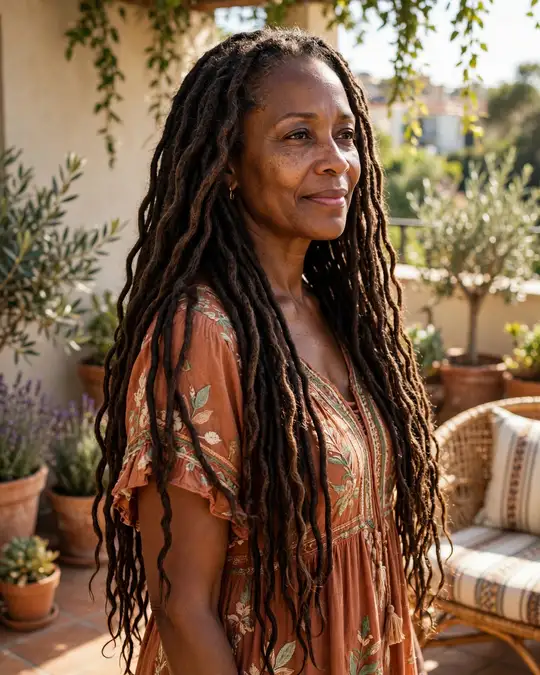
Soft faux locs wrap extension hair around your own braided base to create a loc look without the permanent commitment — and the “soft” versions use textured, pliable hair rather than stiff plastic-feeling fibre, so they move and drape like real locs.
They’re lighter than they look, last 6–8 weeks, and give dramatic length and presence with genuinely low root tension, since each loc hangs from its own wrapped base.
- Length: Mid-back to waist, 45–55 cm
- Install time: 5–8 hours
- Daily styling: 5 minutes — they hold any position you put them in
- Face shapes: Round and oval — the length elongates
Ask your stylist for: “Soft faux locs, the pliable kind not the stiff kind, mid-back length, medium parts — I want them to move, not stand up.”
How to style it:
- Wear them down the first month — the texture is the statement and needs no help.
- For formal events, sweep all locs to one shoulder and add a beaded cuff near the face.
Skip it if you have neck or shoulder problems — this is the heaviest style on the list, and length times weight is real.
Best for: maximum presence and women curious about locs without the permanence.
Good to know
The take-down matters as much as the install. After 4–8 weeks in braids, your shed hair is tangled around every braid base — cut the extension hair, never your own, and detangle each section with conditioner before it touches water. Rushing a take-down causes more breakage than the whole install did.
Save this guide to your protective styles Pinterest board so your braider can see exactly which style you mean at your appointment.
Braids with personality
These four break the rules a little — faster installs, shorter lengths, unexpected textures. For women who’ve worn the classics for decades and want something new.
9. Crochet Braids

Crochet braids flip the process: your natural hair is cornrowed flat as a base, and pre-made braids, twists or curls are looped through with a latch hook. Your hair never takes installation tension at all — it’s tucked safely underneath — and the whole install takes under two hours.
For thinning hair it’s the gentlest full-coverage option that exists, and switching the crochet pattern at week three gives you a fresh style for the price of a touch-up.
- Length: Your choice — shoulder to mid-back
- Install time: 1.5–2 hours
- Daily styling: 3 minutes — the pre-made texture does the work
- Face shapes: All — choose the pattern, not the length, for flattery
Ask your stylist for: “Cornrow my own hair flat as a base, then crochet in medium braids — leave my hairline cornrows braid-free so my edges stay untouched.”
How to style it:
- Choose a curly or wavy crochet pattern — it hides the base cornrows better than straight patterns.
- Moisturise your own hair underneath weekly with a nozzle applicator; neglect is the only real risk of this style.
- Refresh the front by re-crocheting just the first two rows at week three.
- Remove by cutting the crochet knots and unravelling — never pull them out.
Skip it if you want a sleek, tight look — crochet texture is inherently fuller and softer, never pin-straight.
Best for: the fastest full protective style, and the kindest option for sparse hair.
10. The Braided Bob

A braided bob takes everything good about box braids and removes the weight problem entirely: braids cut or braided to jaw-to-chin length (20–25 cm) weigh a third of a mid-back install, swing freely, and read polished in a way long braids can’t. The shorter length also means a 3–4 hour install and easier sleeping, washing and gym sessions.
It’s the executive choice — braids that behave like a precision haircut.
- Length: Jaw to chin, 20–25 cm
- Install time: 3–4 hours
- Daily styling: 2 minutes — shake and go
- Face shapes: Long and oval — the width balances length
Ask your stylist for: “Box braids or twists, chin-length, blunt ends — I want a bob silhouette, not tapered, so they swing.”
How to style it:
- Tuck one side behind the ear for work — the asymmetry reads intentional.
- Add a deep side part for evenings; the swing of the bob does the glamour.
Skip it if you love updos — there’s not enough length to gather, so this is a wear-it-down style.
Best for: professional settings, hot climates, and women done with heavy hair.
11. Jumbo Rope Twists
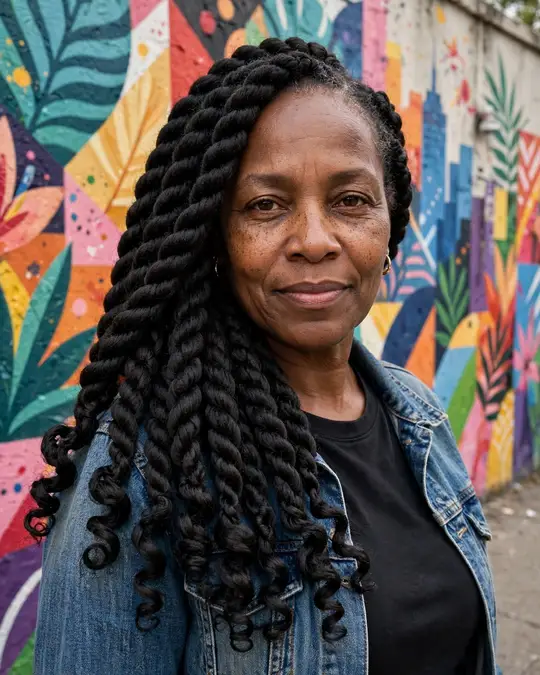
Jumbo rope twists are the two-hour braided style: thick, chunky twists (8–12 per head) that install in 2–3 hours and make a bold, sculptural statement.
The large parts mean each twist hangs from a wide base, so root tension is low despite the size, and the chunky scale flatters mature faces — small fiddly braids can look busy, while big twists read confident. It’s the style for the week you need great hair by Friday.
- Length: Shoulder length, 30–35 cm
- Install time: 2–3 hours
- Daily styling: 2 minutes
- Face shapes: All — the scale does the work
Ask your stylist for: “Jumbo rope twists, about ten of them, shoulder length, with the ends curled — bold, not fiddly.”
How to style it:
- Wear them swept to one side for an instant red-carpet feel.
- Twist two front twists back and pin — a two-minute updo.
- Oil the scalp between the wide parts weekly; big parts mean easy access.
Skip it if you need more than a month — jumbo twists loosen fastest of all the styles here, plan for 3–4 weeks.
Best for: quick transformations and women who like their hair to make the first impression.
12. Braided Crown Updo
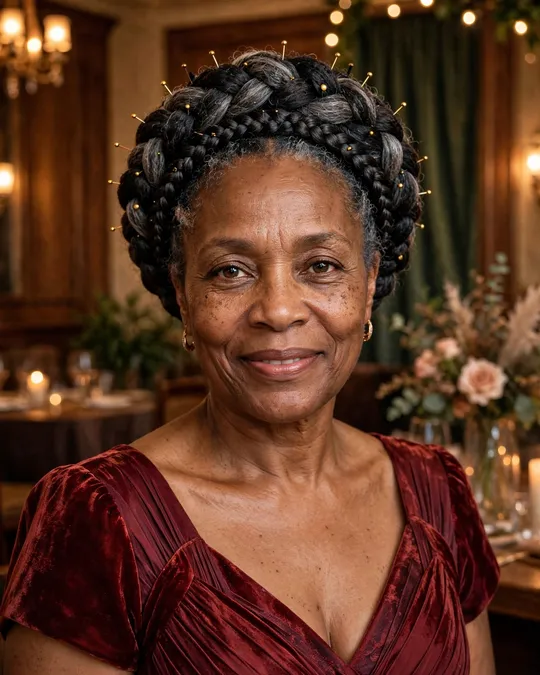
The braided crown is an event style built from your own braids: medium braids are installed or already worn, then wrapped and pinned around the head into a raised crown.
Because it’s styled from existing braids rather than installed fresh, your scalp gets a 1–2 hour appointment instead of a full day, and the wrapped structure distributes weight around the whole head instead of hanging from it. It’s the answer to “I have a wedding Saturday and great braids already.”
- Length: Styled from existing shoulder-length+ braids
- Install time: 1–2 hours (styling appointment)
- Daily styling: Set for the event — lasts 3–5 days pinned
- Face shapes: All — the height flatters everyone
Ask your stylist for: “Wrap my braids into a raised crown — I want height at the front, pinned securely, with a few face-framing twists left loose.”
How to style it:
- Have the crown built the morning of the event — it holds 24–48 hours perfectly.
- Weave in a beaded hair vine or gold pins for weddings and galas.
- At the end of the night, unpin gently and re-braid the loosened sections rather than sleeping in the crown.
- Keep your earrings simple — the crown is already the statement.
Skip it if your braids are very short — you need at least shoulder length to wrap a full crown.
Best for: weddings, galas, church anniversaries — anywhere photos happen.
Up, away and evening-ready
The last three are the polished finishers — styles that lift the hair off the neck and shoulders for formal occasions, warm weather and the sheer elegance of hair worn up.
Braids are a natural choice for a wedding party — our mother of the bride hairstyles over 50 include the updos and pinned styles that pair with these braids.13. The Braided Top-Knot Bun

A braided top-knot takes medium braids and coils them into a high, structured bun — the braid texture gives the bun body and grip that smooth hair can’t match, so it holds all day with minimal pins.
Worn high, it lengthens the neck and lifts the whole face; it’s the single most polished way to wear braids, and it takes about ten minutes to assemble from existing braids.
- Length: Assembled from shoulder-length+ braids
- Install time: 1 hour (as a style over existing braids)
- Daily styling: 10 minutes to rebuild
- Face shapes: Round and square — the height elongates
Ask your stylist for: “Coil my braids into a high top-knot — smooth the hairline first, and I want it secure enough for a full day.”
How to style it:
- Gather all braids high, twist the bundle once, then coil around the base and pin every 5 cm.
- Smooth flyaways at the hairline with edge control — the contrast between sleek roots and textured bun is the look.
Skip it if you get tension headaches — all-day high buns aren’t for everyone, and the low chignon is the gentler alternative.
Best for: work presentations, formal dinners, and hot days when hair must be up.
14. Halo Crown Braid
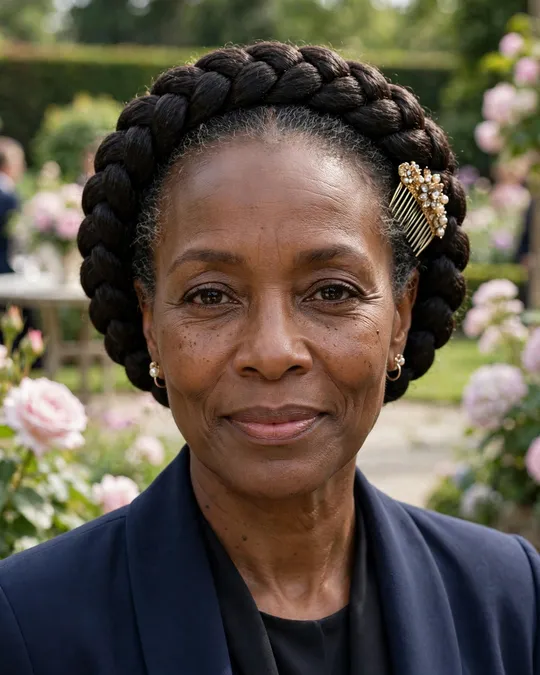
The halo braid circles the entire head like a crown, braiding your own hair (or hair with light extensions) in one continuous ring. Because it’s braided close to the scalp all the way round, the weight distributes perfectly — no single point takes the load — and the finished circle frames the face like a headband made of hair.
It’s regal, it photographs beautifully, and it keeps every strand off the neck in summer.
- Length: Needs 15+ cm of hair (extensions can supplement)
- Install time: 1–2 hours
- Daily styling: Set for 2–3 weeks with nightly scarf
- Face shapes: All — it frames the face symmetrically
Ask your stylist for: “A full halo crown braid, Dutch-braided so it sits raised — not too tight at the temples, with the ends tucked invisibly.”
How to style it:
- Wear it for 2–3 weeks, tying down with a satin scarf nightly to keep the ring crisp.
- For black-tie events, pin a small jeweled comb at the side of the halo.
- Touch up the hairline with edge control every few days — the ring’s neatness is the whole effect.
Skip it if your hair is very short without extensions — the halo needs enough length to complete the circle.
Best for: formal occasions and women who want maximum elegance with minimum fuss.
15. Fulani-Inspired Braids With Cuffs
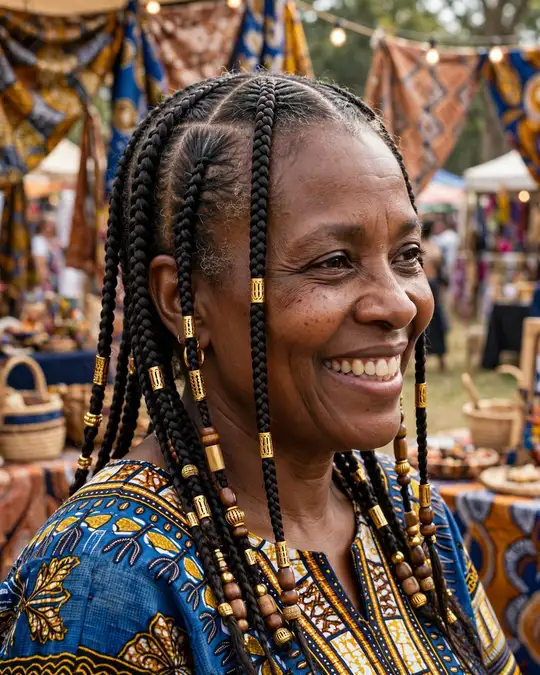
Fulani-inspired braids combine a centre cornrow with hanging braids on each side, traditionally decorated with cuffs, beads and shells — the pattern comes from Fulani culture and the decoration is part of the design, not an afterthought. The centre braid lifts the face, the side braids frame it, and the jewellery catches light with every movement.
It’s the most decorative style on this list and the one that photographs best. Braids for older Black women over 50 don’t have to be quiet, and this style proves it.
- Length: Mid-back, 40–45 cm with decorated ends
- Install time: 3–5 hours
- Daily styling: 5 minutes — the jewellery is the styling
- Face shapes: All — the centre part suits symmetry
Ask your stylist for: “Fulani-style: one centre cornrow, braids hanging each side, mid-back length — and thread gold cuffs and a few beads before I leave.”
How to style it:
- Keep the decoration near the face and ends — cuffs at the roots can snag on scarves.
- Sleep with the braids in a loose side ponytail so beads don’t press into your scalp.
- Swap the jewellery at week three for a completely refreshed look without reinstalling.
- Remove beads before take-down — they tangle the shed hair otherwise.
Skip it if you prefer understated hair — this style is designed to be noticed.
Best for: celebrations, cultural events, and women whose jewellery box deserves a showcase.
Keeping braids healthy after 50
Braids protect your hair only if you protect your scalp while wearing them. These habits make the difference between a style that grows your hair and one that thins it.
- Oil the scalp, not the braids — a nozzle bottle delivers product between the parts where it’s needed, twice a week.
- Wash every 2–3 weeks with diluted shampoo in an applicator bottle, rinsing thoroughly — clean scalps hold braids longer and itch less.
- Never keep braids past 8 weeks. The regrowth becomes a matted nest at the root that breaks hair on take-down.
- Give your hair 2–3 weeks of rest between installs — deep condition weekly during the break.
- Sleep in a satin bonnet or on a satin pillowcase every single night; cotton is the enemy of braid longevity.
- Moisturise grey hair more often — grey strands dry out faster under extensions, so add a light leave-in spray weekly.
The week-two reset routine:
- Wash the scalp with diluted shampoo in an applicator bottle; rinse until the water runs clear.
- Apply a light oil to the scalp between parts while the hair is still slightly damp.
- Smooth the hairline with edge control and re-tie with a satin scarf for 20 minutes.
- Mist the braids with a leave-in spray and re-fluff the ends — the style looks freshly done.
The bottom line
If I had to pick one, it would be knotless box braids (#2) at shoulder-blade length — the feed-in technique protects the hairline, the length keeps the weight honest, and you get two months of wake-up-and-go hair. Pin this guide to your protective hairstyles board on Pinterest so you can show your braider the exact style at your next appointment.
Frequently asked questions
Are braids for older Black women over 50 safe for thinning edges?
They can be — if you choose the right technique. Knotless braids, feed-in cornrows and crochet installs all avoid the hard knot at the hairline that causes traction alopecia. Traditional box braids with a knot start, very small braids at the front, and any style that hurts on day one are the ones to avoid.
Tell your braider about your edges before she starts, not after.
How long should I keep braids in after 50?
Six weeks is the sweet spot for most styles; eight is the absolute ceiling. Past that, shed hair builds up at the roots and the take-down causes breakage that wipes out the protection the braids gave you.
If your braids still look good at week eight, take them down anyway and enjoy the break — your hair will thank you at the next install.
Knotless or traditional box braids — which is better at 50?
Knotless, almost always. The gradual feed-in start eliminates the tension knot that makes traditional braids painful and risky for thinning hairlines. Traditional braids install faster and cost less, so they’re fine if your scalp is healthy and your edges are strong — but if you have any tenderness, go knotless and don’t look back.
Can grey hair be braided without breaking?
Yes, with two adjustments. Grey hair is drier and more fragile, so moisturise before the install and ask for slightly looser tension at the roots. Goddess braids with curly ends (#7) are the kindest showcase for grey because the loose ends blend the colour transition.
Avoid bleached or heavily processed grey under extensions — the combination is too fragile.
How often should I wash braided hair?
Every two to three weeks, with shampoo diluted in an applicator bottle aimed at the scalp. Rinse very thoroughly — residue causes itching and shortens the install. Between washes, wipe the scalp with diluted witch hazel on a cotton pad.
Daily oiling isn’t necessary; twice a week with a light oil between the parts is plenty.
What if my braids hurt the first night?
Mild tightness that eases within 48 hours is common; pain is not. Take an anti-inflammatory, apply a warm compress to the hairline, and mist the roots with water to loosen the braids slightly. If pain lasts past day three, or you see bumps along the hairline, take the front rows out — no style is worth traction alopecia.
A good braider would rather redo the front than damage your edges.