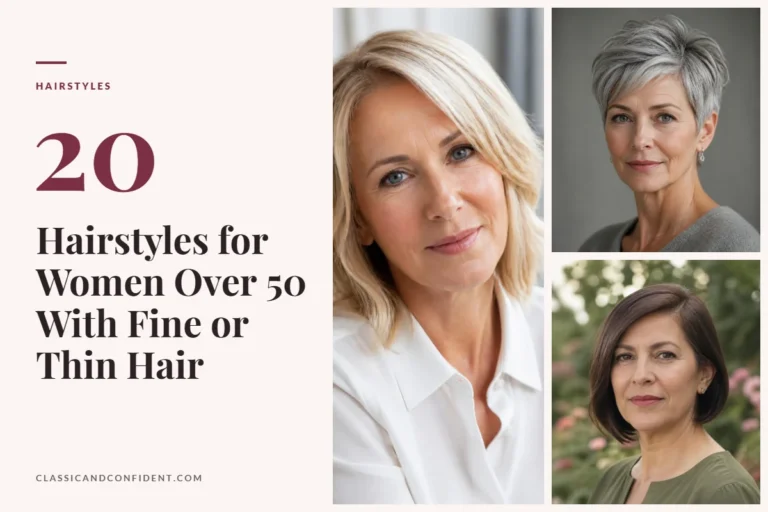
15 Hairstyles for Women Over 60 With Fine or Thin Hair

Your sixties often bring two changes at once: the hair gets finer, and the color starts to turn. Neither has to mean a worse hairstyle. The best over 60 hairstyles for women with fine hair work with both, using a solid shape for thin areas and color or bangs to take the pressure off the part.
This guide collects 15 ideas for ages 60 to 69, from jaw-length bobs to collarbone lobs, with notes on bangs by face shape, ways to grow in gray, and styling for volume. Each idea includes the detail to ask for. If you are looking for hair styles for thinning hair over 60, start with the section on choosing a cut.
What changes in your sixties, and how to choose a cut
About two-thirds of women have some thinning after menopause, often starting at the center part, and around 55 percent of women have some hair loss by age 70. Gray adds its own change. Gray hair can be dry, coarse or wiry, though that coarser texture may add body, so the same head of hair can feel thinner and harder to control at once.
Start with length. A blunt edge between the chin and collarbone works well for fine hair, because the bulk sits at the bottom. Keep layers to the front and skip feathered perimeters and heavy razoring. Blunt bottom lines look thickest, and layers are best avoided if hair is truly thin, apart from subtle hidden ones.
Next, think about the front. Choose bangs by face shape: long sideswept or curtain bangs for a round face, feathery horizontal bangs for a long face, and curtain bangs to soften a strong jaw or broad forehead. For thinning temples, part on the fuller side. Moving your part regularly also helps, since the same stripe of scalp is not always exposed.
Finally, check the cause. Thyroid problems, stress, weight loss and certain medicines are possible contributors, and it is wise to see a doctor for sudden loss, patches or a receding hairline. Earlier treatment makes regrowth more likely. I cannot diagnose anything, so please treat this as a prompt to ask.
Jaw-length cuts for fine hair
Hair that ends near the jaw keeps weight at the ends and tends to read denser.
1. Classic blunt bob with a side part
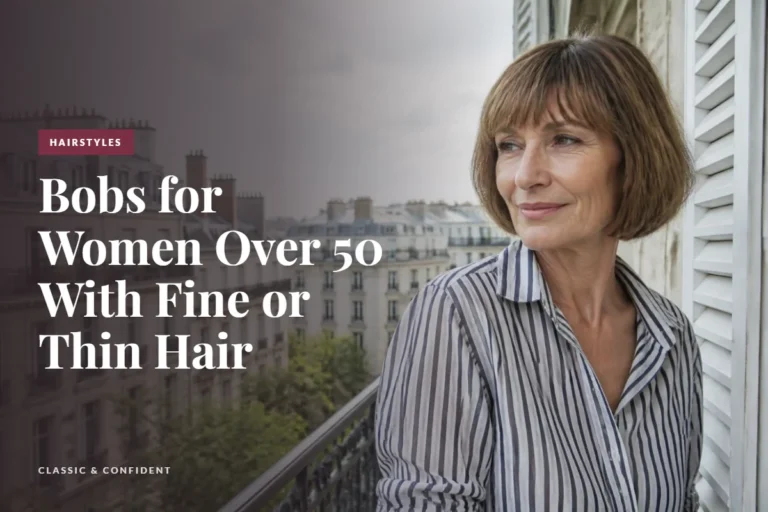
The classic bob is chin length, give or take an inch, with a blunt bottom line, and it is a strong thickening cut for fine or thin hair. A side part softens the features and gives the roots a lift. Plan on a salon trim about every six weeks, because the line goes soft quickly as it grows. Ask for the ends to be cut in a single line with no feathering.
Best for: straight or slightly wavy fine hair
2. Layered bob with shattered ends
A layered bob with textured, shattered ends and long layers brings out natural wave or body. For fine hair, keep the layers long and few, because over-layering thins the ends. It suits a diffuser or air-dry routine, and it grows out gracefully if you stretch the time between trims. Ask for texture only through the ends and keep the outline solid.
Best for: fine hair with a little natural wave
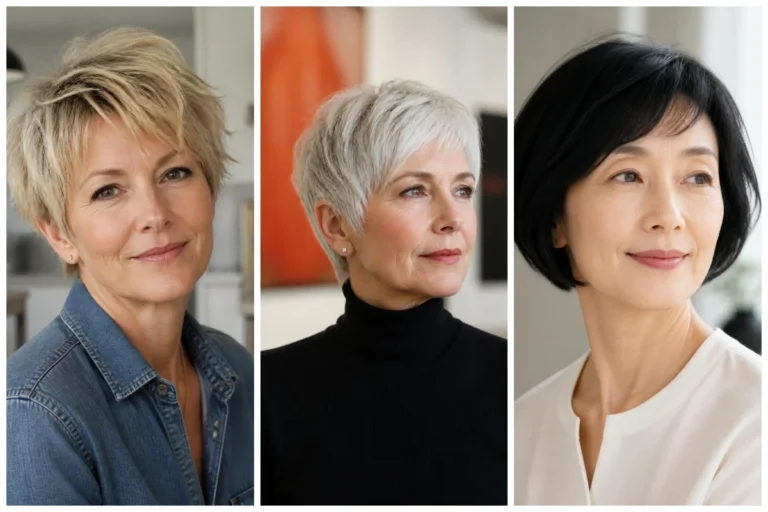
3. Soft silver pixie
A natural gray pixie needs minimal upkeep. A soft pixie gives the crown height and takes little time in the morning. Keep the layers soft rather than choppy, since many short layers across the top can leave fine hair looking sparse. Plan trims every four to eight weeks. Use a light mousse on damp roots and avoid heavy waxes.
Best for: women who want low upkeep and a quick routine
Collarbone and shoulder lengths
If you are not ready to go shorter, these cuts keep some length without sacrificing fullness.
4. Shoulder-grazing lob with face-framing layers
A shoulder-grazing lob with layers frames the face and adds shape. For fine hair, ask for the layers to start at the cheekbone and stay light around the face while the bottom line stays solid. The face-framing pieces can be tucked behind the ears or worn forward. Ask the stylist to leave the back of the lob blunt.
Best for: women who want shape and length
5. Split-level lob with a long sweep
The split-level lob is a bi-level bob with a long sideswept bang or long layers at cheek or mouth level, suited to broad cheekbones or a round face. For fine hair, keep the upper level soft and the lower level thick. Bring photos to the pre-cut consultation so your stylist can see the exact levels. Ask whether your density can carry two levels.
Best for: round faces with fine hair
6. Shoulder-length waves with an off-center part
Shoulder-length hair with soft waves and an off-center or side part works well, since a center part shows more scalp. Highlights add texture, and balayage allows several months between touch-ups. The waves add visual body for little effort. Use a texturizing spray on damp hair and let it dry naturally or with a diffuser.
Best for: a casual look with minimal styling
Bangs by face shape
Bangs are the quickest way to change the front of the hair, and the right style depends on your face shape.
7. Long sideswept bangs for a round face
Long sideswept bangs slim the cheeks of a round or full face. They also suit thinning at the temples, since you can part on the fuller side. Ask for them to be cut long enough to sweep past the cheekbone, which helps them blend into the rest of the hair. They need trims less often than blunt bangs.
Best for: round faces and thinning temples
8. Feathery bangs for a long face
For a long face, try bangs with a horizontal line, such as feathery, wispy or chunky styles, to counter downward lines. For fine hair, I would lean toward feathery or wispy over chunky, since they need less density at the hairline. Ask the stylist to cut them with scissors held vertically, using tiny snips. Trim them often so they stay light.
Best for: long faces with moderate density at the hairline
9. Curtain bangs for a strong jaw
Voluminous bangs, including curtain styles, soften a broad forehead or a strong jaw. Curtain bangs are parted in the middle and sweep outward, from cheekbone to just above the lip. Keep them thin enough to look soft, not heavy. They can be tucked behind the ears on days when they misbehave. Ask the stylist to cut them dry so you can see how they fall.
Best for: angular faces
10. Wispy bangs, only with hairline density
Wispy bangs need enough density at the hairline to work, and razor cutting is best skipped on fine, thin or damaged hair because it can cause breakage. If your front hairline is sparse, a fuller feathery fringe or sideswept bangs parted on the fuller side are safer choices. Ask the stylist to check your hairline density by hand before cutting.
Best for: women with a dense front hairline
Growing in gray without losing density
The transition years are when many women worry about thinning most, because stark roots highlight the part.
11. Dyed-end snip transition
Snipping off dyed ends regularly lets natural gray gradually take over, and cutting about half an inch each time keeps the look consistent. A chin-length bob is a good cut to grow in with, since you lose color every trim. Skip touch-ups for a month or two to see what shade your gray really is. Take a daylight photo of your roots to the consultation so the stylist can plan the cut.
Best for: women stopping color slowly
12. Face-framing highlights while roots grow
Ask a colorist for highlights around the face without retouching your base color, and add a few lowlights for depth and contrast. This blurs the line between old color and new gray. On fine hair, ask for the highlights to be fine and soft, since low-contrast, blended highlights look best. Ask for the highlights to sit where the part and temples are.
Best for: a halfway stage between color and gray
13. Silver bob with smoothing cream and gloss
A salon gloss adds shine on gray hair, but avoid over-toning, which can leave a purple, green or blue cast. A smoothing cream also helps gray layers lie flat. Keep heavy conditioner off the roots so the crown stays light. Choose a blunt, chin-length cut so the line looks crisp on silver. Ask how often to repeat it.
Best for: wiry silver hair that looks flat
Color and volume habits that build density
These last three are less about a cut and more about the finishing touches.
14. Light brunette with soft balayage
Light brunette suits thin hair because very dark color can accentuate it, and balayage adds dimension. Stay close to your natural shade, since a base very different from your scalp color can make the crown look thin. Ask for the balayage to use existing lightness instead of heavy bleaching.
Best for: women who still color and want depth
15. Volume-first blow-dry
Apply a volumizer to damp hair, rough-dry until about 75 percent dry, and finish with a round brush or rollers. Avoid daily dry shampoo, which can build up. Brush daily to move oil to the ends and use a clarifying shampoo occasionally. Keep the dryer moving so no area gets too much heat.
Best for: any cut that falls flat by afternoon
Good to know
Use a heat protectant every time you style with heat, and choose lower heat settings for thin hair. Both help protect strands that are already fragile.
What to ask your stylist and colorist
Bring photos from the front and the side, and say where the bottom line should fall. Ask whether the stylist will point cut the ends, keep layers to the front or inside, and avoid a razor on fine hair. Trims every six to eight weeks suit fine hair.
Tell the colorist your goal. If you want to grow in gray, ask for a plan that includes face-framing pieces. If your hair is fragile, a colorist can adjust highlight placement, formula and maintenance schedule.
At home, build volume at the roots, move your part, and keep heavy conditioner and oils off the roots.
Frequently asked questions
Your sixties are a good moment to let the shape do more of the work. Choose a length that keeps weight at the ends, pick a front that suits your face, and plan your gray with a colorist. If thinning feels sudden, get it checked.