15 Hairstyles for Black Women Over 50
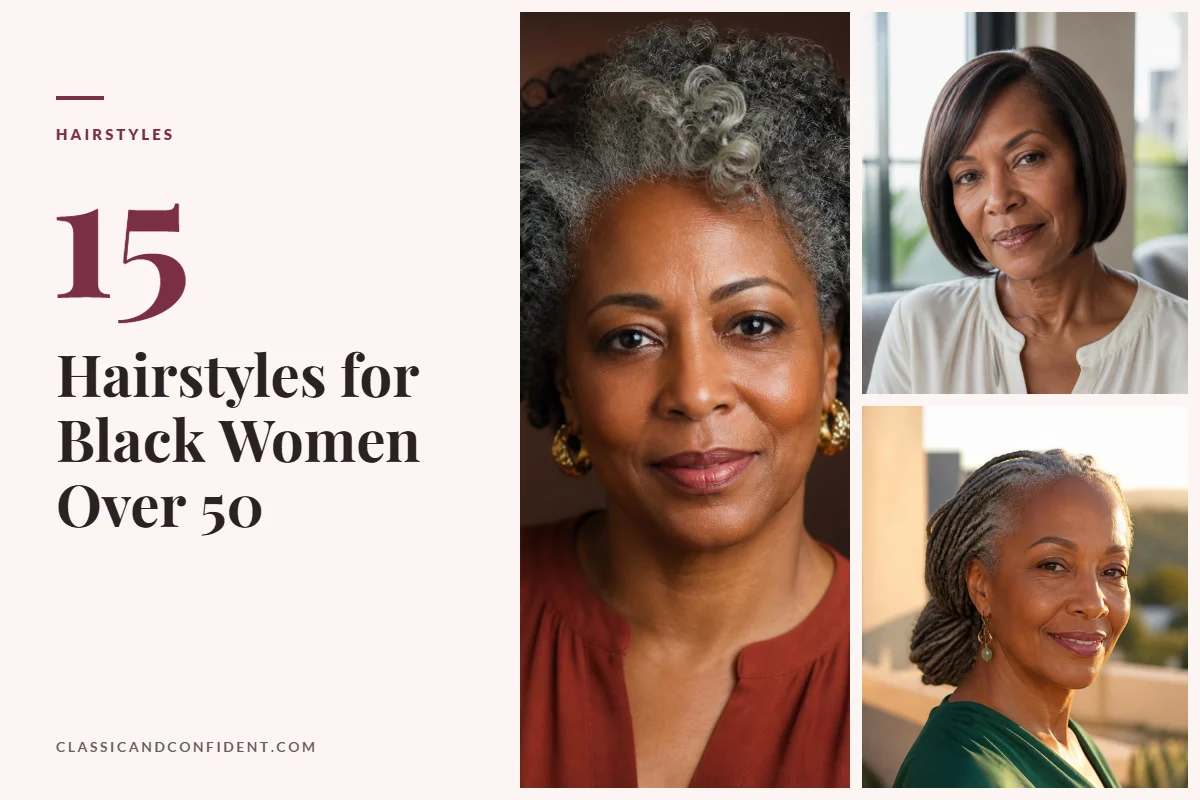
The best advice for older Black women hairstyles over 50 starts with two things: how textured hair behaves every day, and what happens when hair is pulled, heated or left dry for years. I wrote this guide to hairstyles for Black women over 50 around gentle handling, low tension and good moisture, so you can choose styles that look good and protect your hair.
Silver and gray strands tend to be drier, and menopause and aging can shift texture, so moisture and gentle handling come up in nearly every tip here. This list leans on natural hairstyles for Black women over 50, such as twist-outs, tapered crops and locs, and it also covers sleek bobs, wigs and low-tension protective styles, with notes on what to ask for and when to be cautious.
How to choose natural hairstyles for Black women over 50
Start with moisture and balance. Hair follicles shrink with age and scalp oil production drops, so hair needs a careful balance of moisture and protein: too much moisture can leave hair limp, and too much protein can make it brittle. A weekly deep conditioner is a smart habit, and applying gentle heat from a hooded dryer or heat cap helps the conditioner penetrate. Wash day is when hair actually gets hydrated, because water, not butters, moisturizes.
Graying changes things. Gray strands have lost their melanin and are more prone to dryness and sun damage, so a hat or scarf outdoors helps. Plan on trims about every eight weeks for relaxed or straight-natural hair, and every 12 to 16 weeks for curly-natural hair. A weekly deep conditioner keeps that drier hair balanced.
Finally, watch tension. Black women commonly experience hair loss from central centrifugal cicatricial alopecia (CCCA), traction alopecia and female pattern hair loss, among others, so see a board-certified dermatologist early if you notice changes. Braids, locs, weaves and extensions carry higher risk, particularly on chemically straightened hair. Pain, bumps or a receding hairline mean the style is too tight.
Twist-outs and defined natural styles
These styles work with your texture rather than against it, and most can be done without heat.
1. Silver twist-out
A twist-out is made by twisting damp hair in two-strand twists, letting them dry, then unraveling them into soft, defined curls. On silver hair the curls catch the light. A fluffy fro starts with loose two-strand twists on dry hair, using seven or ten sections, then an ionic blow-dryer on the roots for fullness. Use a light moisturizing cream rather than heavy butter, and finger-fluff.
How to wear it: Twist on damp hair, let it dry fully overnight, then separate gently.
Best for: Medium to long natural hair, 3c to 4c textures
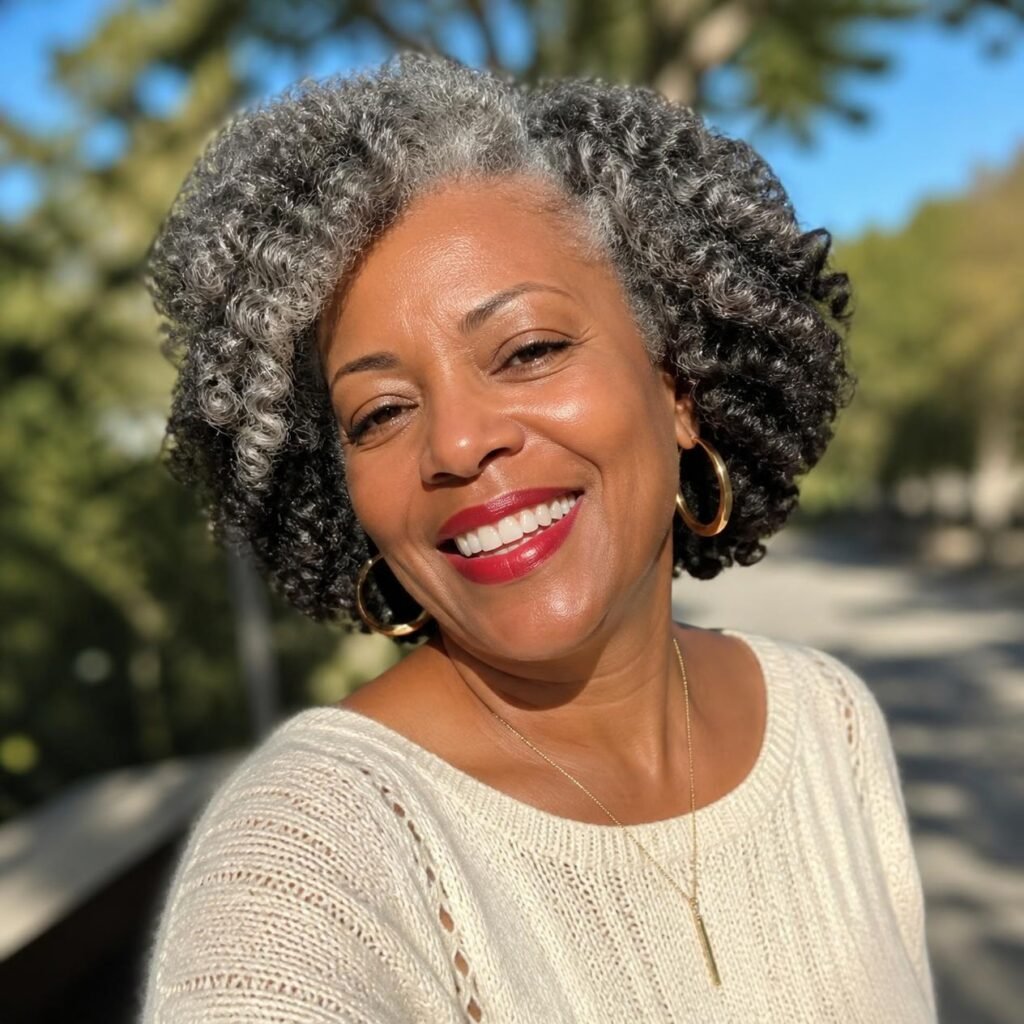
2. Flexirod set
Rolling medium sections of damp hair on flexirods gives bouncy, longer curls with little heat. Roll sections from the roots with a liquid leave-in applied first, and choose rod size by how big you want the curls. It lengthens the curl and adds volume. Let them dry fully, or leave them in overnight under a satin bonnet.
How to wear it: Pick larger rods for a looser curl and smaller rods for a tighter spiral.
Best for: Shoulder-length coily or curly hair that needs volume
3. Flat twists with a high bun
Flat twists lie close to the scalp and can be gathered into a high bun for a neat, polished look. Begin with stretched, dry hair and twist with firm but comfortable tension, since pain, bumps along the hairline or headaches mean the twists are too tight. With care they last one to two weeks, which gives hair a break from daily restyling.
How to wear it: Twist along the natural parts and leave the edges free.
Best for: Anyone wanting an elegant updo without added hair
4. Stretched fro
A stretched, rounded fro keeps length and volume without chemicals. Two-strand twists stretch tight coils, large twists at night limit shrinkage, and a satin pillowcase helps. Low-manipulation styles like this one are kind to older hair, because fewer styling sessions mean less stress on fragile strands. Shape it with a pick only when needed.
How to wear it: Re-twist at night in four to six large sections.
Best for: Natural hair that likes volume and low upkeep
5. Bantu knots
Bantu knots coil sections of hair into small knots against the scalp, and when they come out they leave defined curls. They are a low-maintenance, low-manipulation option. Keep them loose, not tight at the base, and moisturize before you start. They can be worn as knots for a few days, or undone for curls.
How to wear it: Make larger knots with soft hold, never tight at the hairline.
Best for: Women who like a sculptural look
Sleek bobs, wigs and heat
Straightened styles are popular and polished, but they come with trade-offs.
6. Sleek chin-length bob in deep brown
A bob ending at the jaw is a polished option, and a deep brown reads rich and covers any gray. It can be a pressed natural style, a relaxed one or a wig. If hair loss is a concern, limit dry heat from hot combs and blow dryers and relaxers on the scalp. Choose the bob if you like a clean line, and ask your stylist to keep heat low.
How to wear it: Use a heat protectant, and let the bob rest between presses.
Best for: Women who want a sleek, professional look
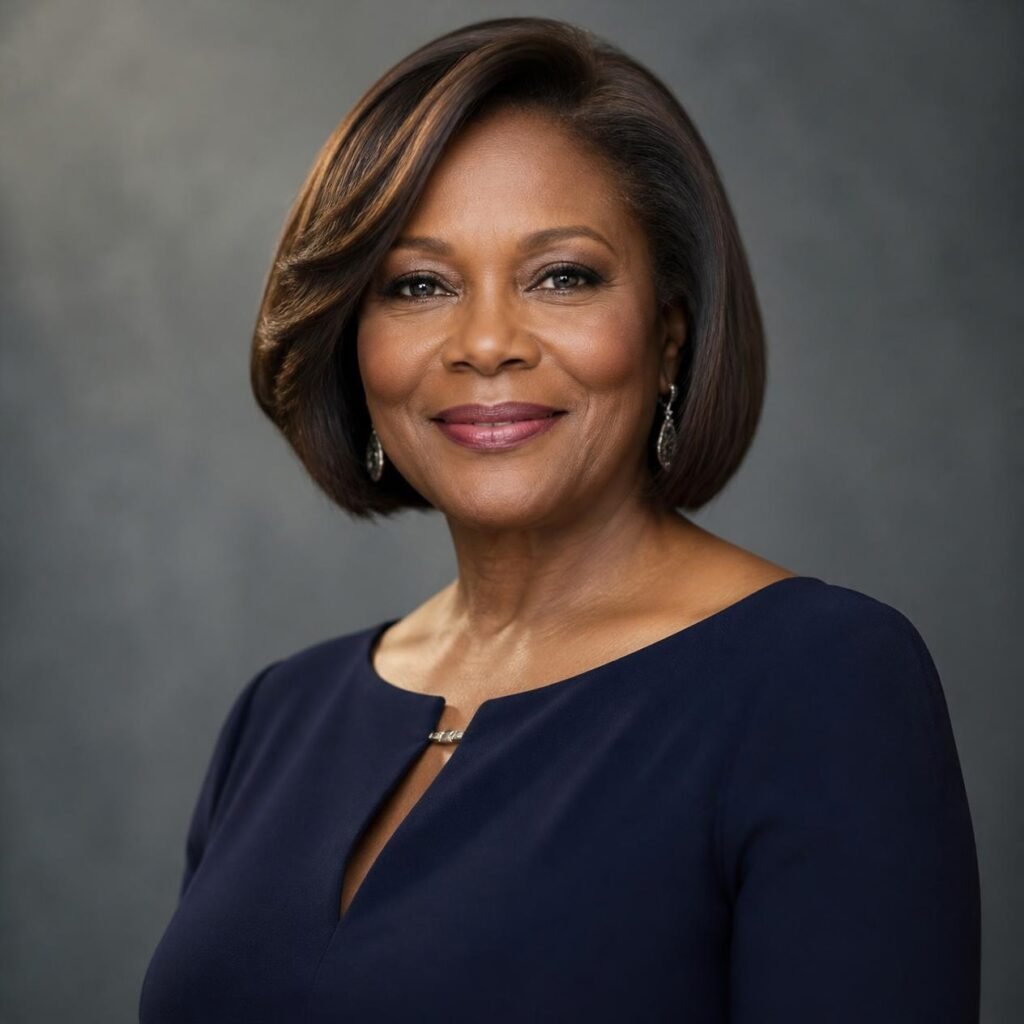
7. Silk press lob
A silk press straightens natural hair with heat, and a lob suits it because shorter hair carries less weight. Heat damage is the main risk, so avoid frequent presses and use a clarifying shampoo, blow-drying first, a heat protectant and a steam iron. Deep condition before a press. Wrap your hair at night.
How to wear it: Space presses weeks apart and wrap with satin at night.
Best for: Healthy hair, occasional events
8. Curly bob with soft layers
A curly bob shows off texture at jaw length and can be cut blunt with minimal layers. Go easy on the layers so the hair still looks dense, and use a light curl cream. Round faces can add a deep side part. Detangle with a wide-tooth comb.
How to wear it: Apply curl cream on soaking wet hair and diffuse on low.
Best for: Curly and coily hair at the chin
9. Wig or hair topper
A wig is a style choice and a practical tool. A dermatologist can suggest scalp powders, hairpieces or wigs to make hair loss less noticeable, and a wig or hat also protects from sun. Wigs held by clips or adhesives carry moderate risk, and satin caps are gentler than cotton or nylon. Choose a wig with a breathable cap.
How to wear it: Wear a satin cap under it and avoid glue at the hairline.
Best for: Thinning crowns, or a break from styling
Cropped, tapered and short natural cuts
Short natural hair is easy to wash and dry, and it shows off silver beautifully.
10. Cropped silver natural curls
A cropped cut keeps curl close to the head and lets silver be the focus. A very short curly cut makes gray strands look almost iridescent, especially with a demi-permanent gloss. Short hair needs less detangling and less time on wash day. Keep it shaped every four to six weeks. It also takes very little product, which keeps wash day short.
How to wear it: Define curls with a light gel or cream on damp hair.
Best for: Women who want a clean, low-maintenance silver look
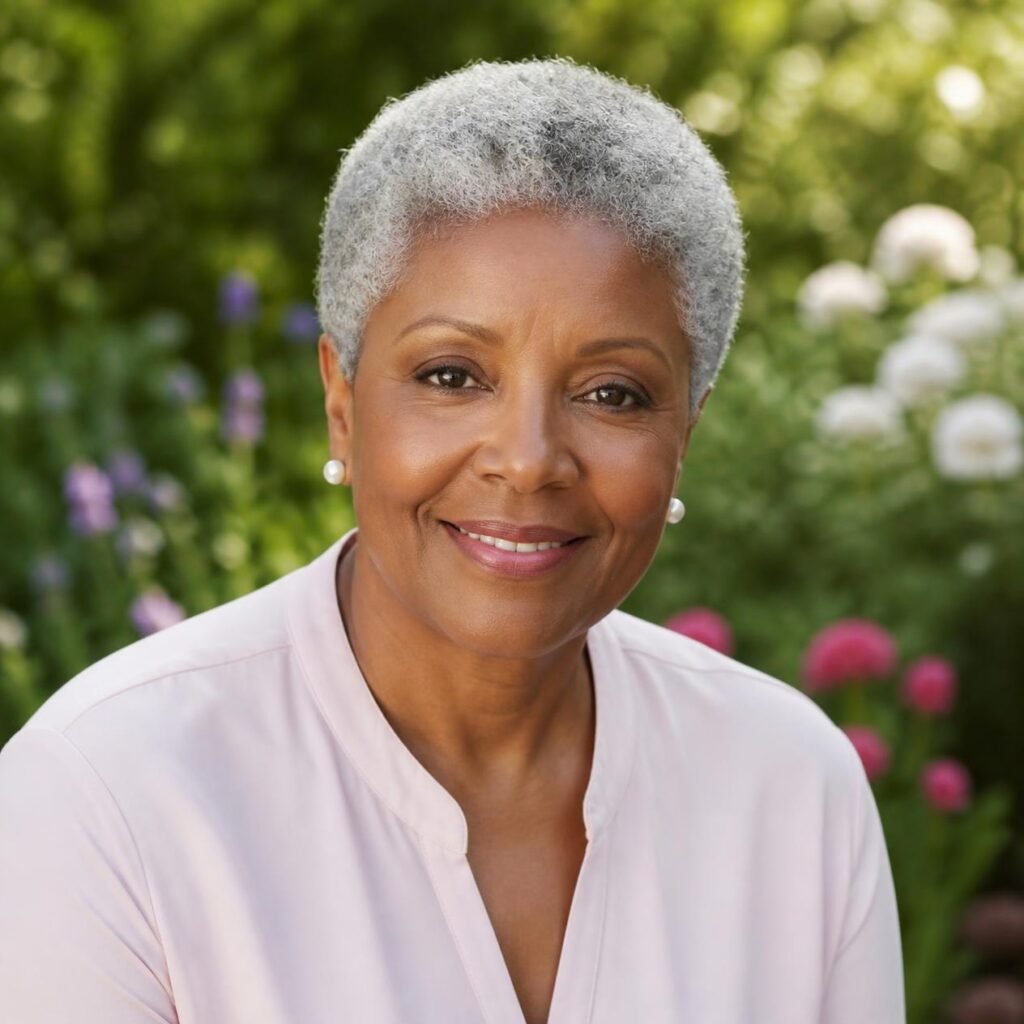
11. Tapered cut
A tapered cut is shorter at the sides and nape and longer on top, with a clean outline around the ears. Coil the top with a curl sponge or your fingers to define it. The taper highlights cheekbones and the neck, and it frames silver hair clearly. It also keeps the hair off your neck.
How to wear it: Ask for a gentle taper and shape it with the barber’s clippers.
Best for: Coily 4a to 4c textures; those who like a defined shape
12. Curly pixie
The curly pixie is short and soft, with curls left to fall on top. Use a curl-enhancing gel and air dry, with a diffuser for lift. It can be worn silver, salt and pepper, or colored. This cut is especially quick on busy mornings. Trim it every five to six weeks to keep the shape. It suits a bold earring and a swipe of lipstick well.
How to wear it: Use gel on wet hair, then leave it alone until dry.
Best for: Curly and wavy hair
13. Asymmetric curly cut
A lightweight curl cream keeps an asymmetric shape light. This cut leaves one side longer than the other, with curls falling across the forehead or cheek. It works for wavy, loose or spiral curls. Because the weight sits on one side, it adds lift and a modern twist to a short style. Ask for a defined shape.
How to wear it: Show the stylist a photo of the exact side lengths.
Best for: Wavy and loose to spiral curls
Locs, braids and low-tension protective styles
Protective styles can be kind to hair, but only when the tension is low and breaks are built in.
14. Silver locs
Locs can be worn long or cropped and look striking in silver. Avoid wrapping locs too tightly at the roots, since this can lead to hair loss, and keep them hydrated with steam sessions and light sprays. Locs are among the higher-risk styles for traction alopecia, so keep them light and see a loctician who understands scalp health.
How to wear it: Have roots retwisted gently, with breaks between sessions.
Best for: Women who want a long-term, low-styling look
15. Larger, lighter braids
The problem is sustained tension, not braids themselves. Larger braids spread pull across more follicles, so choose larger braids, shorter lengths, less added hair and edges left out. Keep braids in no more than six to eight weeks, and two to three months at the very most. Choose the shorter limit.
How to wear it: Tell the braider you want it loose enough to move your scalp.
Best for: Women who want a protective style
Good to know
Hair loss in Black women often comes from CCCA, traction alopecia, female pattern hair loss or other causes, and earlier treatment generally gives better results. Traction hair loss can be permanent once follicles scar, so see a board-certified dermatologist if you notice a receding hairline, bumps or smooth shiny patches. This is not self-blame: many forms are treatable.
Talking with your stylist and dermatologist
Before any installation, state your boundaries: edges out, no glue, nothing painful. Make specific requests before styling starts and speak up if anything stings. Thinning at the crown that spreads outward can point to a different condition from traction, which is one more reason to have a dermatologist look.
Involve your stylist in gentle care and in finding styles that help you feel like yourself while you are treating hair loss. If your texture has changed or your hair feels different since menopause, talk to your doctor, since some medications, including hormone therapy and thyroid or blood pressure drugs, can affect hair.
Frequently asked questions
Your hair at this stage deserves care that matches how it feels now: drier, silver in places, and worth protecting. Choose a style that keeps tension low and moisture high, and bring this list to a stylist who understands your texture.