20 Hairstyles for Women Over 50 With Fine or Thin Hair
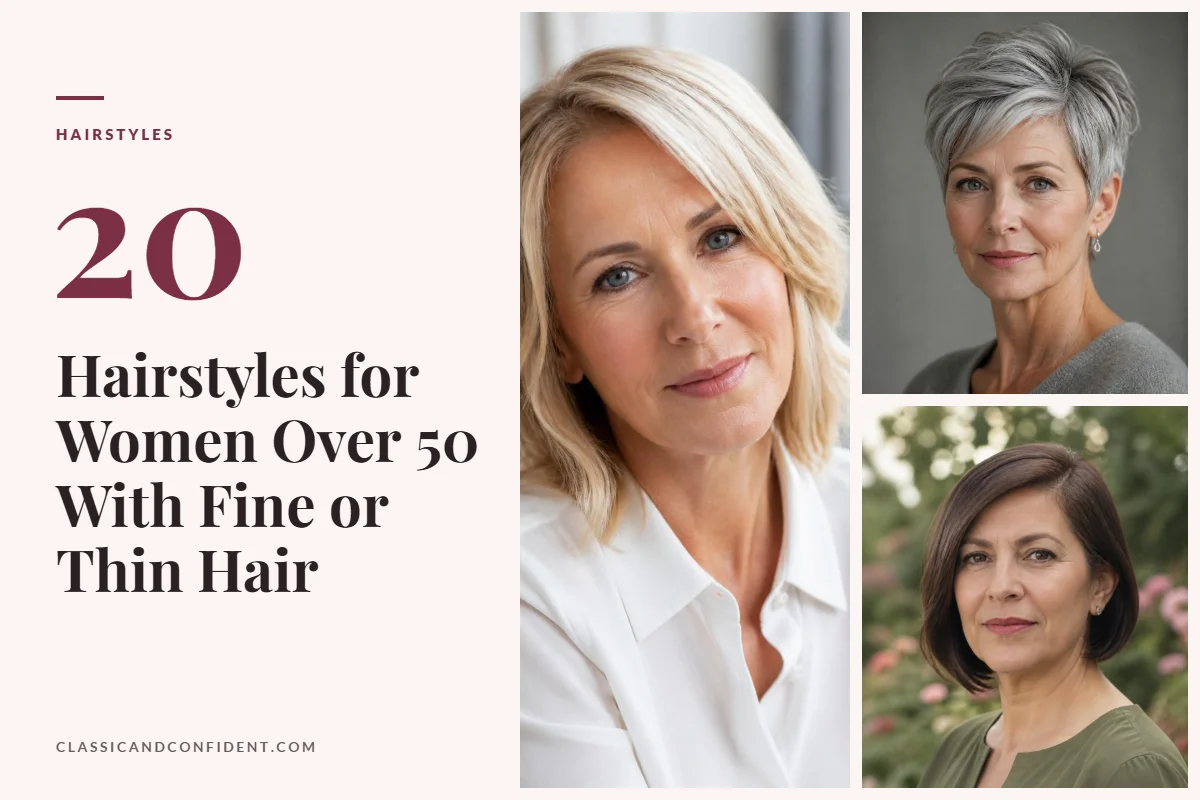
If your part is looking wider and your ponytail feels thinner than it used to, you are in very good company. Dermatologists describe gradual thinning as one of the most common changes women notice in their fifties, and the right cut can do a lot of the work that products cannot. This guide collects 20 hairstyles for fine hair over 50, from crops to collarbone lobs, with the cutting details to ask for.
I spent my research time on what actually works for thin hair, not on picture galleries. You will find the reasons hair thins, the cutting and color techniques that make hair look denser, and the point at which a salon visit should become a doctor’s visit.
Why hair gets finer after 50, and when to see a doctor
The most common reason is female pattern hair loss. Follicles gradually shrink, so each hair grows thinner and shorter, and the process is linked to genetics and to androgen hormones. About two-thirds of women have some thinning after menopause. The first sign is usually a widening part, often in the 40s or 50s, and around 55 percent of women have some hair loss by age 70.
Other things can add to it. Hormone levels drop after menopause, which may change how androgens act on follicles. Thyroid problems, major stress, significant weight loss, poor nutrition and certain medications, including some used for arthritis, depression, heart conditions, gout and blood pressure, can all play a part. Stress or illness can cause a temporary shed that shows up two to three months later and usually settles over several months. Take iron, zinc or biotin only if a blood test shows you need it.
I am not a doctor, so please treat this as a prompt, not a diagnosis. See a doctor for sudden thinning, patchy bald spots, much heavier shedding than usual, or a receding front hairline, and do the same if your scalp itches, burns, hurts or develops a rash. Earlier treatment makes regrowth more likely, and treatments such as minoxidil can take months to show results.
For choosing a cut, think about three levers. Keep weight at the ends, place layers only where they lift, and move your part. A length between the jaw and collarbone works best for fine hair, because growing hair long to hide thinning tends to backfire.
Short cuts that add lift
Shorter hair has less weight pulling it flat, which is why several stylists point fine-haired clients toward these shapes.
1. Textured pixie with a longer top
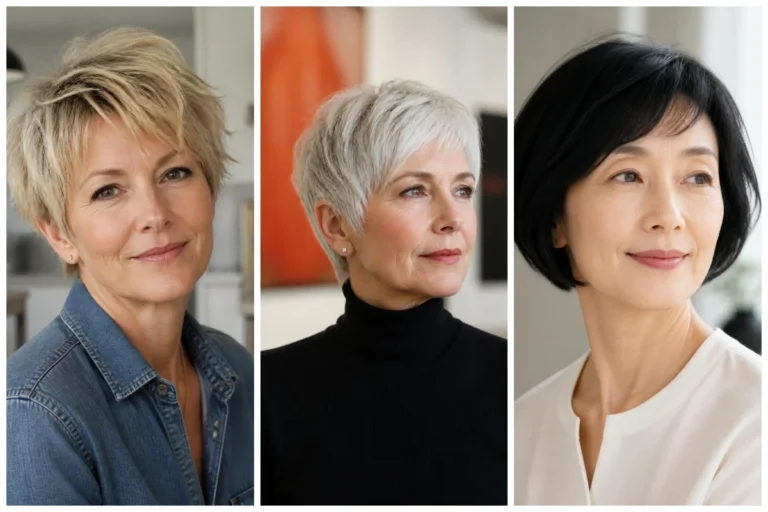
A pixie keeps the nape and sides short and leaves more length on top, so the crown has height instead of lying flat. Less length gives fine hair more lift and bounce. Point cutting on dry hair gives soft movement without the heavy texturizing that can leave thin hair looking see-through. Work a little root spray into damp roots, then rough-dry with your fingers.
Best for: fine hair that goes flat by lunchtime
2. Bixie
A bixie sits between a bob and a pixie: ear-to-jaw length at the back, short layers at the crown and a long fringe. It is a gentler step if a full crop feels like a leap, and it keeps some length around the ears and nape that a pixie removes. Test the idea first by slicking wet hair back and checking both profiles in a mirror.
Best for: women moving out of a bob who want less length
3. Crop with a long swept fringe
Crops finished with long bangs can be brushed aside or swept up at the crown. That flexibility helps with thinning at the temples, because the fringe can be moved to cover the thinner side while the rest stays short and light. Ask for the fringe to be cut long and feathery, then trimmed every few weeks. Keep the sides tidy so the fringe is the feature.
Best for: thinning temples or a widening front part
Bobs that make fine hair look fuller
A blunt outline reads as density because every end lands on the same line.
4. Blunt chin-length bob
The classic chin-length bob with a blunt bottom line is a strong thickening cut, since all the ends stop at one length. Keep it to a single line with no feathering, which thins the perimeter. Plan on a trim about every six weeks to keep the edge crisp. Ask for the length to land at the chin, give or take an inch.
Best for: straight or slightly wavy hair with thin ends
5. French bob with a soft fringe
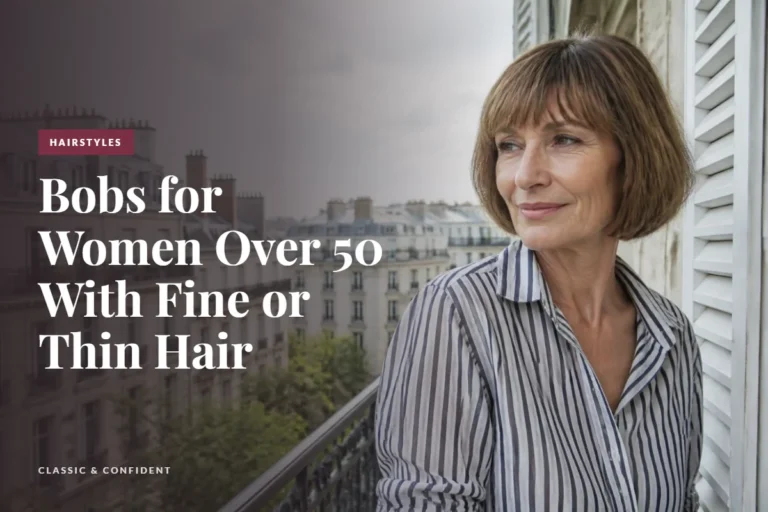
The French bob is shorter, between jaw and cheekbone, blunt, and usually worn with a fringe, and it is easier on fine hair than a rounder Italian bob. A soft fringe adds visual weight at the front, and the bangs can be split in the middle for a lighter look. Cut the fringe from a small hairline section so it blends in.
Best for: oval and heart-shaped faces, and straight hair
6. Slightly angled A-line bob
An angled A-line suits hair that is fuller at the nape and thinner at the sides, because the longer front pieces cover the sides while the back stays dense. Keep the angle gentle, since strongly asymmetric shapes draw attention to thin areas. Point to where your hair is thinnest so the stylist can place the length there.
Best for: thinner sides with more density at the back
Lobs and shoulder-length cuts
Shoulder length is a reasonable place to stay if you are not ready to go short.
7. Collarbone-grazing blunt lob
A blunt edge between the chin and collarbone is one of the best tricks for fine hair, because the bulk sits at the bottom. A collarbone-grazing lob keeps that weight while leaving enough length to tuck behind the ear or pull back. Keep the bottom line an inch or two above the shoulders so it does not flip.
Best for: women who want to keep some length
8. Lob with ghost layers
Ghost layers are cut inside the hair, hidden under a solid outer layer. They suit baby-fine hair under a blunt bob or lob, adding volume along the length without breaking the outline. The surface looks one length while the hair lifts. Ask for internal layering only, with no visible short pieces. Your stylist can judge by hand whether your density can carry hidden layers or whether a plain blunt cut is safer.
Best for: very fine hair that collapses at the roots
9. Shoulder-length cut with curtain bangs
Shoulder length is the new long for women over 50, and it is less prone to damage than very long hair. Soft curtain bangs create fullness without removing bulk. Skip bangs that are heavily thinned out, which can strip the weight fine hair relies on. Have the fringe cut dry so you can see how it falls.
Best for: women who want a fringe without a heavy block
10. Front-weighted face-framing layers
Keep layers toward the front, where they add lift around the cheekbones, and avoid feathered perimeters. Two or three longer pieces framing the face give shape, while the back and sides remain solid. Over-layering thins the ends. Ask that the shortest layer begin no higher than the cheekbone. Ask to see how the layers fall when dry before any final shaping.
Best for: shoulder-length hair that looks stringy at the ends
11. Diffused soft-wave mid-length
Diffusing keeps the volume of a blunt bob or lob without flattening it under a brush. Use your fingers and a diffuser, and add mousse only once the hair is partly dry, so it is not diluted. The result is body and a little texture on a clean shape, with very little heat or effort. Apply mousse when hair is about 70 to 80 percent dry, then scrunch gently under the diffuser.
Best for: straight-to-wavy hair that needs body
Parts and fringes that cover thin spots
Sometimes the change that matters most is where the hair falls, not how long it is.
12. Deep side part with a crown swoop
A center part shows more scalp than a side part, and a side part with a swoop at the crown gives an old-Hollywood look. Flipping the part while blow-drying adds fullness. Pushing the hair across the widest area covers it without drawing attention. Dry the hair in the opposite direction first, then flip it back to your side.
Best for: a widening center part
13. Zigzag part with root touch-up
An imperfect zigzag part helps disguise roots, and moving your part regularly means the same stripe of scalp is not always exposed. A root cover-up product along the part can reduce the widening effect of white or gray roots. The cut underneath can be anything you like. Use a fingertip or comb tail to make the part uneven.
Best for: women with contrast between scalp and hair color
14. Feathery full fringe
For a receding hairline, try full, feathery bangs across the forehead, adjusted by your stylist in width and starting point. Feathery is the key word. A heavy blunt block can look sparse on fine hair, while tiny vertical snips make it airy. Check that you have enough hair at the front to build it. Ask the stylist to cut it with scissors, not a razor, which can break fine hair.
Best for: a receding hairline or high forehead
15. Long sideswept bangs
Sideswept or curtain bangs work well for thinning temples, parted on the fuller side, with the part angled toward the crown if it is widening. They grow out smoothly and need fewer trims than blunt fringes. They also soften a strong jaw or a high forehead. Trim them dry to avoid the shrinkage surprise. They also look softer than a straight-across fringe as hair grows.
Best for: thinning at the temples
Color that adds density
Color cannot grow hair, but the right placement creates depth that makes the hair look thicker.
16. Shadow root on a blunt bob
Darker roots melting into lighter lengths create depth at the base and a fuller look without obvious highlights. It also grows out softly, so you need fewer visits, and fewer chemical sessions are kinder to fragile hair. Ask for the root to stay within a few shades of your natural base. It suits anyone who dislikes seeing a regrowth line.
Best for: hair that looks flat at the scalp
17. Fine highlights on top, deeper lowlights underneath
Bolder lowlights and highlights on the back and sides add depth, with finer highlights through the top layer. Very fine, soft highlights, often called babylights, keep the surface from looking striped, which matters when the scalp shows through. Avoid stark contrast, which can make thin hair look thinner. Ask your colorist to keep the contrast low and the placement soft.
Best for: women who want dimension without harsh stripes
18. Gray blending with lowlights
Let your roots show for a month or two to see your true shade, then ask a colorist for highlights around the face without recoloring the whole base and a few lowlights for depth. Gray hair can be coarser, which may add body. Cut off dyed ends gradually. Take a photo of your roots in daylight to the consultation.
Best for: women moving to gray who worry about a harsh line
19. Glossed color on a polished cut
A gloss does not add density, but shine reads as health, and a blunt line looks sharper when light bounces off it. A salon gloss boosts shine on gray, but avoid over-toning, which can leave a purple, green or blue cast. Ask for a gentle toner. Schedule the gloss for a few weeks after a cut so the shape stays crisp.
Best for: dull gray or faded color
20. Soft balayage within your natural range
Avoid a base color far from your scalp tone, because it can make the crown look thin. Balayage uses existing lightness instead of heavy bleaching, and it also needs fewer touch-ups. Skip bleach entirely where possible and use high-lift tints. Say plainly if you want to avoid bleach. Ask for a gloss afterward to keep the tone fresh.
Best for: fragile hair that cannot take much lightening
Good to know
Supplements such as iron, zinc or biotin help only when a blood test finds a deficiency, and too much iron can be harmful. Before buying thickening vitamins, ask a doctor what a test shows.
What to say at the salon, and what to skip
Bring two photos, one from the front and one from the side, and say where the bottom line should land: jaw, chin or collarbone. Ask whether the stylist will point cut the ends and keep layers inside. Scissors are better than razors on fine hair, and razor cutting fine or damaged strands is best avoided.
At home, put mousse or root spray on damp roots, rough-dry until about 75 percent dry, then finish with a round brush or Velcro rollers. Keep heavy conditioner and oils off the roots. Avoid daily dry shampoo, which can build up on thin hair.
What to skip: very long, stringy hair, heavy shag layers, thinning shears, a wide unchanging center part, and a base color far from your natural shade.
Frequently asked questions
None of these cuts will change the number of hairs on your head, but the right shape changes what people see. Take photos to the salon, and if something about the thinning worries you, get it checked.