12 Hairstyles for Women Over 70 With Fine or Thin Hair
When you can see your scalp through your hair under bathroom lights, the question is not how to look younger. It is which hair styles for women over 70 with fine hair take the pressure off thin areas, stay comfortable, and do not demand an hour at the mirror. This guide gathers 12 cuts, sets, color choices and cover options built around fine, thinning hair in your seventies and beyond.
I kept the focus on thinness, not general over-70 style. Along the way you will find gentle-care habits that suit a sensitive scalp, ideas for white and gray hair, and practical notes if a family member or caregiver helps with washing and styling.
How to choose a cut when hair is fine and thin after 70
Thinning is common by this age. About 55 percent of women have some hair loss by 70, most often from female pattern hair loss, which shows as a wider or wispier part. Hair over 70 also often becomes finer and drier, so softer, lighter shapes tend to work better than heavy ones.
Look at length first. Medium length works well after 70 because it gives movement without weight. Next, look at layers. Avoid heavy shag layers and heavy razoring, and if your scalp is dry, choose a gentle, moisturizing shampoo and wash less often.
Many medicines taken in later life can contribute to shedding, including certain drugs for arthritis, depression, heart conditions, gout and blood pressure. Please do not stop any prescription on your own; if you suspect a link, ask your doctor or pharmacist. See a doctor too for sudden thinning, patches, pain or itching. Wigs and concealers do not regrow hair but give immediate results.
Gentle hair styles for women over 70 with fine hair
These cuts keep weight at the edges and hair away from an over-worked scalp.
1. Layered bob with side bangs

A layered bob with side bangs is a lovely pick for women over 70. The bangs soften the forehead and give the front a place to lift, while a side part sets the hair at the root. Keep layers short in number and soft at the ends. Ask for a deep side part and a quick root-lift blow-dry.
Best for: women who want shape without fuss
2. Soft pixie with downward-angled layers
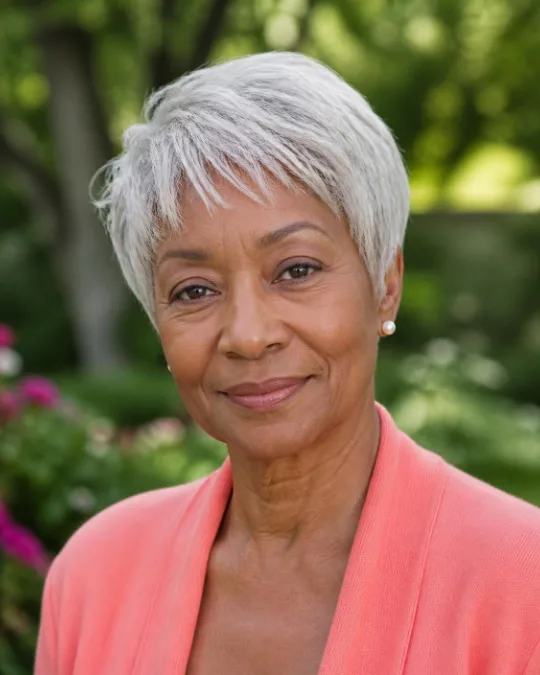
Angle pixie layers downward instead of spiking them, which masks sparse areas and lets the bangs blend in. The sides and back stay short and the top has just enough length to lie in place. It dries quickly and needs little more than a dab of product, which helps if your hands tire easily. Ask the stylist to point cut the top rather than razor it.
Best for: women who prefer to avoid brushes and tools
3. Graduated bob that grazes the chin
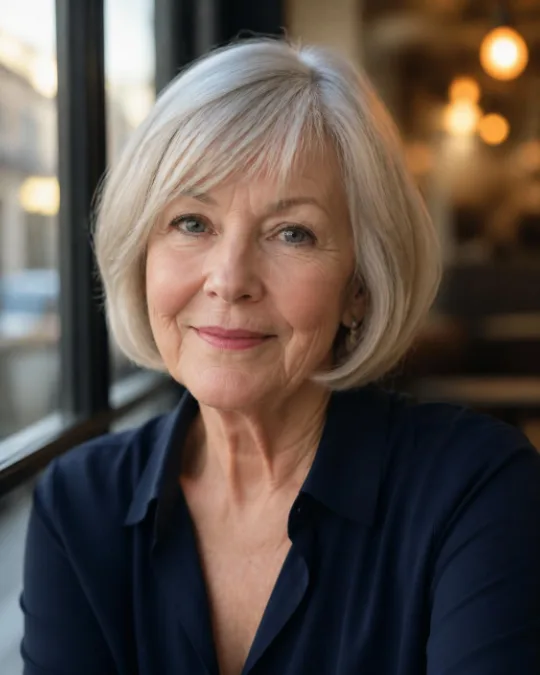
A graduated bob has longer front layers, shorter stacked layers at the back and chin-grazing lines, and this shorter shape is often kinder than longer styles that can be less flattering on fine hair. The stacked back adds some lift at the crown. Keep the angle gentle so it does not draw attention to the sides. Trim the stacked back regularly so the shape stays neat.
Best for: fine hair that goes flat at the back
4. Natural shoulder-length cut with subtle layers
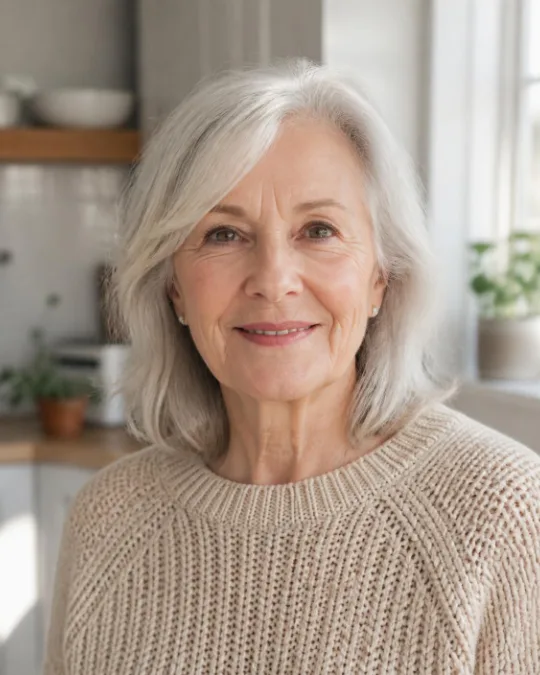
A shoulder-length cut with subtle layers adds body, keeping the face-framing pieces lighter. Medium length gives movement without weight. This length can be tucked behind the ears, pinned back, or worn forward, and it is less prone to breakage than long hair. Ask for tidy ends so the perimeter looks solid, and plan on a trim about every two months.
Best for: women who do not want a dramatic change
Sets, rollers and easy volume
Rollers are old technology, and they still work well for hair that needs body without heat damage or a lot of brushing.
5. Wash-and-set with Velcro-style rollers
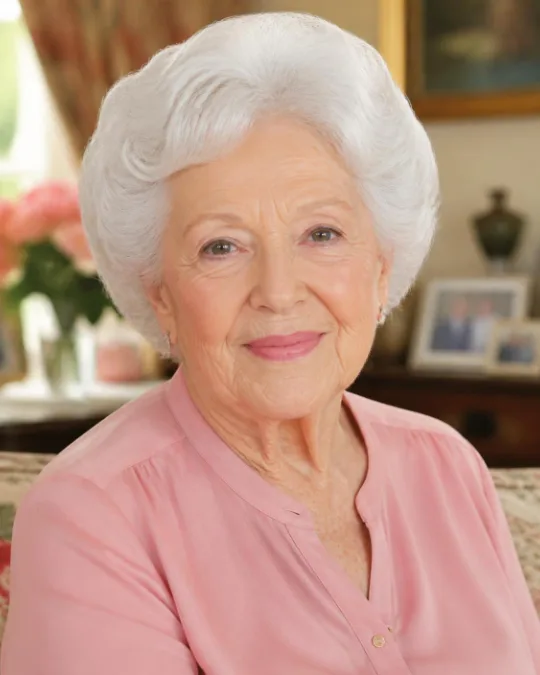
Rough-dry hair to about 75 percent dry, then finish with Velcro-style rollers for shape. Rollers lift the roots where the scalp tends to show through. Use rollers that grip gently, take them out only when the hair is cool, and finish with a light mist. A caregiver can often place them easily. Pin a small section at the crown first.
Best for: women who like a classic, set look
6. Hot-roller curls on a chin-length bob
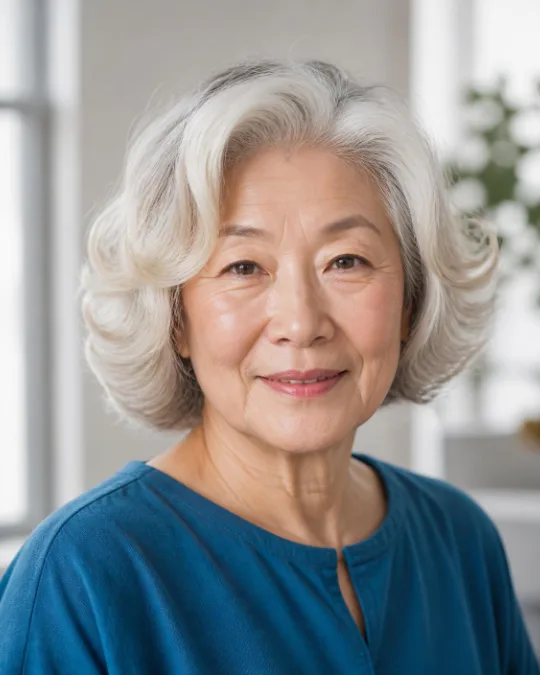
Setting a bob on hot rollers adds curl without a flat iron. Fine hair takes shape quickly, so a few large rollers at the crown and sides are usually enough. Let the rollers cool before removing them so the set lasts, and use a heat protectant spray first. Keep the curls loose and brush them out with your fingers for a softer look.
Best for: special occasions and church or lunch outings
White and gray hair that looks fuller
Gray hair behaves differently, and a few salon and home details make a visible difference.
7. Natural silver pixie with a gloss
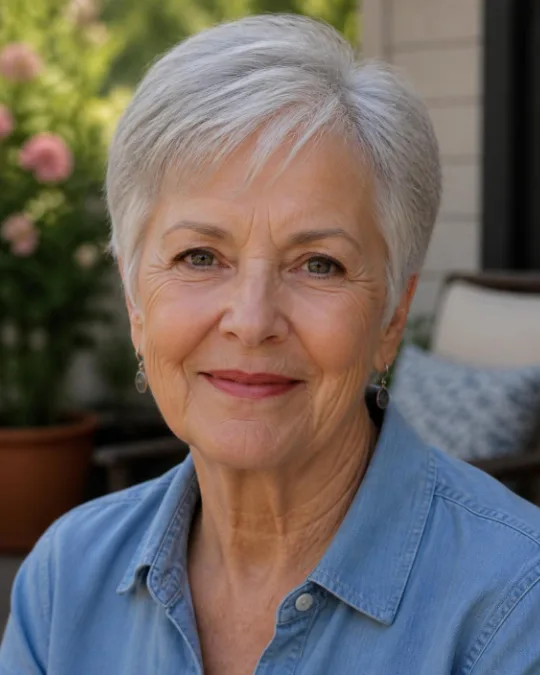
Ask your stylist for a clear gloss treatment to keep silver hair healthy and shiny. A gloss makes a short cut look neat, since shine reads as health. Avoid over-toning, which can leave a purple, green or blue cast. Ask for gentle toning or none. Book it with your regular trim so one visit does both.
Best for: short silver hair that looks dull
8. Salt-and-pepper grow-in through trims
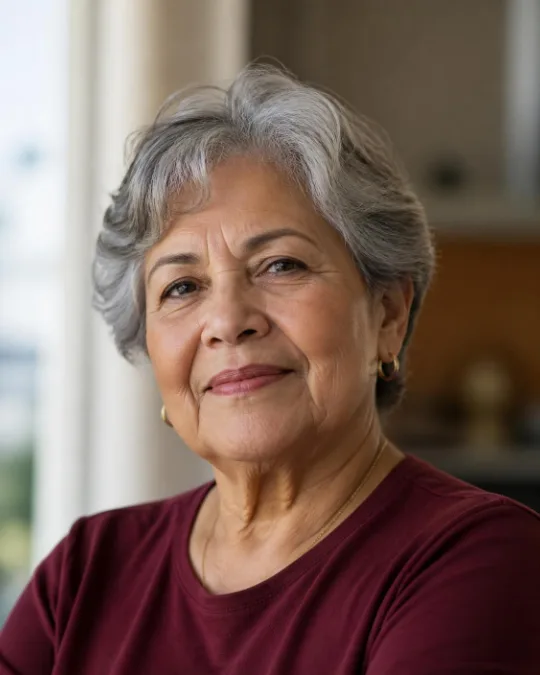
Trimming about half an inch of dyed ends each time lets natural gray gradually take over. This works well with a short, easy cut. A colorist can add highlights around the face without recoloring the base, and a few lowlights give depth. Wait a month or two before the first appointment so you see your true shade. Do it in stages so the line never looks harsh.
Best for: women stopping color without a harsh line
9. Bright white bob with weekly violet shampoo
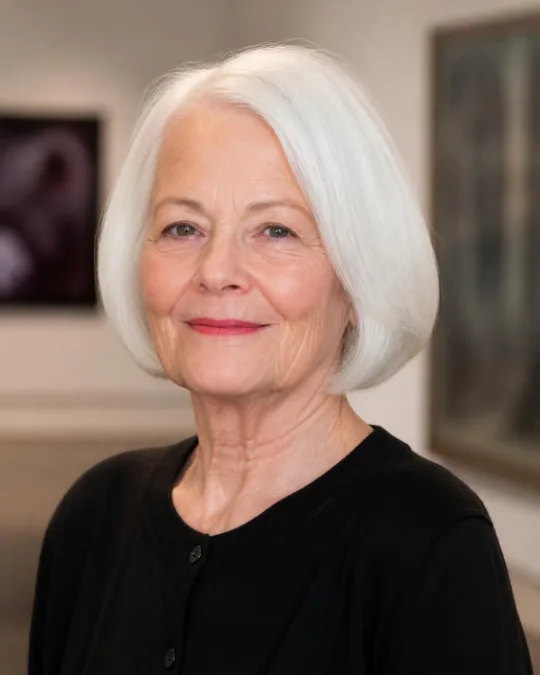
A purple-toned shampoo helps keep gray from yellowing, and coarse or frizzy hair should alternate it with a hydrating shampoo. Choose a conditioner that adds fullness if hair is fine. Because white hair shows every shift in tone, keep the shape a blunt bob so the line stays crisp. Violet shampoo can dry hair, so follow it with a moisturizing conditioner.
Best for: white hair that yellows
Low-effort looks and cover options
If someone helps you with hair, or your hands and shoulders tire, simpler is kinder.
10. Wash-and-wear short crop

Pixie cuts are low maintenance. A crop that dries into shape needs only fingers and a dab of product, so it works if reaching up is difficult or if someone else washes your hair. Choose a stylist who cuts it to fall naturally, so no tools are needed. Plan trims every six to eight weeks. Ask for the top to be left a little longer than the sides for softness.
Best for: minimal styling and easy washing
11. Shoulder-length cut that air-dries

A shoulder-length cut with subtle layers needs no daily heat. Gray hair should be trimmed often, as ends fray, with eight to 10 weeks the usual interval. Ask for a blunt perimeter, so air-drying gives a tidy line instead of wispy ends. Comb it through with a wide-tooth comb when wet to avoid pulling.
Best for: women who prefer to skip the hair dryer
12. Partial topper over a short cut
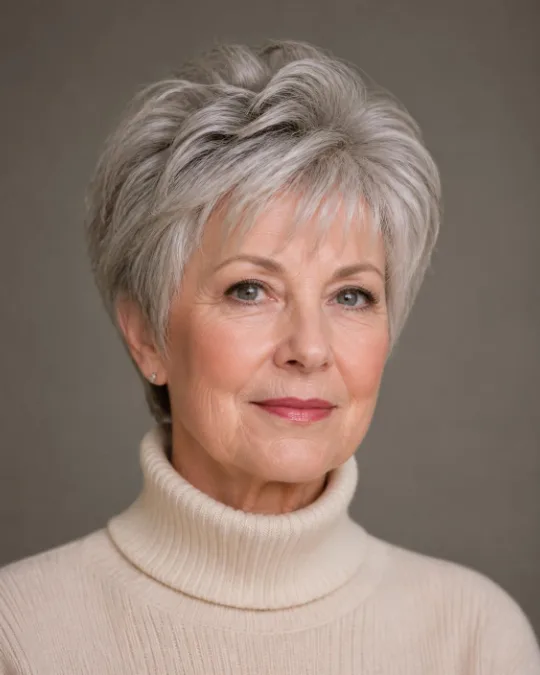
A topper is a hairpiece that covers the crown or part. Toppers add volume but do not treat hair loss, and they suit women who still have enough hair to anchor one. Clips can cause traction, so rotate positions and take breaks. Ask a doctor first if the scalp is sore or the loss is sudden. Choose a skin-colored base that matches your part.
Best for: a clearly thin crown with hair at the sides
Good to know
If your scalp is dry, choose a gentle, moisturizing shampoo and wash less often. Avoid tight braids and caps. Both ideas pair well with the soft, low-tension looks in this guide.
Salon talk and gentle upkeep
Tell your stylist plainly how much time and help you have. Ask for a cut that works with how your hair falls when dry, and mention if you have a tender scalp. Trim fine hair every six to eight weeks, and gray hair every eight to 10 weeks.
For heat, use a heat protectant every time, keep settings low, and never leave hot tools resting on the hair. A good rule of thumb is that if hair feels too hot to touch with your finger, it is getting too much heat.
If you use a topper, patch-test any adhesive for 24 hours and stop if you notice irritation, pain or more shedding. Anything that hurts the scalp is a reason to see a doctor.
Frequently asked questions
A good cut after 70 should make mornings easier, not harder. Pick one idea, perhaps a layered bob or a soft pixie, and take a photo of it to your stylist. If thinning has changed quickly, ask your doctor to look.