20 Hairstyles for Women Over 50
Most lists of haircuts for women over 50 show you a pretty photo and stop there. I wanted more: why a cut works on hair that has changed, what to say in the chair, and what daily upkeep really looks like. This guide gives you practical, honest advice on cuts that flatter fine, thinning, gray and textured hair alike.
Hair after 50 tends to be finer, drier and less dense, and gray strands often feel coarser. Female pattern hair loss usually starts in midlife and shows up as a widening part, a thinner ponytail or receding temples. The good news is that a well-chosen cut can do a lot of visual work, so the 20 hairstyles for women over 50 below are sorted by length and shape, from layered shags to pixies, bobs and long hair.
Every entry says who the cut suits and what to ask your stylist. My other guides cover the 60s, the 70s and newer looks, so you will not find the same cuts repeated here.
How to choose haircuts for women over 50 as your hair changes
Start with the biology, because it decides which cuts behave. Falling estrogen can shorten each hair’s growth phase, and that follicles shrink with age, so new strands come in finer and overall density drops. Oil production from the scalp also declines, which leaves hair drier and more brittle and can make gray hair feel wiry. It is hard to separate the effect of menopause from ordinary aging.
Female pattern hair loss is the most common cause of hair loss in women, often beginning in the 40s to 60s. Signs include a widening part and receding hair near the temples, and getting a diagnosis early is wise, since other conditions can look similar. If you are noticing shedding or a changing part, see a dermatologist before assuming it is just the cut that needs fixing.
For cut choice, a few principles come up again and again. Weight at the ends makes fine hair look thicker, so a blunt bob does this well, and it is smart to go easy on layers when hair is thin. Shorter cuts can also make hair look fuller. Texture matters too: curly and coily hair usually wants layers cut to the curl pattern, while straight fine hair often wants a clean line. Length itself is not a rule. Choose the shape you will actually style on a busy Tuesday.
Layered, shaggy and shoulder-length cuts
Shoulder length is where many women land for this decade. It is the new long for women over 50, because it keeps movement without the wispy ends that very long hair can develop.
1. Feathered collarbone layers
This cut skims the collarbone with soft, long layers that start below the chin, so the shape stays full at the bottom. Layered mid-length cuts add dimension and soften the face while keeping a longer outline. Keep the layers long and connected, never choppy. They lift flat roots and give straight hair a gentle bend when blow-dried with a round brush.
Best for: Straight, medium-density hair that has lost bounce
2. Modern layered shag
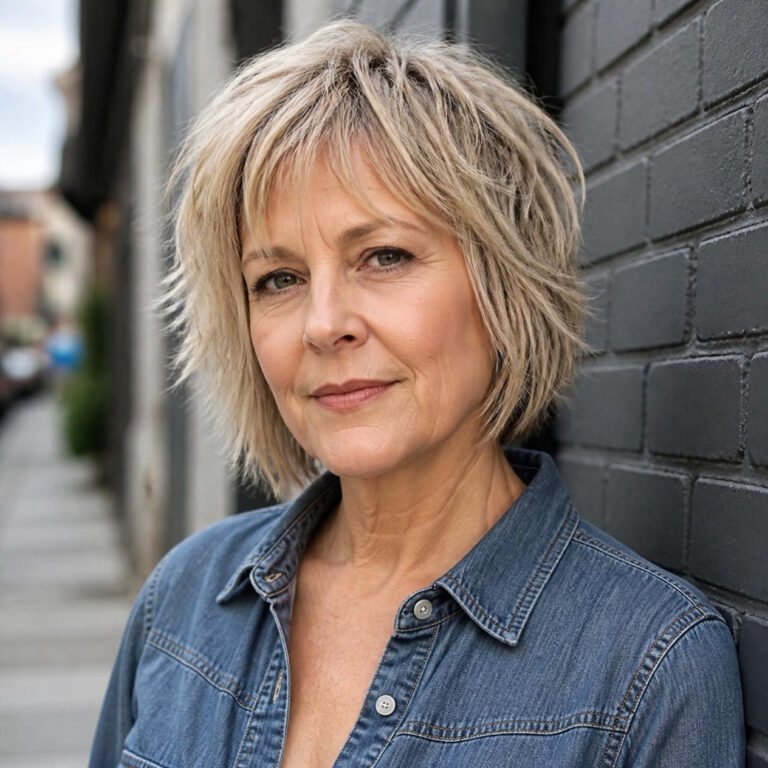
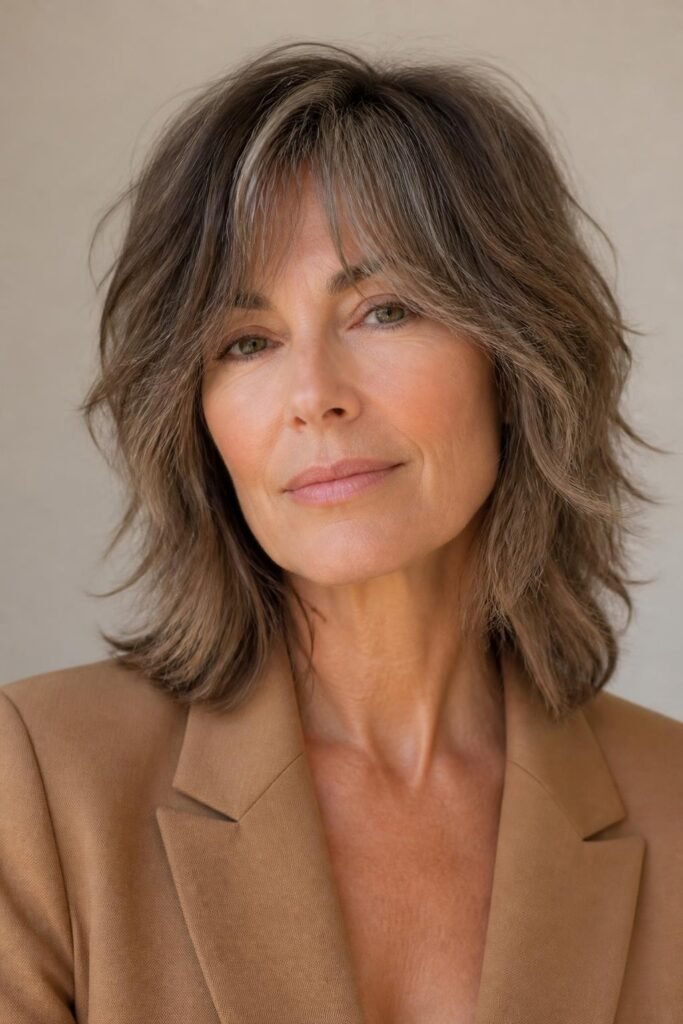
The shag is back in a softer, airier form: feathered layers through the crown and face, with the length left around the shoulders. It is soft and low maintenance, with trims every eight to twelve weeks, and it works best on thick hair because the layers remove weight. A lighter version works on medium hair if the stylist keeps the layers short only at the crown. Highlights show the layers beautifully, as in the photo below.
Best for: Wavy or thick hair that needs shape and movement
3. Natural wavy shoulder cut
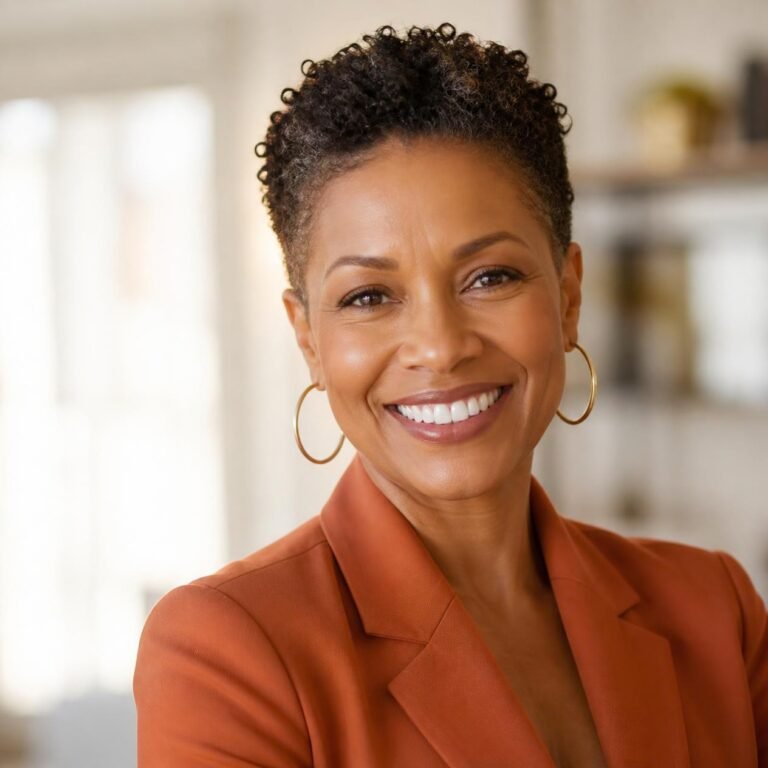
If your hair has a natural bend, a cut at the shoulders with subtle layers lets the wave do the work. This length is low maintenance, with lighter pieces around the face and curl-defining product for curlier textures. Menopause can change texture, and some hair turns curlier in spots, so a cut that follows your current pattern helps. Air drying or a diffuser is enough.
Best for: Wavy and curly hair, mornings with no time
4. Shoulder-grazing cut with a deep side part
A deep side part is one of the simplest ways to make hair look fuller, because it throws a section of hair across the crown. Pair it with a length that just grazes the shoulders and layered, side-swept pieces. This length suits thinning or gray hair well. Turn the ends under with a round brush for a soft finish.
Best for: Thinning crowns and widening parts
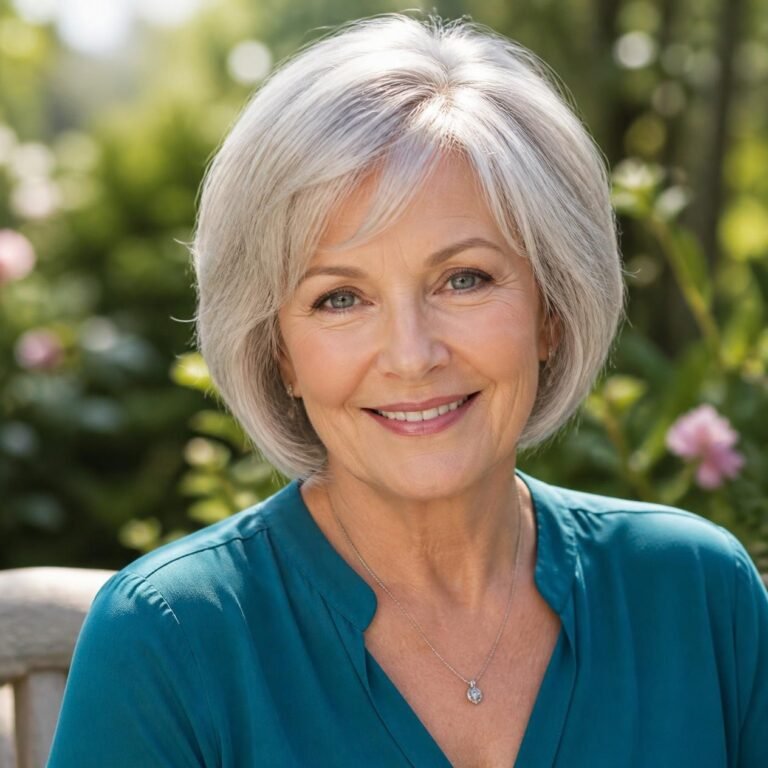
5. Grown-out silver shoulder cut
If you are letting gray come in, a cut at or just below the shoulders gives you room to grow out the line. You can let the color grow out gradually or cut off colored ends for a fully gray look, with salon visits about every 10 to 12 weeks. Gray is often drier, so moisturizing products help. A gloss adds shine.
How to wear it: Ask your colorist for a gloss between cuts and a purple shampoo only if yellow tones show.
Best for: Women transitioning to natural gray
Short and cropped cuts
Short does not mean severe. Shorter cuts can make fine hair look thicker, which is why a smart crop is often a good choice for thinning hair.
6. Disconnected pixie
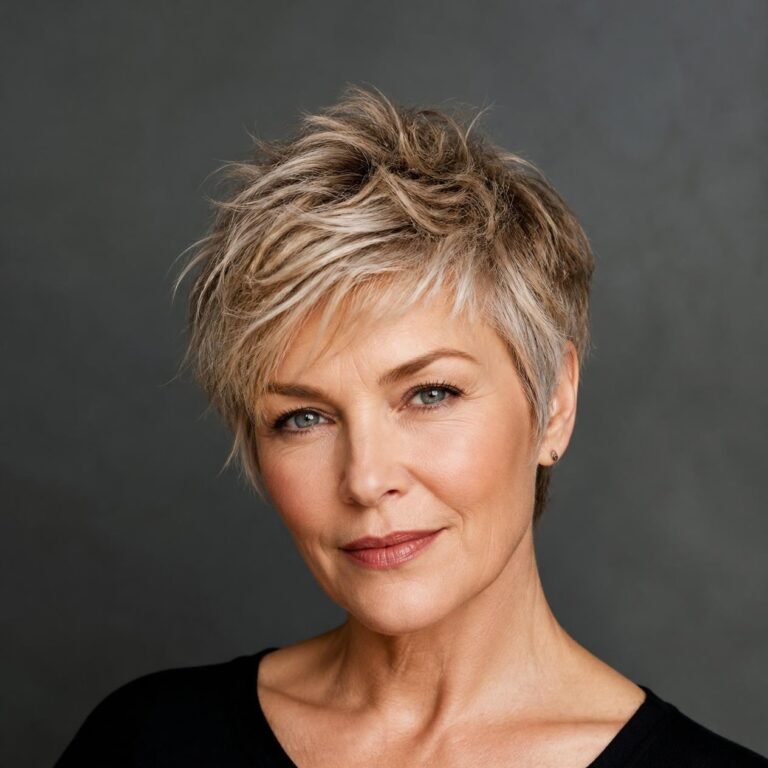
This pixie keeps the sides and nape short and clean while the top stays longer and textured, so there is a visible step between the two lengths. The shorter sides remove weight and keep hair off the neck in humid weather, and the top moves easily with a little salt spray. It is a good option if you want change without a full buzz and a style that takes two minutes.
Best for: Fine to medium hair, hot climates, low-effort routines
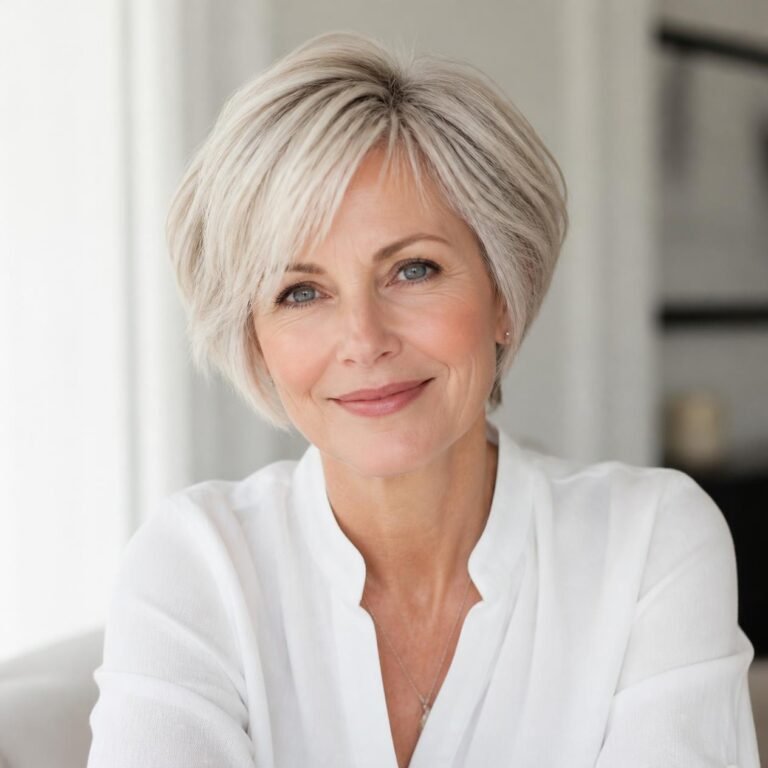
7. Textured silver pixie
A pixie suits silver hair because short lengths show off the metallic tone. Keep some length on top for movement, with softer, shorter sides, and finish the tips with a texturizing paste. A pixie reveals the ears, jaw and neck, so test the idea by pulling your hair back first. Trim it every six to eight weeks.
How to wear it: Use a pea-size amount of paste on dry hair and tousle with your fingertips, never a comb.
Best for: Silver or white hair, oval and heart-shaped faces
8. Bixie
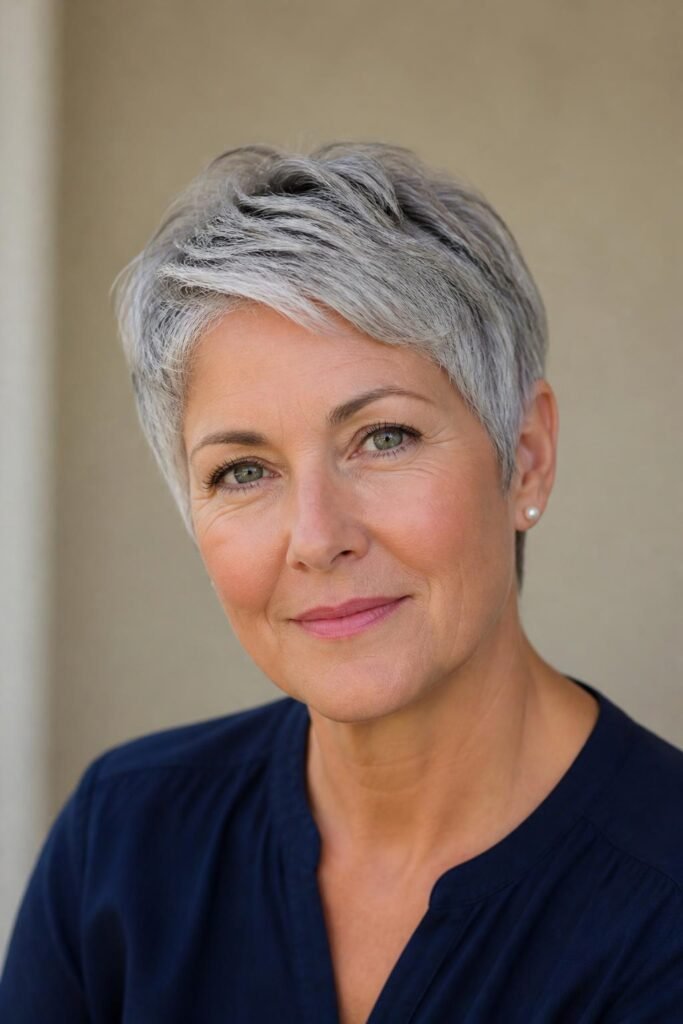
The bixie is a bob and a pixie combined, with a little more length at the nape and top than a true pixie. It is a good halfway stop when you are moving to short hair or growing out gray. A bixie cut too blunt or too short at the sides can look severe, so ask for diffused edges and longer face-framing pieces.
Best for: Women moving from a bob toward a pixie
9. Pixie shag
This sits between a pixie and a bob: short at the sides, longer and airy on top, with feathered layers through the crown. It adds volume and suits anyone who wants structure with a lived-in look. For body, curl large sections and spray a dry texturizer. Plan on salon trims and a deep conditioning treatment about once a month.
Best for: Fine hair that needs volume, wavy textures
10. Cropped cut with a soft fringe
A short cut with a fringe covers a hairline that is moving back. A cropped cut leaves room to play with texture, and a soft fringe can disguise a thinning hairline or one that has receded above the forehead. Choose a feathery fringe over a heavy one.
Best for: Receding hairlines and thin temples
Bobs and lobs
A bob is the easiest way to keep a clean shape while adding fullness. The details below are what separate a flattering one from a flat one.
11. Blunt chin-length bob
A one-length bob that ends at or just below the jaw has a blunt edge that makes thin hair look thicker. An angled bob helps if hair is fuller at the nape and thinner at the sides. The chin-length shape also frames the face nicely. Use a paddle brush while hair is about half dry to tame gray frizz.
Best for: Fine, straight hair and anyone wanting a polished look
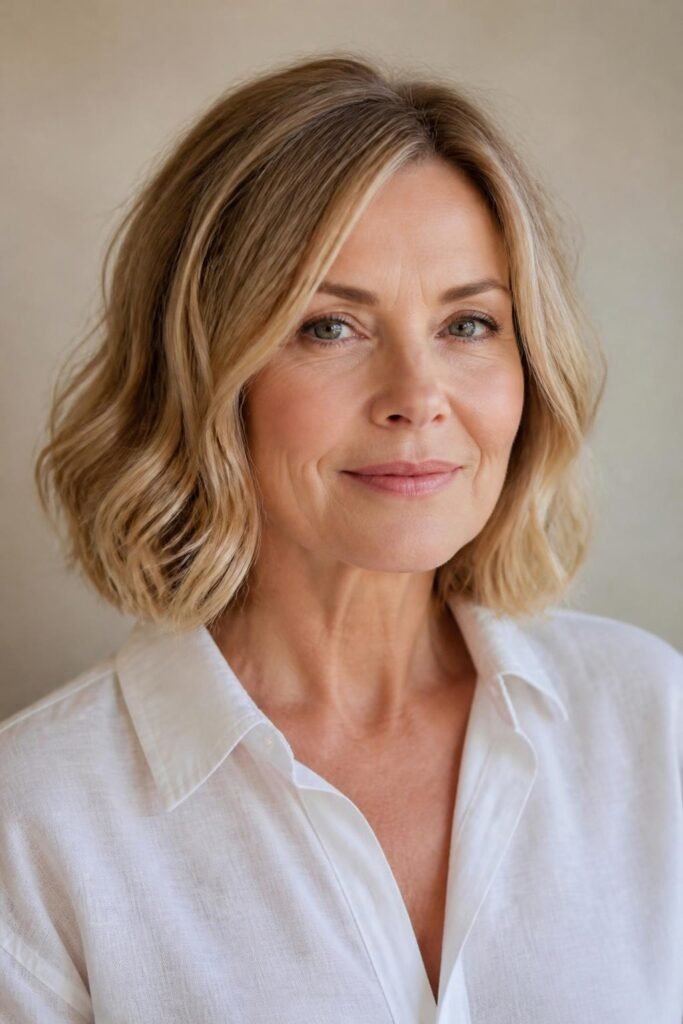
12. Wavy blonde bob
Soft waves add the body that straight, fine hair lacks, and a bob is short enough to hold them. Blonde looks luminous with a wave because the curls catch the light, and texturizing spray or hot rollers help build waves in a bob. Keep the layers minimal so the ends stay full. A 1.25 to 1.5 inch curling iron makes loose waves without a tight set, and a shine spray finishes the look.
Best for: Straight or slightly wavy hair, blondes
13. A-line bob
The A-line is shorter at the back and a little longer at the front, so the line points toward your face. It is a timeless, low-maintenance cut that flatters the features. Blow-dry forward, then flip your head back, to build crown height. It is tidy at the nape, which many women like when hair there has thinned.
Best for: Women who like a precise, tailored shape
14. French bob with a fringe
The French bob sits at the jaw or just above, usually with a long, side-swept fringe. This combination makes gray hair look fuller. Ask for shorter internal layers while keeping the length at the jaw, to add movement without losing the line. It reads as chic rather than sweet, and it is quick to dry.
How to wear it: Ask for a long fringe that skims the brows and can be tucked behind the ear.
Best for: Straight and wavy hair, women who wear glasses
15. Soft collarbone lob
A long bob that hits between the neck and collarbone is the safe change for anyone leaving long hair. Trimming frayed ends makes hair look healthier while keeping the feel of length. It is also easy to style, either sleek with a round brush or left to dry in its own wave. Fine hair benefits from texturizing products, and thicker hair can take shattered ends.
Best for: Anyone growing out long hair or undecided about length
Long hair, if you love it
Long hair has no age limit. It only needs to be healthy and shaped, because very long, wispy ends can read as tired.
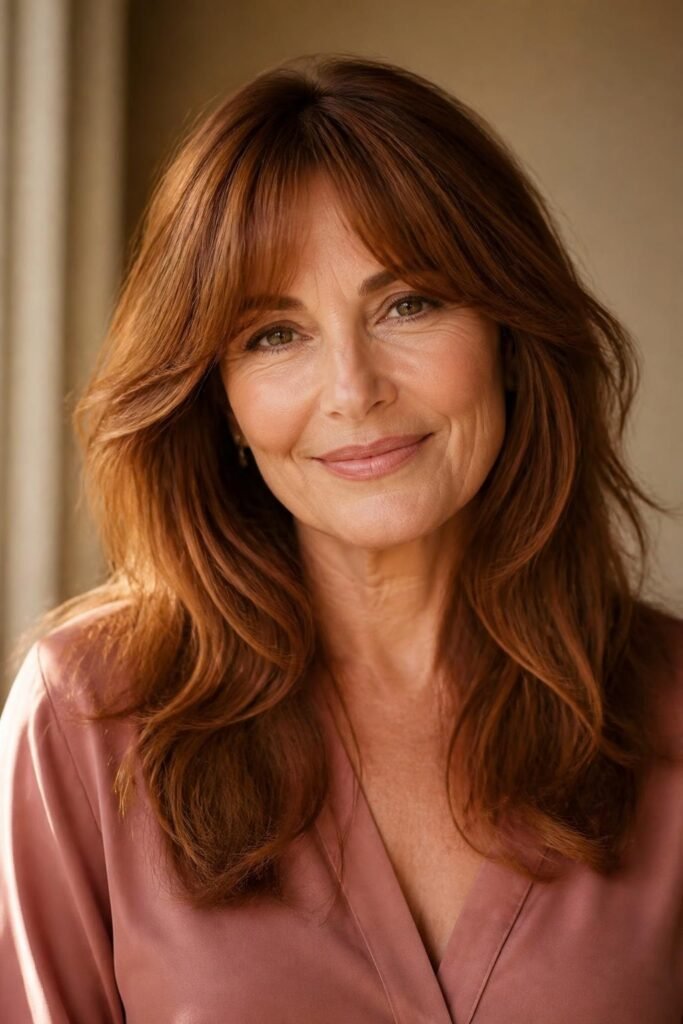
16. Long layers with curtain bangs
Long layers add movement, and curtain bangs parted in the middle frame the face and sweep to the sides. Curtain bangs suit all face shapes and add fullness for fine hair. Ask for a texturizing cut so they do not look heavy. Auburn and copper tones also make long hair look rich, and a gloss keeps them from fading. Trim the bangs every four to six weeks.
Best for: Women with a high forehead who like length
17. Glossy one-length hair
A single, blunt length that ends mid-back looks expensive when it is healthy. A daily hair sheen or gloss helps, and extensions can help if your ends are thin. This only works if the ends are in good shape, so book regular dusting trims and avoid daily hot tools. Plan on a salon visit every 10 to 12 weeks for longer cuts.
Best for: Thick, strong hair and a willingness to take care of it
18. Long hair with weight-reducing layers
On long, thick hair, layers placed at the bottom rather than around the face work best. They lighten the hair’s visual weight and add movement. For long wavy hair, straight-cut perimeter layers and a center part look good. Blow-dry straight once to check for heavy spots before the stylist cuts. Ask your stylist to confirm where the layers start before they cut.
Best for: Thick, wavy or heavy long hair
19. Half-up with soft curls
Long hair pinned partway up keeps strands off the face and adds height at the crown. Half-updos draw attention to the features, and headbands keep hair off the face and can make thinning hair look fuller. Loose curls from a barrel iron soften the line. It is a look for dinners and events, and a friendly option when you do not want to commit to a whole new cut.
How to wear it: Pin it with two flat clips at the crown and loosen a few strands in front.
Best for: Special occasions and bad hair days
20. Low chignon bun
A low bun at the nape is a classic way to wear long hair with polish, and it works over a layered or one-length cut. Keep it loose, with a few strands left near the ears, and use a covered elastic rather than a tight band, because constant pulling is hard on follicles. Add a smoothing balm for shine and a light-hold spray at the end.
How to wear it: Use a smoothing balm and a light-hold spray, not a tight elastic.
Best for: Weddings, work and warm days
Good to know
Female pattern hair loss usually begins in midlife and is more likely to progress without treatment, and treatment works best when started at the first sign. A new haircut will not stop thinning, so if your part is widening or your ponytail is thinner, make a dermatologist appointment as well as a salon one.
What to say at the salon
Bring two or three photos of the cut you like and one of a cut you do not, so your stylist can see your taste. Tell them about your routine in real numbers: how many minutes you will spend, whether you blow-dry, and how often you can come in. Ask for a wash and wear cut if you want less heat styling.
Mention anything that has changed: thinning at the temples, a stubborn cowlick, gray that is coarser than the rest. Ask which products will help rather than buying several. Hot tools can cause yellowing in gray hair, so use them sparingly.
Frequently asked questions
None of these 20 hairstyles requires you to look younger than you are; they simply work with the hair you have now. Pick one that fits your texture and your patience, and give it two or three styling sessions before you decide. A good cut should make mornings easier, not harder.